
A Song Passed Hand to Hand: When “Dublin Blues” Became a Farewell Spoken in a Friend’s Voice
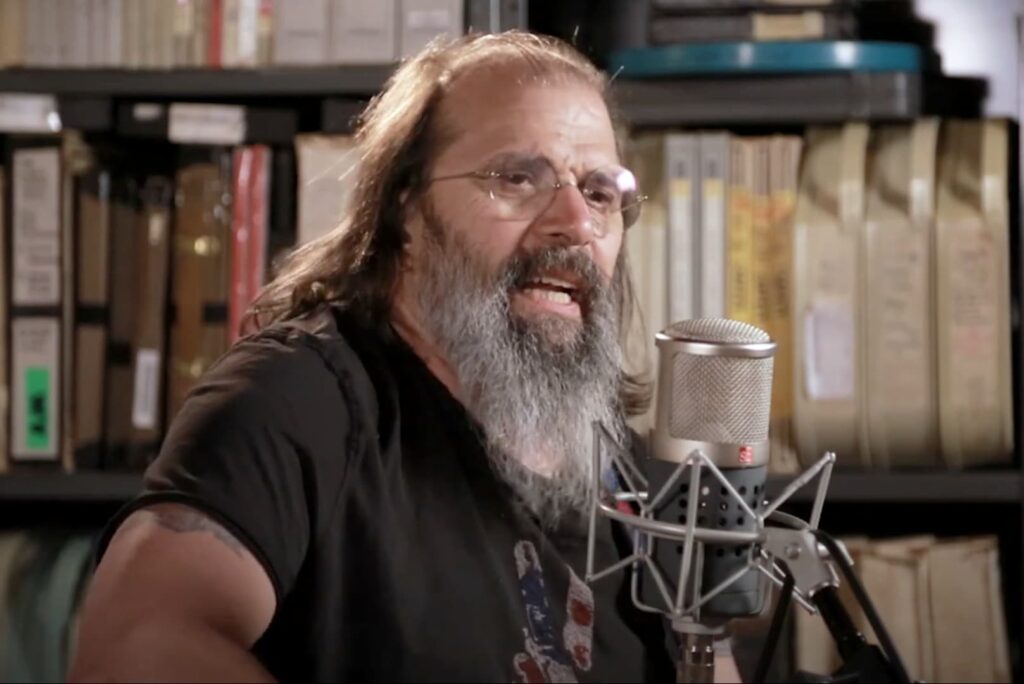
On March 28, 2019, at Paste Studios in New York City, Steve Earle performed “Dublin Blues” in a setting that felt closer to a private conversation than a public appearance. The performance came shortly after the release of his tribute album GUY, dedicated to his longtime mentor and friend, Guy Clark, whose 1995 album Dublin Blues had long been regarded as a cornerstone of modern Americana songwriting.
From the outset, the arrangement was deliberately bare. Just an acoustic guitar and a voice shaped by years of hard living. There was no attempt to reinterpret the song in a modern sense. Instead, Earle approached it with restraint, allowing the lyrics to carry their original weight. Each line unfolded with a sense of familiarity, as though he were revisiting shared memories rather than performing for an audience.
The narrative within “Dublin Blues” has always been restless, moving between places and emotions with quiet unease. In this rendition, that restlessness feels more grounded. Earle does not dramatize the journey from Dublin to Galveston. He lets it sit, almost matter-of-fact, which in turn gives the song a deeper resonance. The references to fleeting moments and distant places land with a kind of acceptance rather than longing.
What makes this performance particularly significant is the personal context behind it. Earle was not only interpreting a well-known composition. He was honoring a relationship that shaped his own artistic identity. The influence of Clark, along with contemporaries like Billy Joe Shaver, is evident in the disciplined simplicity of the delivery. There is no excess, no unnecessary flourish. Only the core elements of storytelling remain.
The audience response reflects this tone. There is an attentiveness that suggests recognition rather than surprise. Listeners are not reacting to novelty. They are acknowledging something enduring, something that has been passed down through years of shared tradition.
In the broader context of American roots music, this performance stands as a quiet but definitive moment. It reinforces the idea that songs like “Dublin Blues” are not fixed in time. They evolve through those who carry them forward.
That night in New York, the song did not belong solely to its writer, nor entirely to its performer. It existed somewhere in between, shaped by memory, respect, and the unspoken understanding between two craftsmen who believed that the truth, simply told, was always enough.