
Steve Earle’s “Over Yonder” Is Not About a Death Row Inmate. It Is About the Possibility of Redemption.
Few songs in Steve Earle’s catalog have sparked as much discussion, controversy, and reflection as “Over Yonder (Jonathan’s Song).” On the surface, it tells the story of a man awaiting execution. Beneath that narrative lies a deeper meditation on guilt, forgiveness, faith, and whether a human being can truly change before it is too late.
The song was inspired by the real-life story of Jonathan Nobles, a Texas death row inmate whom Earle came to know through his involvement in efforts opposing capital punishment. Nobles had committed murder as a young man and was sentenced to death. During his years in prison, however, he reportedly taught himself to read and write, embraced religion, and devoted himself to personal transformation. By the time he was executed in 1998, Earle believed he was no longer the same person who had entered prison decades earlier.
That belief became the foundation of “Over Yonder.”
What makes the song particularly powerful is Earle’s artistic decision not to tell the story from his own perspective. He does not appear as an advocate, a witness, or a commentator. Instead, he writes from the voice of the condemned man himself. The listener is invited inside the thoughts of someone facing the final hours of life, reflecting on mistakes, consequences, fear, and the hope that forgiveness may still exist somewhere beyond earthly judgment.
This approach transforms the song from a political statement into something far more personal.
Although Earle has long been outspoken about his opposition to the death penalty, “Over Yonder” does not spend its time attacking the legal system. There are no fiery speeches or direct arguments. The song focuses instead on the emotional and spiritual reality of a man confronting his own mortality. By avoiding overt political rhetoric, Earle allows listeners to arrive at their own conclusions.
That restraint is one reason the song remains so compelling.
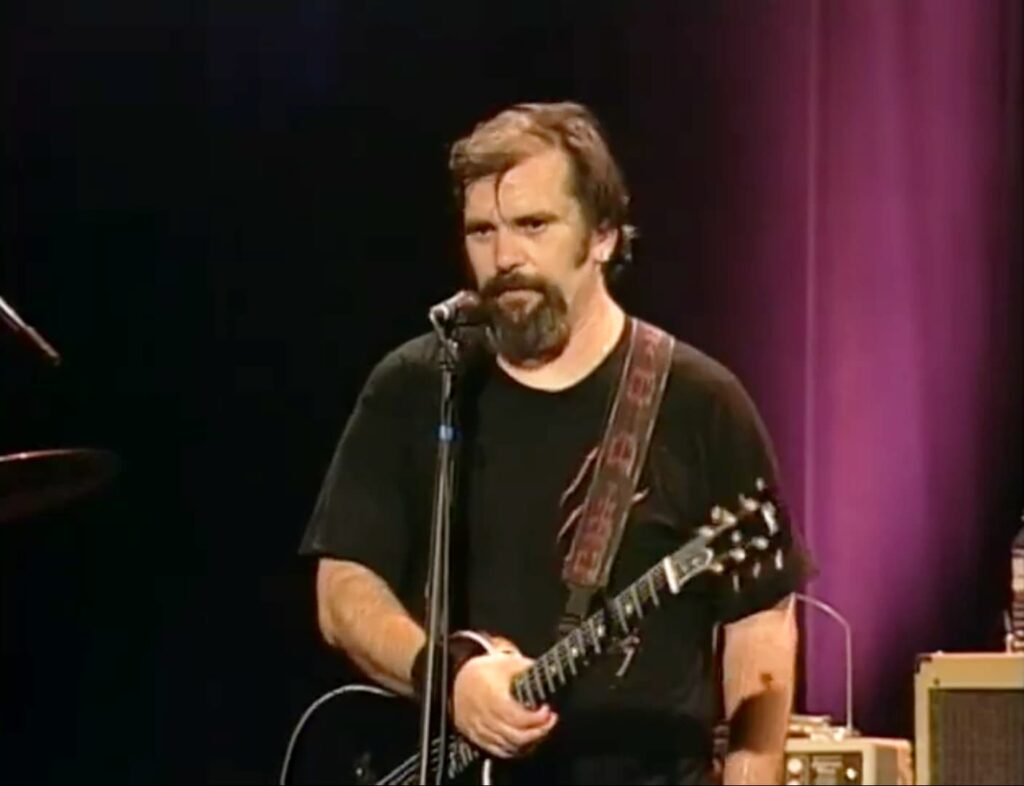
Live performances of “Over Yonder” are often strikingly different from the energy associated with many of Earle’s best-known songs such as “Copperhead Road,” “Guitar Town,” or “The Mountain.” The rebellious edge gives way to quiet reflection. Rather than performing, Earle seems to be bearing witness. His delivery is measured, thoughtful, and deeply human, creating an atmosphere that often leaves audiences listening in near silence.
Part of the song’s emotional authenticity may come from Earle’s own life experiences. During the 1980s and 1990s, he struggled with addiction, legal troubles, and personal turmoil. He understood what it meant to stand dangerously close to losing everything. While the circumstances were vastly different, he recognized in Jonathan Nobles a familiar theme: a person trying to become better than the worst thing they had ever done.
That perspective explains why the song feels rooted in empathy rather than sympathy. Earle is not excusing a crime. He is exploring the possibility of redemption.
The result has divided listeners for years. Some regard “Over Yonder” as one of the most compassionate and courageous songs Earle ever wrote, praising its belief in forgiveness and human dignity. Others feel he extended too much understanding toward a convicted murderer. More than two decades after its release, the debate continues.
Musically, the song resembles a Southern hymn as much as a country ballad. Its simple language, unhurried melody, and recurring references to a place beyond this world give it a spiritual quality. The phrase “over yonder” traditionally suggests a distant place beyond the horizon. Within the song, it becomes a symbol of heaven, death, peace, and perhaps the hope of mercy waiting on the other side.
What lingers longest is the ending. Unlike many songs dealing with crime and punishment, “Over Yonder” does not conclude with anger or condemnation. It ends with hope. The narrator believes that beyond fear, beyond regret, and beyond earthly judgment, forgiveness may still be possible.
That is why many listeners ultimately see the song as something larger than a story about capital punishment. It becomes a reflection on youthful mistakes, irreversible choices, and the universal desire to find peace before the final chapter closes. Whether one agrees with its message or not, “Over Yonder (Jonathan’s Song)” remains one of the most thought-provoking works in Steve Earle’s remarkable career, asking difficult questions while offering no easy answers.