
A SONG OF TEMPTATION, HEARTBREAK, AND PERFECT HARMONY
On a cold February night in 1962, The Everly Brothers stepped onto the stage of The Ed Sullivan Show and turned a simple television appearance into one of the last great moments of early rock and roll innocence before America changed forever.
By February 18, 1962, Don Everly and Phil Everly were already among the most beloved vocal duos in American music. Their harmonies had shaped the sound of rock and roll throughout the late 1950s with classics like “Bye Bye Love,” “Wake Up Little Susie,” and “All I Have to Do Is Dream.” Yet on that evening, standing beneath the bright studio lights of The Ed Sullivan Show, they introduced something darker and more dramatic to television audiences: “Jezebel.”
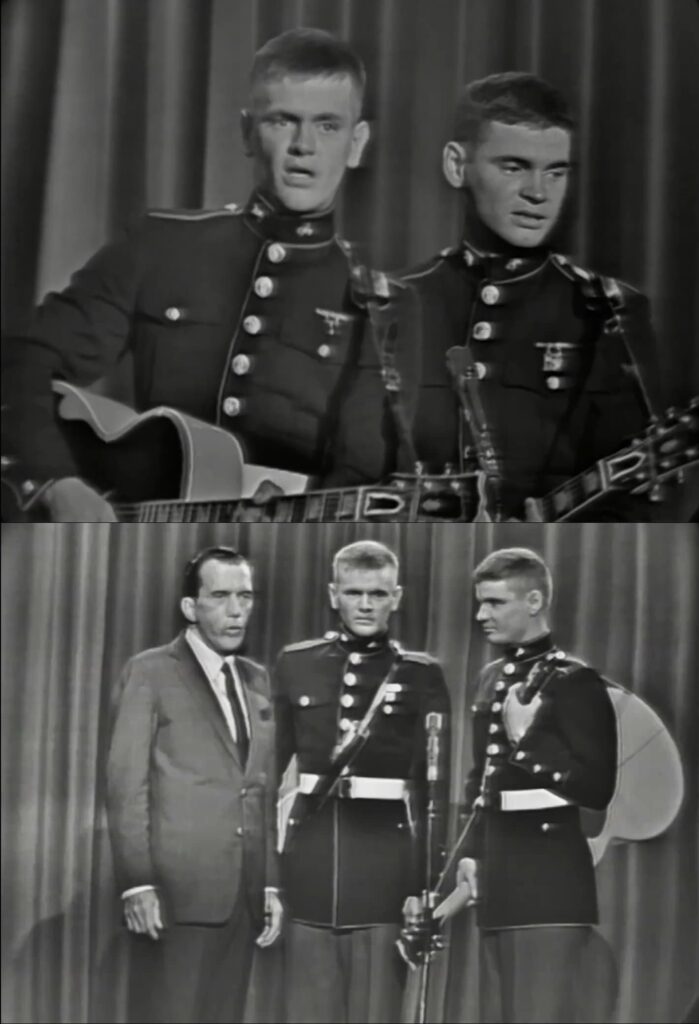
Before the performance began, Ed Sullivan himself praised the audience and warmly introduced the brothers’ “newest recording.” The atmosphere inside the theater carried the polished excitement of early 1960s television. Men wore dark suits. Women sat elegantly in their seats. The orchestra waited quietly. And then the Everlys began to sing.
From the very first line:
“If ever the devil was born without a pair of horns…”
the tone shifted immediately. This was not teenage puppy love. This was obsession, betrayal, temptation, and regret wrapped inside one of the smoothest harmony performances ever heard on national television.
Originally written by legendary songwriter Wayne Shanklin, “Jezebel” had first become a hit for Frankie Laine in 1951. But the Everly Brothers brought a completely different energy to it. Their version blended rock and roll rhythm with dramatic pop orchestration, while their unmistakable sibling harmonies gave the song an emotional sharpness that felt both elegant and dangerous.
Watching the performance today feels like opening a time capsule from another America. Don and Phil stood almost perfectly still as they sang, dressed in matching dark suits, relying not on choreography or spectacle but on the sheer precision of their voices. In an era before giant stage productions and flashing screens, the music itself carried everything.
What made the Everly Brothers so remarkable was the emotional contrast inside their singing. Their harmonies sounded heavenly, but the lyrics often carried loneliness, jealousy, and longing. “Jezebel” captured that contradiction perfectly. The song accused a mysterious woman of deception and heartbreak, yet beneath the bitterness there was still fascination. The narrator could not escape her memory.
As they repeated the name:
“Jezebel… Jezebel…”
the performance almost took on the feeling of a confession.
The audience responded with immediate applause, and Ed Sullivan, smiling warmly, asked if the brothers were heading back to California. It was a small exchange, but today it feels strangely poignant. America in early 1962 still lived in a quieter world, just months before cultural tides would begin shifting dramatically with the British Invasion, social unrest, and the changing sound of popular music.
For the Everly Brothers, this period marked the closing chapter of their first great era. Though they would continue recording and performing for decades, the innocence and dominance of their late 1950s success was beginning to fade. Yet their influence only grew stronger. Artists like The Beatles, Simon & Garfunkel, and The Beach Boys would later borrow heavily from the Everlys’ close harmony style.
Looking back now, the performance of “Jezebel” on The Ed Sullivan Show feels beautifully preserved in amber. Two young brothers standing shoulder to shoulder, singing about love’s darker side with voices so perfectly intertwined that they almost sounded like one soul divided into two parts.