
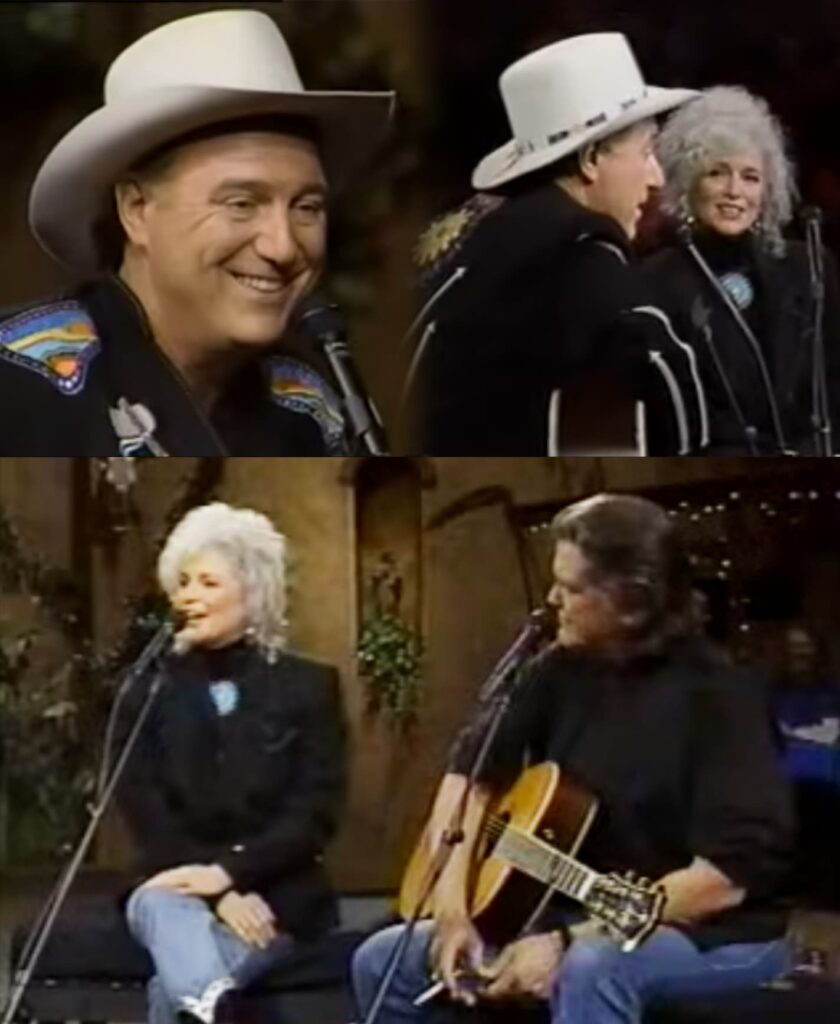
When Youth Fades Into Memory, Two Voices Recall a Time That Refused to Sleep
In 1991, Jerry Jeff Walker joined Susanna Clark to perform “We Were Kinda Crazy Then”, a song that feels less like a composition and more like a memory spoken aloud. Born from reflections on the restless 1970s, the piece captures a fleeting era when life, music, and love seemed too urgent to pause for rest.
Before the song begins, their conversation sets everything in motion. They laugh about nights without sleep, about chasing songs, people, and moments with an energy that now feels almost mythical. That brief exchange is essential. It frames the performance not as nostalgia for its own sake, but as a genuine attempt to revisit a time when everything felt possible.
When the melody arrives, it does so gently. Jerry Jeff Walker’s voice carries a weathered warmth, while Susanna Clark brings a quiet steadiness that grounds the song. Together, they do not try to recreate youth. They remember it. Lines about Mexico roads, lucky charms, and moonlit nights over Texas unfold like fragments of a shared past, each one simple, yet deeply personal.
At its heart, “We Were Kinda Crazy Then” is about more than being young. It is about the intensity of feeling that defined those years. “Needing lovers more than friends” is not presented as regret, but as truth. There is an honesty in how they acknowledge the impulsiveness, the vulnerability, and the beauty of that time.
The imagery of songs feeling like “flowers for your scars” stands out as one of the performance’s most enduring lines. It speaks to the healing power of music, not as something grand, but as something intimate. A guitar, a voice, and a moment shared between two people.
As the song drifts toward its closing, the image of the moon over Austin lingers. It becomes a symbol of continuity, something unchanged despite the passing years. The world may move on, but certain memories remain suspended, illuminated in quiet ways.
Looking back, this 1991 performance does not try to hold onto the past. It simply honors it. And in doing so, it offers a gentle reminder that sometimes, the most meaningful stories are the ones told softly, between two voices that remember exactly how it felt.