
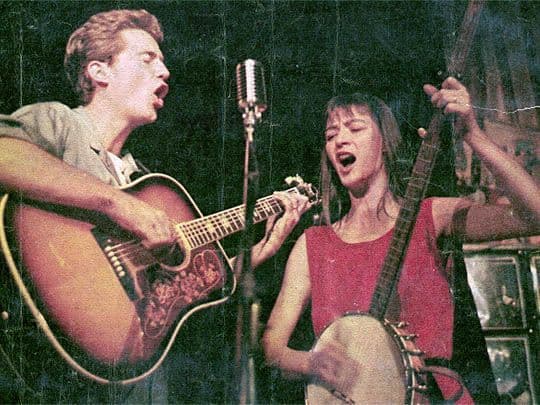
A Voice Too Fragile for This World: How Karen Dalton Turned “It Hurts Me Too” Into a Lonely Midnight Confession
There are singers who perform a song… and then there are singers who seem to disappear inside it. Karen Dalton belonged to that second, far rarer category. When she sang “It Hurts Me Too,” she did not sound like an artist trying to impress an audience. She sounded like someone sitting alone at the edge of the night, quietly revealing wounds she never intended anyone else to hear.
Unlike many celebrated recordings of the era, “It Hurts Me Too” was never a chart hit for Karen Dalton. It did not climb the Billboard Hot 100, nor did it receive the kind of commercial attention that surrounded more polished folk and blues performers of the late 1960s and early 1970s. In truth, that absence from the charts somehow became part of its enduring mystique. The song lived not through radio countdowns, but through whispered recommendations, late-night record collections, and the aching memory of listeners who discovered her voice almost by accident.
Originally a classic blues standard associated with artists like Tampa Red and later Elmore James, “It Hurts Me Too” had already traveled through several musical lives before reaching Karen Dalton. Earlier versions carried the pain of betrayal in a traditional blues framework — direct, wounded, proud. But when Dalton approached the song, she transformed it completely. She stripped away the performance. What remained felt almost unbearably intimate.
Her version appeared during a time when the American folk scene was overflowing with extraordinary talent. Names like Bob Dylan, Joan Baez, Tim Hardin, and Fred Neil dominated conversations in coffeehouses and Greenwich Village clubs. Yet even among those giants, Karen Dalton was regarded with near-mythic admiration. Dylan himself once said her voice reminded him of Billie Holiday. Others heard traces of ancient mountain music, weary blues, and broken-hearted jazz drifting together in the same breath.
And perhaps that is why “It Hurts Me Too” cuts so deeply in Dalton’s hands. She never sang with technical perfection in mind. Her phrasing wandered slightly behind the beat, her voice cracked at unexpected moments, and there was always a trembling vulnerability hovering beneath every note. But those imperfections became the truth of the song itself. You do not listen to Karen Dalton for polish. You listen because she sounds human in the most devastating sense of the word.
The story behind Dalton’s life only deepens the emotional weight of the recording. Born in Oklahoma and raised partly in Colorado, she carried the spirit of wandering America within her music. She played banjo and guitar with remarkable instinct, often preferring old folk traditions over commercial ambitions. Friends and fellow musicians constantly urged her to pursue fame more aggressively, but Dalton resisted the machinery of the music industry. Recording sessions reportedly frustrated her. Success seemed to make her uncomfortable. She belonged to the song, not to celebrity.
That tension — between artistic purity and worldly expectation — hangs heavily over “It Hurts Me Too.” The lyrics speak about watching someone suffer while being powerless to ease their pain:
“When things go wrong, so wrong with you… it hurts me too.”
Simple words, yet Dalton delivers them with such emotional exhaustion that they no longer feel like lyrics at all. They feel remembered. Lived through. Carried for years.
By the early 1970s, popular music was changing rapidly. Folk music was becoming more polished, country-rock was rising, and singer-songwriters were moving toward sophisticated studio productions. Karen Dalton, however, seemed untouched by trends. Her recordings felt timeless even then — too raw for radio, too honest for commercial formulas. That may explain why her work aged so beautifully. Decades later, younger generations of musicians began rediscovering her catalog with astonishment. Artists across indie folk and alternative music openly cited her as a hidden influence.
Yet for many listeners, the lasting power of “It Hurts Me Too” lies not in musical history, but in memory. The song carries the atmosphere of dimly lit rooms, dusty vinyl sleeves, long drives after midnight, and quiet heartbreaks that were never fully spoken aloud. Karen Dalton’s voice does not merely evoke sadness; it evokes the strange dignity of surviving sadness.
There is also something profoundly lonely about her singing. Not theatrical loneliness, but the quiet loneliness of someone who has spent years observing life from the margins. When she bends certain notes in “It Hurts Me Too,” the sound almost resembles someone trying not to cry in front of strangers. Few recordings in American folk-blues history capture emotional restraint with such devastating effect.
Karen Dalton died in 1993, largely unknown to mainstream audiences. She never experienced the level of recognition many believed she deserved. But perhaps her music was never meant for mass celebration. It was meant for private moments. For listeners who understand that the most truthful songs are often the least glamorous ones.
And that is why “It Hurts Me Too” still lingers long after it ends. Not because it was a hit. Not because it dominated charts. But because Karen Dalton sang it as though pain itself had found a voice — fragile, weathered, and unforgettable.