
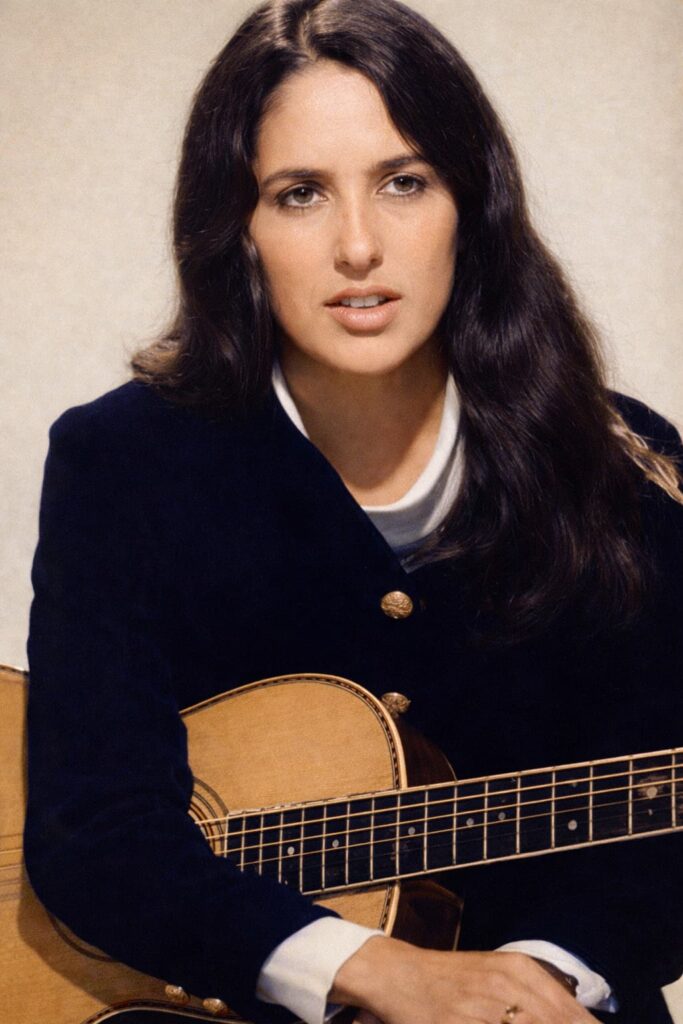
When Joan Baez Sang Bob Dylan’s Blessing to a Child
In a deeply moving performance of “Forever Young,” Joan Baez brought renewed emotional weight to one of Bob Dylan’s most personal compositions. Written by Dylan for his newborn son, the song has long stood as a heartfelt message from a father to a child, filled with hope, wisdom, and quiet prayers for a meaningful life.
Through Baez’s interpretation, those words seem to gain another layer of tenderness. Her voice, often described as pure and timeless, carries the song with remarkable grace. Every lyric feels carefully held, allowing the emotional honesty of Dylan’s writing to remain at the center. The performance captures the fragile beauty that made folk music so powerful during its golden era.
The connection between Baez and Dylan adds even greater depth to the moment. Before Dylan became an international icon, Baez was already an established star within the folk movement. She famously helped introduce him to wider audiences during the early 1960s folk revival and played a significant role in bringing him to important stages such as the Newport Folk Festival. Their artistic relationship eventually became one of the most talked about partnerships in modern music history.
That history can be felt throughout Baez’s rendition of “Forever Young.” There is admiration in the way she delivers the lyrics, but also something more personal and reflective. The performance carries the emotional memory of two artists whose lives and careers became permanently intertwined through music, activism, and shared cultural influence.
“Forever Young” itself remains one of Dylan’s most enduring songs because of its universal message. Rather than relying on grand poetic complexity, the song speaks with direct sincerity. It wishes kindness, courage, strength, and moral clarity upon the next generation. In Baez’s hands, those sentiments become almost hymn like, creating a performance filled with warmth and quiet sorrow at the same time.
Decades after it was written, the song continues to resonate because it speaks to something timeless. Baez’s interpretation reminds listeners that great folk music does not simply entertain. It preserves love, memory, and human connection across generations.
 Oldies Songs