
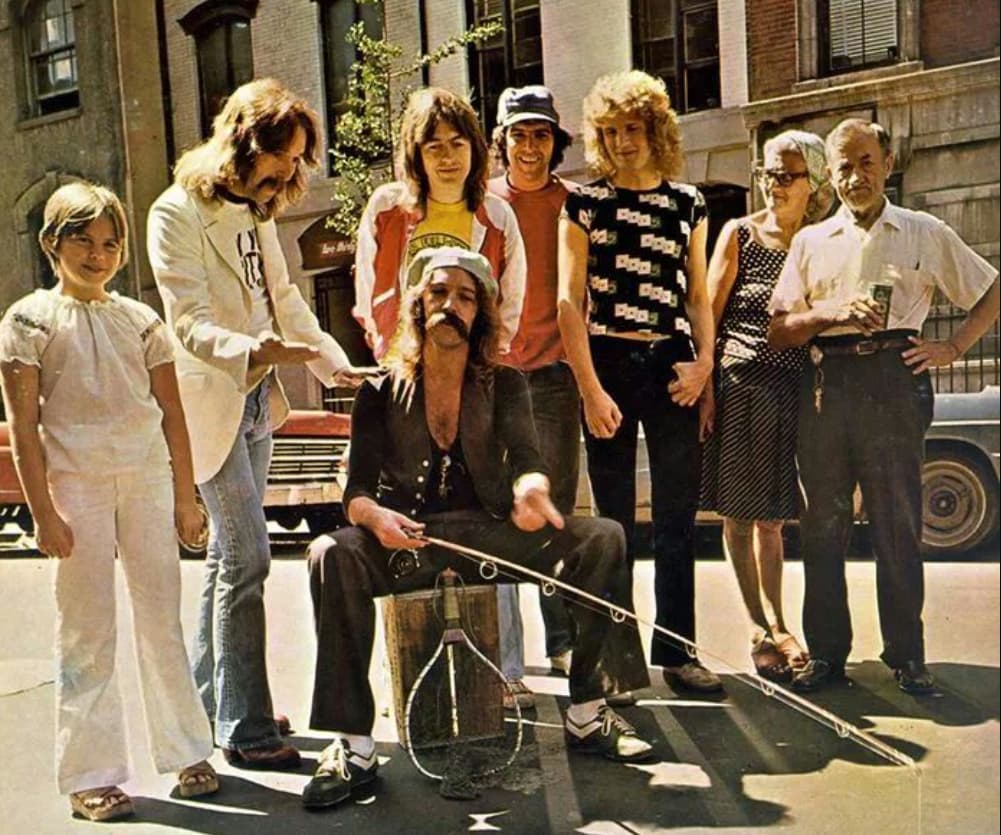
A hypnotic groove of freedom and motion — “Slow Ride” captures the spirit of the open road, where time stretches and the rhythm becomes a companion to life’s quieter reflections.
Released in 1975, “Slow Ride” by Foghat quickly became one of the defining tracks of mid-1970s blues-rock. Featured on their fifth studio album, Fool for the City, the song marked a commercial breakthrough for the band, reaching No. 20 on the Billboard Hot 100 in the United States—a respectable position that belied the song’s enduring cultural impact. Over time, it has far outgrown its original chart placement, becoming a staple of classic rock radio and a familiar echo for anyone who remembers the golden age of FM airwaves.
The origins of “Slow Ride” are rooted in the band’s deep affection for American blues traditions, filtered through the lens of British rock sensibility. Written collaboratively by the members of Foghat, particularly drummer Roger Earl and guitarist Dave Peverett, the song was conceived not as a hurried hit, but as an extended groove—something meant to breathe, to stretch out, and to pull the listener into its hypnotic pulse. The title itself suggests a deliberate pace, a refusal to rush through experience, and that philosophy is embedded in every bar of the track.
Musically, “Slow Ride” is built on a thick, rolling guitar riff that feels almost physical in its presence. It is not merely played—it lingers. The rhythm section moves with a steady, unhurried confidence, creating a sense of forward motion without urgency. This balance between movement and restraint is what gives the song its unique character. It invites the listener not to chase time, but to sit within it. In an era increasingly driven by speed and change, that was—and remains—a quietly radical sentiment.
Lyrically, the song is deceptively simple, yet its meaning unfolds with repeated listening. On the surface, it speaks of taking things easy, enjoying the ride, and letting life come as it may. But beneath that simplicity lies a deeper resonance: a longing for control over one’s own pace in a world that often demands otherwise. There is a subtle defiance here—not loud or confrontational, but steady and assured. It is the voice of someone who has learned that not everything of value arrives quickly.
One cannot discuss “Slow Ride” without acknowledging its remarkable afterlife. Though it peaked modestly on the charts, the song found new generations of listeners through films, television, and notably rhythm-based video games, where its unmistakable groove introduced it to audiences far removed from its original context. Yet even stripped of nostalgia, the track retains its power. It does not rely on trend or novelty; instead, it leans into something more enduring—the human desire to slow down and feel the passage of time.
For those who remember the era of its release, “Slow Ride” often evokes images of long drives, late-night radio, and a world that felt, if only for a moment, less hurried. But even for those encountering it later, the song offers a kind of refuge. It reminds us that music, at its best, does not simply fill silence—it shapes the way we experience time itself.
In the end, “Slow Ride” is more than just a rock song. It is a mood, a philosophy, and perhaps even a gentle instruction: to ease back, to listen closely, and to let the rhythm carry you, however slowly, exactly where you need to go.