
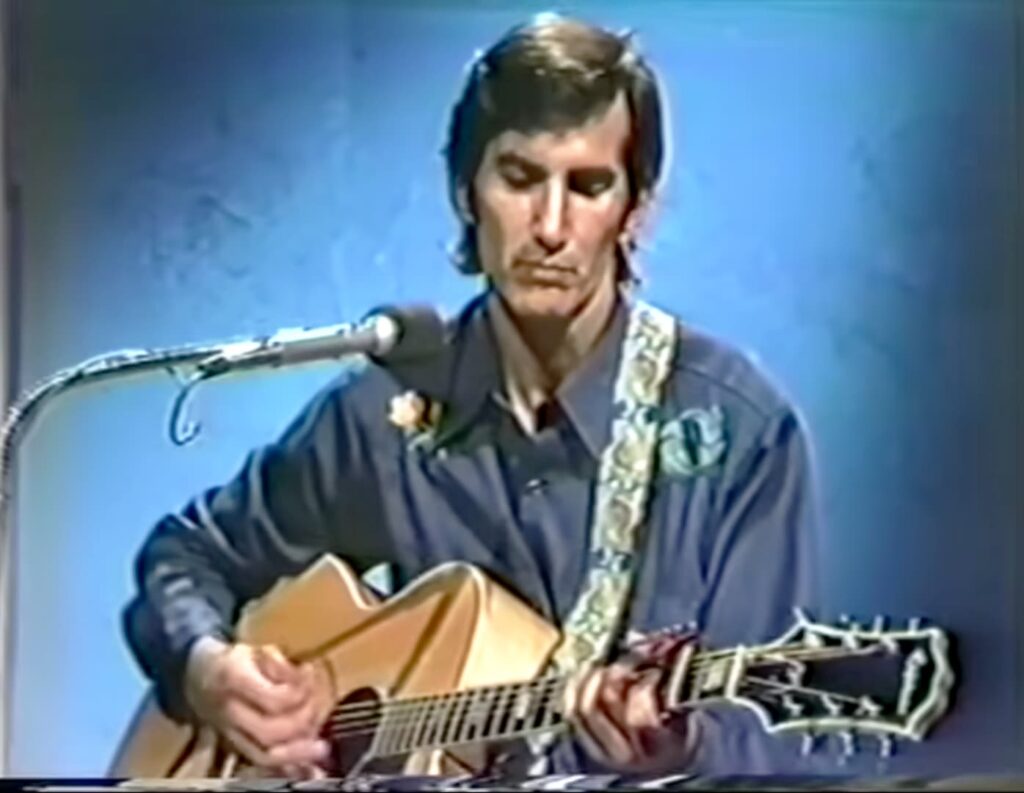
“Townes Van Zandt Could Make Self Destruction Sound Like Poetry.”
In “Mr. Mudd and Mr. Gold,” the smile was gentle, the melody was easy, but beneath it lived one of the darkest stories ever written in American folk music.
At first listen, “Mr. Mudd and Mr. Gold” almost sounds playful. The rhythm moves lightly, the lyrics unfold like an old barroom tale, and Townes Van Zandt occasionally smiles as if he is simply entertaining the room with another wandering story from the road. That is exactly what makes the performance so unsettling.
Because the deeper the listener falls into the song, the darker it becomes.
Featured in the documentary Be Here to Love Me, the performance captures Townes in a way few artists have ever been captured on film: funny, charming, exhausted, brilliant, and quietly unraveling all at once. Watching him perform feels less like seeing a polished folk singer and more like watching a man turn his own damage into mythology.
The song itself revolves around two gamblers, Mr. Gold and Mr. Mudd, but longtime fans have always understood that Townes was never really writing about cards. The two men feel symbolic, almost biblical. One represents luck, temptation, money, and illusion. The other feels tied to fate, consequence, and mortality. Like much of Townes’ songwriting, the story hides existential despair beneath deceptively simple storytelling.
That contrast defined his genius.
Townes could write melodies warm enough to sound comforting while quietly slipping devastation underneath them. Fans often joke that the happier a Townes Van Zandt song sounds, the more dangerous it probably is. “Mr. Mudd and Mr. Gold” may be the perfect example.
Then comes the legendary opening line:
“Livin’ on reds, vitamin C, and cocaine…”
It is funny at first. Almost reckless in its honesty. But after a moment, the line lands with horrifying clarity. In a single sentence, Townes summarized the chaos that surrounded much of his life: addiction, wandering, self-destruction, and the strange ability to laugh while standing dangerously close to the edge.
That is part of what makes this performance from Be Here to Love Me so emotionally powerful today. By the time audiences discovered the documentary, Townes had already passed away in 1997. The film itself feels less like a traditional music documentary and more like a long goodbye to a man who understood his own darkness too clearly.
And in this clip, you can almost see that awareness in his face.
He smiles before painful lines. He pauses as though remembering something distant and private. His eyes sometimes drift away from the audience entirely. Nothing about the performance feels theatrical. It feels lived in. Worn down. Human.
Many artists perform sadness. Townes Van Zandt seemed to inhabit it.
What makes the moment especially haunting is that the song can also be interpreted as a conversation happening inside Townes himself. Mr. Gold and Mr. Mudd feel like two halves of the same soul. One side gifted, charismatic, magnetic. The other addicted, unstable, and forever moving toward ruin. That duality followed Townes throughout his life and became inseparable from the mythology surrounding him.
Yet despite all the darkness attached to his story, audiences continue returning to performances like this because they contain something painfully rare: absolute honesty.
No polish. No protective mask. No attempt to clean up the contradictions.
Just a weary man with a guitar, smiling softly while singing lines that sound like warnings disguised as folklore.
That is why “Mr. Mudd and Mr. Gold” still lingers so deeply with Americana and folk audiences decades later. It is not merely a song about gamblers or fate.
It is the sound of a man staring directly at himself and turning what he saw into art before it destroyed him completely.