
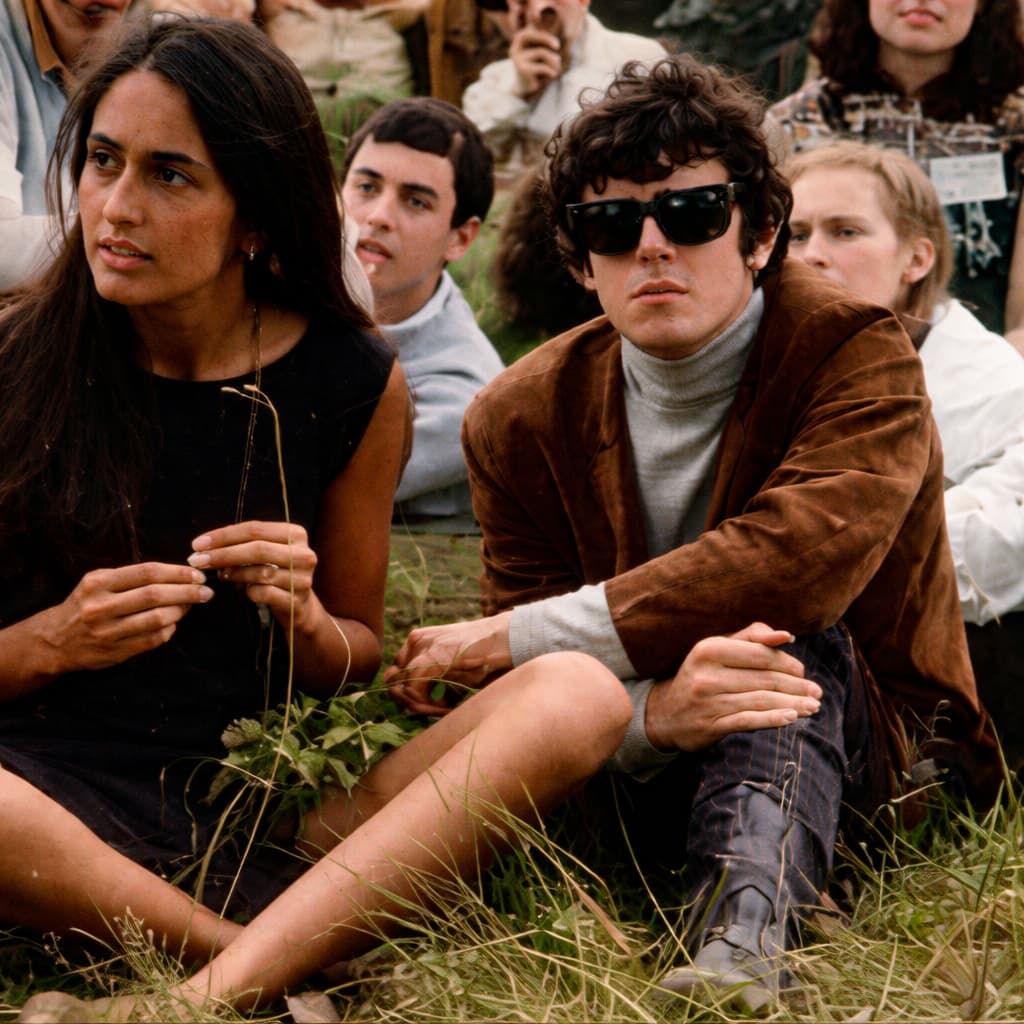
A Quiet Anthem of Hope That Carried a Generation Through Its Darkest Hours
Few songs in modern history have carried the moral weight and quiet dignity of “We Shall Overcome”, and when voices like Joan Baez and Donovan lent themselves to its message, the result was not merely a performance—it was a moment suspended in time. Though the song itself predates their collaboration by decades, their interpretation stands as a deeply human echo of a struggle that defined an era.
Originally rooted in early 20th-century gospel traditions and later shaped by labor movements, “We Shall Overcome” became the unofficial anthem of the American Civil Rights Movement. By the early 1960s, it had already been sung in churches, on picket lines, and in protest marches across the United States. Joan Baez, with her clear, unwavering soprano, brought the song to international attention, most notably during her appearance at the 1963 March on Washington for Jobs and Freedom—a defining historical event where music and message merged seamlessly. Though the song was never released as a commercial single in the traditional sense, and therefore did not chart on mainstream rankings like the Billboard Hot 100, its cultural impact far exceeded any numerical placement. It became something greater than a hit—it became a voice.
The collaboration with Donovan, a Scottish singer-songwriter known for his gentle folk sensibilities, added another layer of intimacy to the song. Their shared performance—often remembered from television appearances and live folk gatherings—was less about vocal perfection and more about emotional truth. In their hands, “We Shall Overcome” felt less like a declaration shouted into the world and more like a promise whispered between kindred spirits.
There is a simplicity to the song’s structure—repetitive, almost meditative—that allows its message to settle deeply within the listener. Lines such as “We shall overcome someday” are not delivered with urgency, but with patience. It is this patience that gives the song its enduring power. It acknowledges hardship without surrendering to it. In a time when the world seemed divided by fear and injustice, the song offered something rare: a belief in eventual peace, carried not by force, but by collective resolve.
For Joan Baez, the song was more than repertoire—it was a personal conviction. She had long been involved in civil rights activism, often placing herself directly within the movements she sang about. Her performances of “We Shall Overcome” were never detached; they were lived experiences, shaped by the faces she saw in crowds and the stories she carried with her. Donovan, though less politically overt, brought a gentle sincerity that complemented Baez’s clarity, creating a balance that felt both grounded and hopeful.
Listening to their rendition today, one cannot help but feel the weight of history in every note. It is not a song that demands attention with grandeur or complexity. Instead, it lingers—softly, persistently—like a memory that refuses to fade. It reminds us of a time when music was not just entertainment, but a means of survival, a way to hold onto dignity when everything else seemed uncertain.
In the end, “We Shall Overcome” is not bound to a single artist, chart position, or moment in time. Yet through voices like Joan Baez and Donovan, it found a form that continues to resonate across generations. It is a song that does not age, because its message remains unfinished—still waiting, still hoping, still believing that someday, somehow, we shall overcome.
 Oldies Songs