
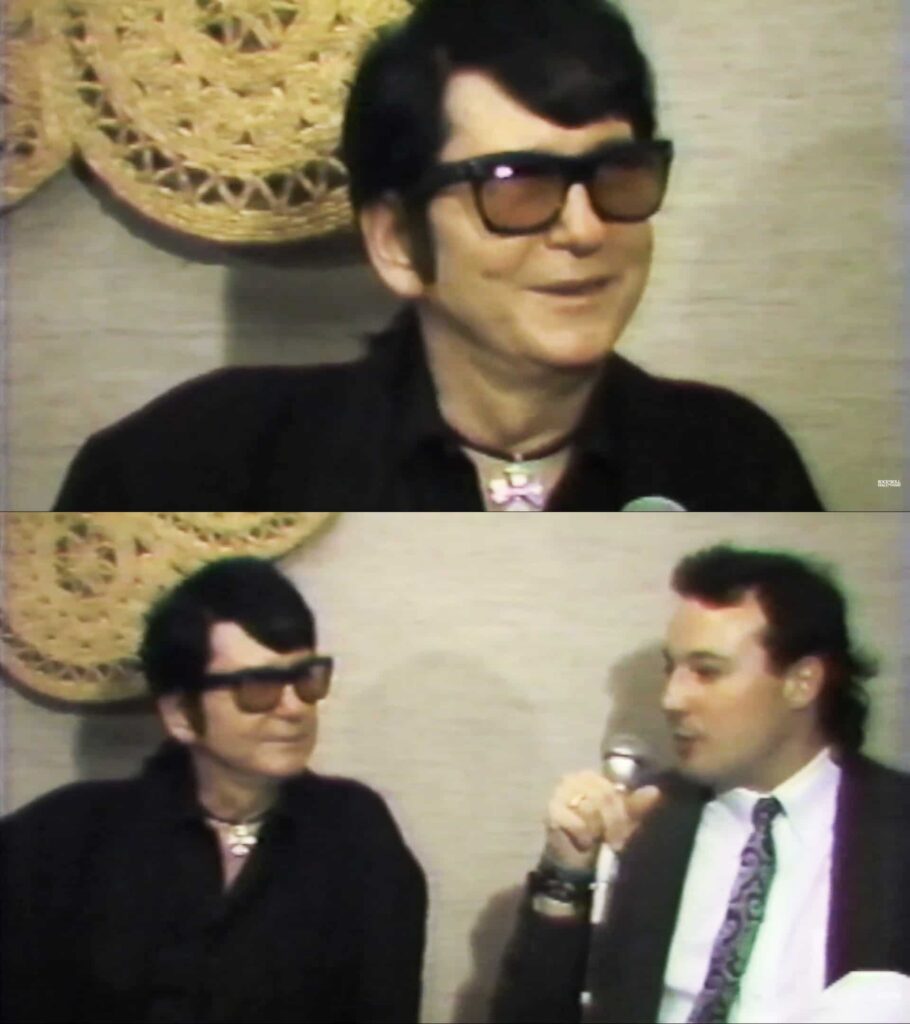
HE SMILED ABOUT THE FUTURE… JUST 48 HOURS BEFORE THE WORLD LOST HIM
On the night of December 4, 1988, Roy Orbison walked into the Front Row Theater in Highland Heights, Ohio, sounding less like a man nearing the end of his life and more like an artist beginning a remarkable new chapter. The interview, conducted by Tony Weber before Orbison’s final concert, would unknowingly become the last recorded conversation of one of popular music’s most haunting voices. Two days later, on December 6, the world woke to the devastating news that Orbison had died of a heart attack at only 52 years old.
What makes this interview so emotionally overwhelming today is not sadness in his voice. It is hope.
By late 1988, Roy Orbison was experiencing one of the most extraordinary comebacks in modern music history. After years of personal tragedy, industry neglect, and changing musical trends, he suddenly found himself embraced by a new generation. His work with The Traveling Wilburys alongside George Harrison, Bob Dylan, Tom Petty, and Jeff Lynne had reintroduced him to millions. At the same time, his upcoming solo album, Mystery Girl, promised to restore him fully to center stage.
And Orbison knew it.
During the interview, he spoke warmly about plans for a worldwide tour, a major U.S. run in the summer, new Wilburys projects, and even the possibility of a film based on his life, once discussed with Martin Sheen. There was genuine excitement in the way he described the future. “It’s all go, go, go,” he said with quiet enthusiasm. Listening now, those words land with heartbreaking force.
Yet perhaps the most revealing moment came when he discussed the songs on his upcoming album. Orbison proudly explained that audiences would not be able to tell which songs were old and which were new because they fit together naturally. That single observation says everything about why his comeback mattered so deeply.
Unlike many artists from the early rock era who struggled to adapt to changing times, Roy Orbison never sounded outdated. His voice existed outside of trends. It carried the same loneliness, vulnerability, and grandeur whether he was singing in 1961 or 1988. By the end of the 1980s, younger musicians no longer viewed him as a relic of the past. They saw him as timeless.
There is something deeply moving about watching Orbison in those final hours. He does not appear tired or reflective in the traditional sense of a farewell interview. He is energized. Focused. Curious about what comes next. The tragedy is not that he knew he was dying. The tragedy is that he clearly believed life was finally opening up for him again.
For older listeners especially, this interview carries an almost unbearable emotional weight because it reminds us how fragile momentum can be. One moment, a man is planning tours, films, and new music. The next, history freezes him in place forever.
And yet, there is comfort in it too.
Roy Orbison did not leave this world forgotten, bitter, or fading away quietly in nostalgia. He left while dreaming forward. He left believing his best days might still be ahead of him. That may be the most poignant legacy of all.
Today, when fans revisit this final interview, they are not simply hearing the last words of a music legend. They are witnessing a rare and deeply human moment: a man standing at the threshold of renewal, completely unaware that he is already saying goodbye.