
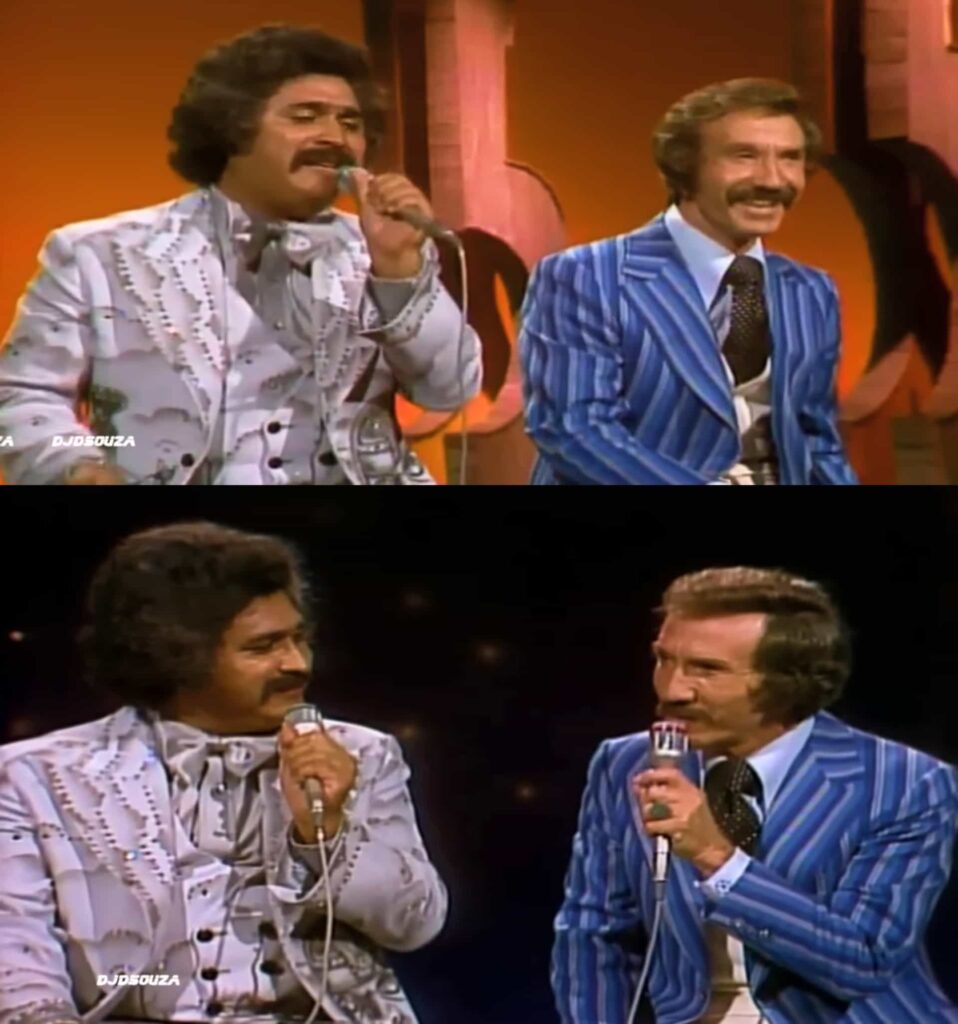
WHEN FREDDY FENDER STOOD BESIDE MARTY ROBBINS, COUNTRY MUSIC QUIETLY CHANGED FOR A MOMENT
The cameras rolling during The Marty Robbins Show captured something much deeper than a television duet. What unfolded between Freddy Fender and Marty Robbins was a rare meeting of musical identities, two voices from different roads discovering they belonged in the same song all along.
By the time Fender walked onto the stage, the audience already knew they were looking at an unusual star. Country music in the 1970s still carried strong regional boundaries, both musically and culturally. Yet Freddy Fender arrived carrying the sound of South Texas in his voice: part country, part rock and roll, part border-town blues, wrapped together with unmistakable Chicano soul.
The moment he joined Robbins under the studio lights, the atmosphere shifted.
Marty Robbins, always one of country music’s most elegant performers, stood with his usual calm confidence. His smooth Arizona-born voice had already become legendary through classics like “El Paso,” “Big Iron,” and “Devil Woman.” Robbins represented the polished craftsmanship of Nashville storytelling. Fender, meanwhile, sounded rougher around the edges in the most beautiful way possible. His voice carried heartbreak, struggle, and late-night loneliness straight from the Rio Grande Valley.
On paper, the pairing might have seemed unlikely.
On stage, it felt completely natural.
As the two men began harmonizing together, something remarkable happened: the differences between them disappeared. Robbins did not overpower Fender with polish, and Fender did not try to imitate Nashville refinement. Instead, both artists leaned into their own identities, allowing the contrast itself to become the magic.
Watching the performance today, one detail stands out repeatedly: the expression on Marty Robbins’ face.
Again and again, Robbins glances toward Fender with visible admiration, almost smiling in disbelief at the emotional texture coming from that voice. Freddy Fender possessed one of the most recognizable vibratos in American music. It trembled slightly at the edges, carrying both vulnerability and strength at once. There was pain in it, but also warmth. Listeners trusted him instantly because nothing sounded artificial.
That authenticity deeply resonated with Robbins.
The duet also symbolized something larger happening inside country music during that era. Freddy Fender’s success challenged long-standing assumptions about who belonged within mainstream country audiences. Born Baldemar Huerta in Texas, Fender had spent years struggling through poverty, prejudice, addiction, and career setbacks before finally breaking through nationally with “Before the Next Teardrop Falls” in 1975.
His rise mattered because he brought bilingual emotion and Mexican-American identity into spaces where they had rarely been fully embraced.
Yet Fender never approached music politically. He approached it emotionally.
That emotional honesty allowed audiences across backgrounds to connect with him immediately. Whether singing in English or Spanish, Fender communicated longing in a way that transcended language itself. During his appearance with Marty Robbins, that quality became impossible to ignore.
The performance carried an almost dusty elegance to it. There were no flashy production tricks, no oversized stage effects, no modern distractions. Just two men standing close together beneath warm television lights, allowing melody and chemistry to do all the work.
And that simplicity gave the moment its lasting power.
Robbins himself understood musical fusion better than many artists of his generation. Long before “genre blending” became fashionable terminology, he had already woven western ballads, Mexican influences, Hawaiian sounds, and pop structures into his own music. Perhaps that is why he seemed so genuinely comfortable beside Fender. He recognized authenticity when he heard it.
The audience sensed it too.
As the performance unfolded, the studio no longer felt divided between Nashville tradition and South Texas soul. The barriers quietly dissolved. What remained was pure communication through song, the kind that reaches people before they even have time to analyze why it moves them.
Looking back now, the duet feels even more meaningful because both men represented fading forms of artistry. They came from an era when singers built careers through emotional truth rather than image management. Neither man relied on spectacle. They relied on voice, phrasing, and human connection.
That humanity radiates through every second of the performance.
Today, the meeting between Freddy Fender and Marty Robbins stands as more than vintage television nostalgia. It remains a reminder of country music at its best: open-hearted, deeply rooted, and capable of bringing entirely different worlds together through a single harmony.
For a few unforgettable minutes on The Marty Robbins Show, the Rio Grande met the Grand Ole Opry, and both sounded richer because of it.
 Oldies Songs