
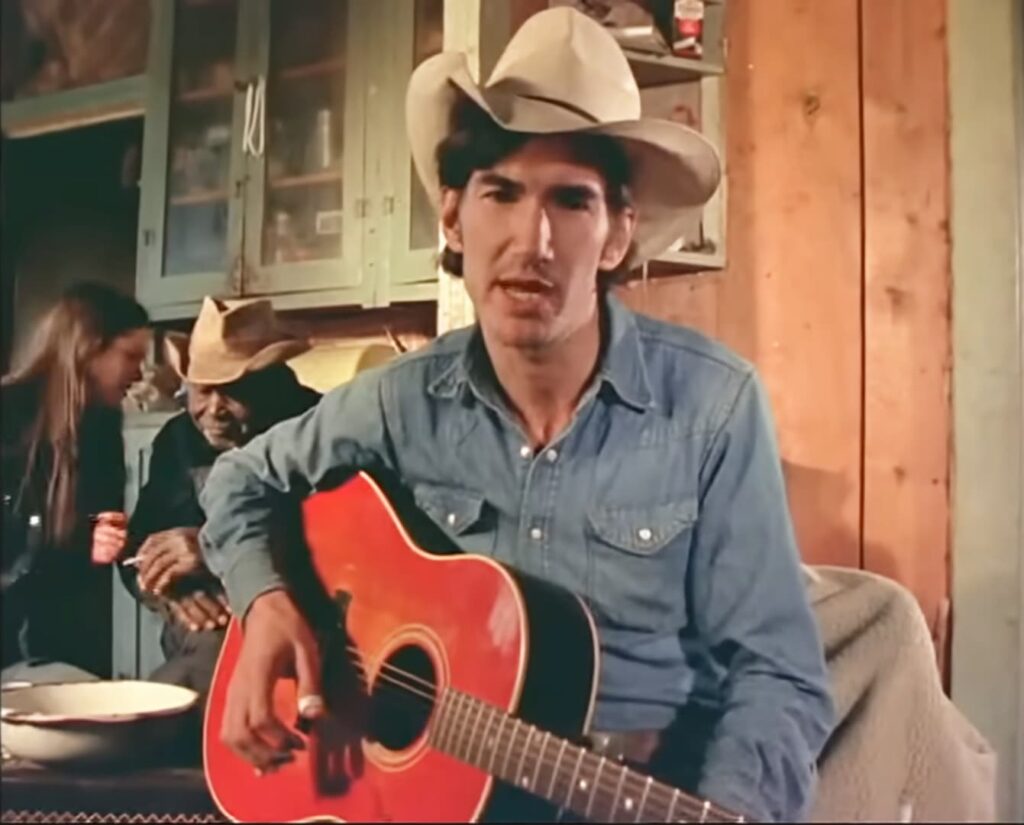
In Heartworn Highways, Townes Van Zandt Sat in a Small Room and Turned “Pancho and Lefty” Into American Folk Legend
There are performances that feel polished and historic, and then there are performances that feel almost accidental, as though the cameras simply happened to capture truth before it disappeared. Townes Van Zandt’s haunting rendition of “Pancho and Lefty” in the documentary Heartworn Highways belongs entirely to the second category.
Filmed inside the worn, intimate atmosphere of Uncle Seymour’s place during the mid-1970s, the performance remains one of the purest glimpses ever recorded of Townes Van Zandt at work. No stage lights. No grand theater. No distance between the songwriter and the people listening. Just Townes, a guitar, a room full of cigarette smoke and silence, and a song that would eventually become one of the greatest outlaw ballads in country music history.
Before beginning, Townes casually joked, “I wrote this about two Mexican bandits that I saw on TV two weeks after I wrote the song.” The line drew laughter, but it also revealed something essential about him. He often treated his own genius with strange indifference, almost embarrassed by the depth of what he had created.
Then he started singing.
From the opening line, “Living on the road, my friend,” the room seemed to sink into the song completely. Townes sang softly, almost conversationally, yet every word carried enormous emotional gravity. His voice sounded weathered, vulnerable, and detached all at once, like someone observing human loneliness from a distance he understood too well.
That emotional ambiguity became the soul of “Pancho and Lefty.”
On the surface, the song tells the story of two outlaws drifting through betrayal, violence, escape, and regret along the Mexican borderlands. But beneath the narrative lived something much deeper: a meditation on friendship, guilt, survival, aging, and the quiet compromises people make simply to keep living.
Townes never explained the song fully because songs like this resist explanation.
What made the Heartworn Highways version especially unforgettable was the environment surrounding it. The film itself captured a generation of Texas songwriters living outside the commercial machinery of Nashville, creating deeply personal music in kitchens, motel rooms, back porches, and ramshackle gatherings. Nothing about it felt manufactured. These were artists writing because they had to.
And among them, Townes Van Zandt often seemed like the most mysterious figure of all.
As he moved through verses about Poncho dying in Mexico and Lefty growing old in cheap hotels, the room listened with complete stillness. The performance did not feel like entertainment. It felt like storytelling passed hand to hand between people who understood hardship intimately.
By the final verses, when Townes sang, “Save a few for Lefty too, he only did what he had to do,” the song no longer sounded like a western ballad. It sounded like a quiet defense of flawed human beings everywhere.
That humanity is why the song survived across generations.
Years later, Willie Nelson and Merle Haggard would turn “Pancho and Lefty” into a massive commercial hit, introducing the song to millions of listeners. But many still return to the Heartworn Highways version because it preserves the fragile emotional atmosphere from which the song originally emerged.
Watching it now feels almost ghostlike.
Townes sits there with little concern for performance polish or celebrity image. He appears tired, funny, brilliant, wounded, and strangely detached from his own importance. Yet somehow, out of that small room and modest setting came a song that would outlive nearly everyone present.