
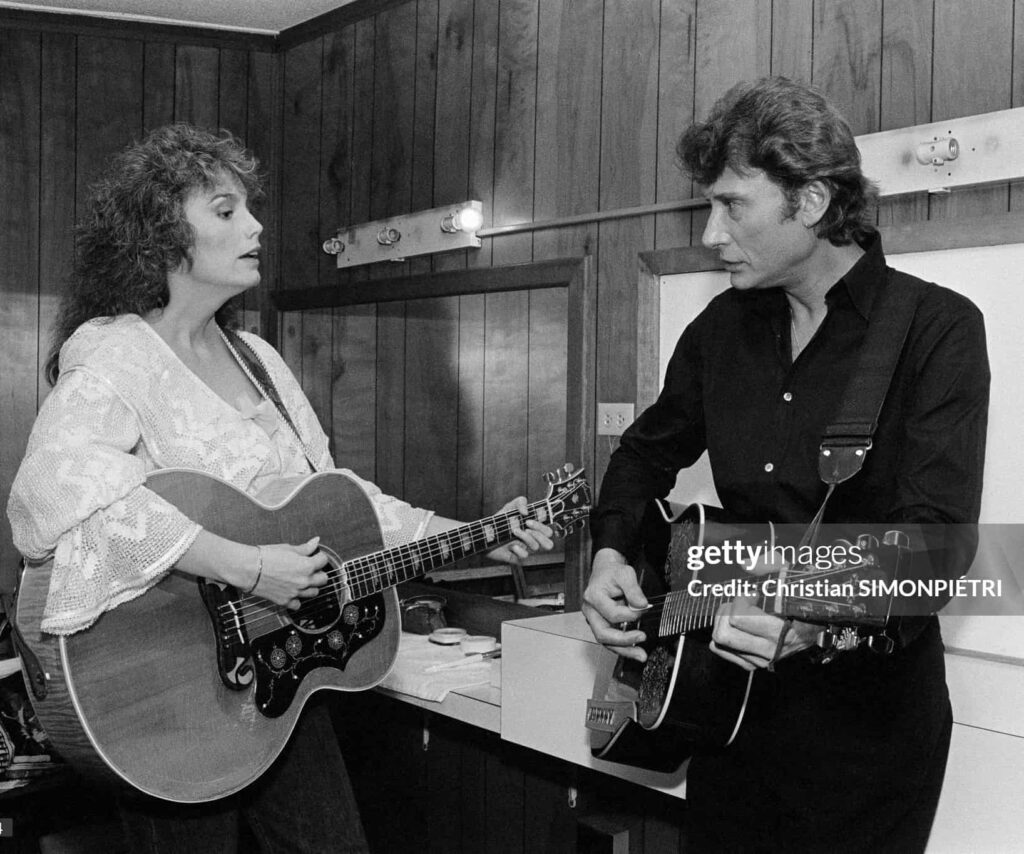
In 1984, Emmylou Harris Sang “To Daddy” for Johnny Hallyday and Turned a Country Song Into Quiet Heartbreak
When Emmylou Harris performed “To Daddy” for French rock icon Johnny Hallyday in Nashville in 1984, the moment carried a rare emotional intimacy that crossed both language and cultural boundaries. There were no dramatic stage tricks, no elaborate production, and no attempt to overpower the audience with spectacle. Instead, there was simply Emmylou’s voice, gentle and aching, telling one of the saddest family stories ever written in country music.
And for a few minutes, the room seemed completely still.
Originally written by the legendary Dolly Parton, “To Daddy” became one of Emmylou Harris’ defining recordings after she released it in 1978 on her acclaimed album Quarter Moon in a Ten Cent Town. The song reached the top of the country charts, but its emotional power went far beyond commercial success. Beneath the calm melody lived a devastating portrait of sacrifice, loneliness, and emotional silence inside marriage.
In the 1984 Nashville performance, those themes felt even more haunting.
Emmylou sang the opening verses softly, almost conversationally, allowing the story to unfold naturally. A mother spends years quietly caring for her family, accepting neglect, loneliness, and emotional distance without complaint. Again and again comes the heartbreaking refrain: “If she did, she never did say so to Daddy.”
That line alone carried the weight of an entire generation.
For many listeners, especially those raised in quieter times when emotions often remained unspoken, the song touched something painfully familiar. Women endured loneliness silently. Men buried tenderness beneath work and routine. Families carried emotional wounds nobody openly discussed.
Emmylou Harris understood exactly how to deliver that truth.
Unlike singers who approached dramatic songs with theatrical intensity, Emmylou specialized in emotional restraint. Her voice floated through the lyrics with extraordinary tenderness, making the pain inside the song feel deeply personal rather than exaggerated. Every word sounded compassionate, never judgmental.
That quality made the song even more devastating when the story reached its turning point.
After years of quiet endurance, the mother leaves. Not in anger, but in sadness. She writes a note explaining that the children are grown now and she must finally search for the love and emotional fulfillment she never allowed herself to seek before.
“She never meant to come back home.”
By the time Emmylou sang those words in Nashville, the atmosphere had completely changed. The audience was no longer simply listening to a country song. They were witnessing a portrait of emotional survival.
The setting itself added another fascinating layer to the performance. Here was Johnny Hallyday, France’s greatest rock star, visiting the heart of American country music while Emmylou Harris delivered one of the genre’s most emotionally sophisticated story songs. It became a beautiful cultural meeting point between Nashville storytelling and European admiration for authentic American roots music.
Looking back now, the performance feels especially timeless because it captured everything that made Emmylou Harris extraordinary as an interpreter of songs. She never forced emotion. She trusted stillness, nuance, and empathy. That quiet sincerity allowed listeners to place their own memories inside the music.
And perhaps that is why “To Daddy” still resonates so deeply decades later.
It is not merely a song about one unhappy marriage. It is about all the words people never said, all the loneliness hidden behind ordinary family life, and the painful courage sometimes required to finally walk away in search of something more.
In Nashville in 1984, Emmylou Harris sang that truth with heartbreaking grace.