
Down on the Rio Grande and the Borderline Soul of Johnny Rodriguez
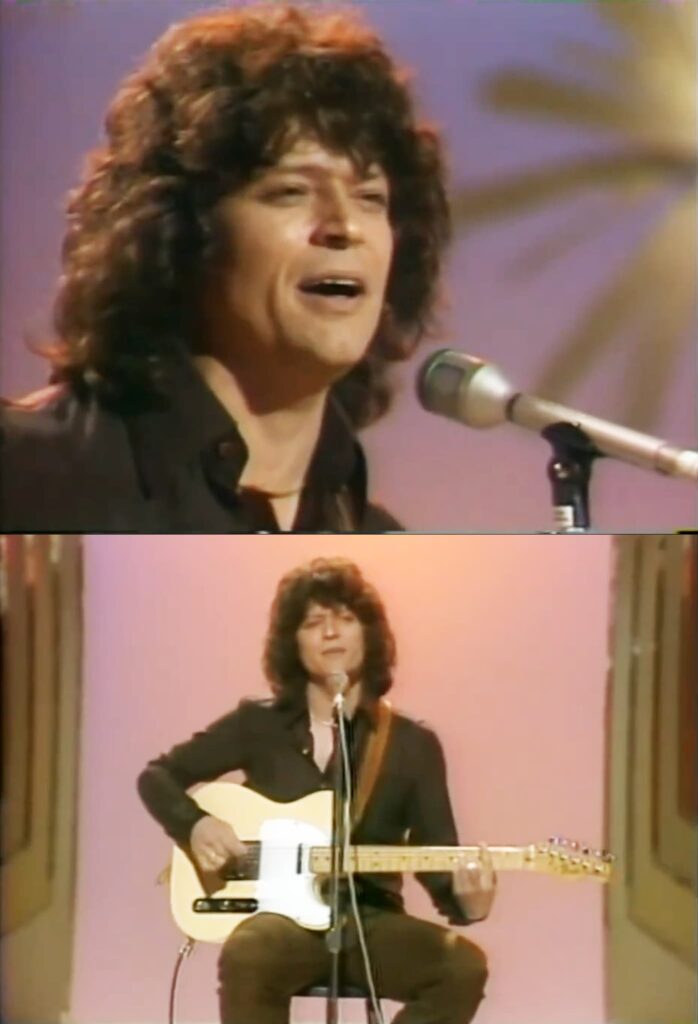
In 1979, when Johnny Rodriguez stepped onto the stage of Pop! Goes the Country to perform Down on the Rio Grande, country television still felt intimate enough for a singer to carry an entire world inside a single voice. There were no giant screens, no explosive stage effects, no polished arena spectacle. Just a band, a melody, and a young Texas-born singer standing beneath soft studio lights sounding like he had brought the dust of the borderlands with him.
What makes the performance so powerful today is that Johnny Rodriguez never sounded like a man pretending to be from the Rio Grande. He sounded like someone who had never emotionally left it.
By 1979, Rodriguez had already become one of the most groundbreaking figures in mainstream country music. Long before Nashville truly opened its doors to Latino artists, Johnny was quietly rewriting what a country star could look and sound like. His South Texas accent remained unmistakably Mexican-American. He occasionally slipped Spanish phrases into his recordings. And unlike later industry attempts to blend Latin flavor into country music, Johnny never sounded manufactured. The Tex-Mex atmosphere lived naturally inside his phrasing, his timing, and the loneliness in his voice.
That authenticity is what gives “Down on the Rio Grande” its emotional gravity.
The Rio Grande in country music has always represented more than geography. It carries images of drifting highways, desert bars, border towns, fading sunsets, and homesickness wrapped inside cowboy mythology. But when Johnny sang about it, the song stopped feeling symbolic. It became personal memory.
There is also something deeply fascinating about Rodriguez during this period. He was still young, charismatic, and enormously popular, yet there was already a quiet exhaustion in his eyes that connected him more to the outlaw movement than to polished Nashville show business. Even in upbeat songs, Johnny often carried an undercurrent of sadness that older listeners immediately recognize. It was the same weary emotional texture found in artists like Waylon Jennings, Willie Nelson, and Merle Haggard.
But Johnny’s loneliness felt different.
It was not Appalachian heartbreak or honky-tonk despair. His music carried the feeling of long Texas highways, warm border winds, neon beer signs glowing outside dance halls, and men driving through the night wondering if they still belonged anywhere at all.
That is why this television appearance feels so nostalgic now.
Programs like “Pop! Goes the Country” accidentally preserved an entire version of country music that has largely disappeared. The relaxed staging, the straightforward musicianship, the absence of heavy production, and the easy Texas dancehall groove all remind viewers of a time when country television still trusted songs and personalities more than spectacle.
Watching Johnny Rodriguez here feels less like watching a television performance and more like discovering an old postcard from another America.
And perhaps the most remarkable thing of all is this:
more than four decades later, “Down on the Rio Grande” still does not sound like nostalgia. It sounds like a man carrying his homeland quietly inside his voice wherever he goes.