
“Ride Me Down Easy” Was More Than an Outlaw Song. In 1989, Billy Joe Shaver Sang It Like a Man Finally Making Peace With the Road Behind Him
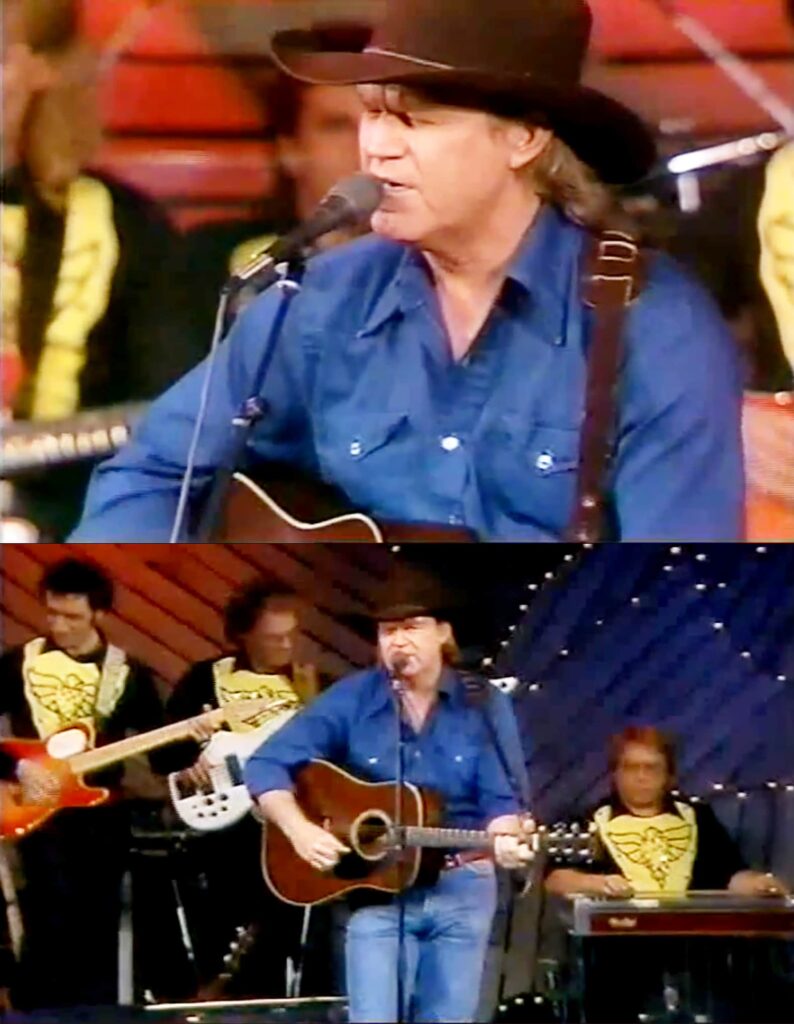
In a quiet television studio on No. 1 West around 1989, Billy Joe Shaver stood beneath the lights with no grand theatrics, no polished Nashville glamour, and no need to prove anything anymore. All he carried was a weathered voice, a lifetime of hard miles, and one of the most deeply human songs outlaw country music ever produced: “Ride Me Down Easy.”
Backed by Brian Sklar and the Prairie Fire band, the performance unfolded with remarkable tenderness. The Prairie Fire lineup featuring Rob Anderson on steel guitar, Brian Pederson on bass, Rod Janzen on guitar, and Quincy Bosovitch on drums created a slow rolling honky tonk atmosphere that felt less like television entertainment and more like an old memory drifting across a lonely highway at midnight. Guest musicians Freddie Pelletier, Gil Campbell, Dave Glowosky, Donnie Parenteau, and the harmony trio Maple Sugar added warmth without ever overshadowing Shaver’s rugged presence.
By the late 1980s, Shaver had already become one of the defining architects of outlaw country. Long before the genre became fashionable, he had written songs filled with rough truths, broken men, spiritual longing, and hard earned wisdom. His compositions for Waylon Jennings on the landmark album Honky Tonk Heroes helped reshape country music in the 1970s. Yet despite his legendary songwriting reputation, Shaver always carried himself like a drifter who never quite belonged to the machinery of fame.
That honesty is exactly what made this performance unforgettable.
When he opened with the line, “This old highway’s hotter than nine kinds of hell,” it did not sound rehearsed. It sounded lived in. Every lyric carried the dust of old bars, empty motel rooms, and friendships left somewhere beyond the next county line. Shaver never over sang. He simply told the truth in rhythm, allowing the song’s poetry to breathe naturally.
The beauty of “Ride Me Down Easy” lies in its contradictions. It is both weary and peaceful. Broken yet strangely comforting. Shaver sings about mistakes, wandering, and spiritual exhaustion, but there is no bitterness in his delivery. Only acceptance. When he reaches the aching chorus, pleading, “Won’t you ride me down easy, Lord,” the song rises far beyond traditional country imagery. It becomes a deeply personal prayer from a man who had spent much of his life outrunning pain, loneliness, and himself.
What makes this 1989 performance especially moving is its simplicity. The camera stays close. The musicians listen carefully to one another. The steel guitar cries softly around Shaver’s voice like a fading desert wind. Nothing feels forced. In an era increasingly dominated by slick production and commercial polish, this moment preserved the older soul of country music, where songs were allowed to sound fragile and real.
For many listeners, performances like this now feel like letters from another America. A quieter world of late night television, smoke filled dance halls, scratched vinyl records, and songwriters who valued honesty more than perfection. Watching Billy Joe Shaver sing “Ride Me Down Easy” today is not simply nostalgia. It is a reminder of what country music once understood so well: that the strongest voices are often the ones carrying the deepest scars.
And in those final moments, as the applause faded and Shaver stood calmly beneath the studio lights, he did not look like a celebrity. He looked like an old traveler still walking forward, hoping the next road might finally lead home.