
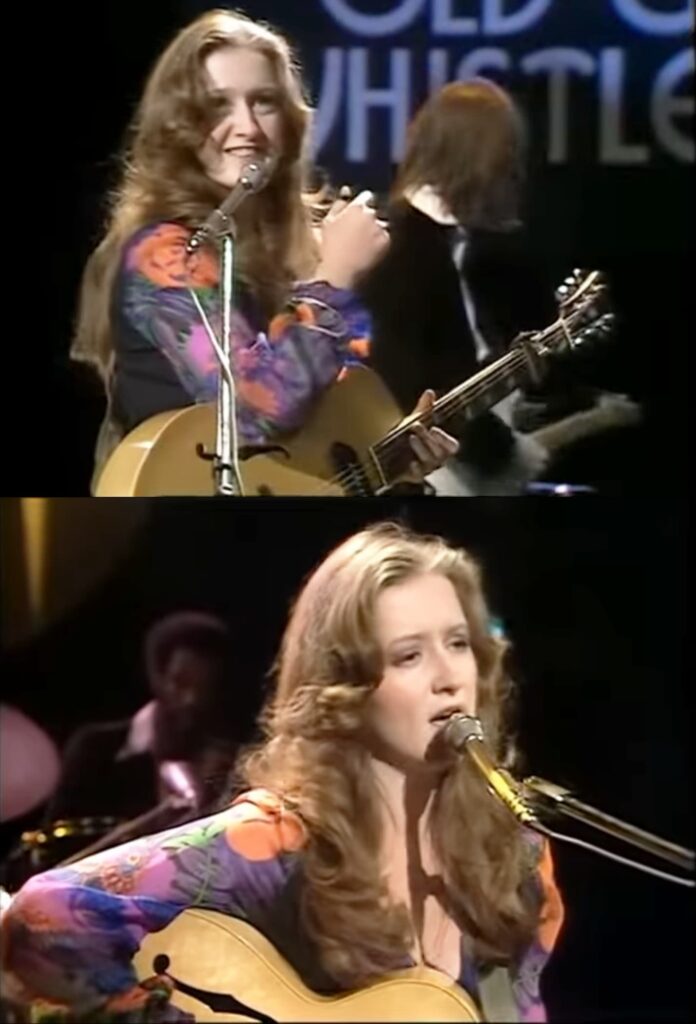
A Young Bonnie Raitt Sang of Lost Dreams in 1976. Nearly Fifty Years Later, the Performance Feels Even More Powerful.
In 1976, Bonnie Raitt walked onto the stage of the legendary British music program The Old Grey Whistle Test and delivered a performance that few could have realized would grow more important with every passing decade.
At the time, she was simply a rising American singer-songwriter making an appearance before a television audience thousands of miles from home. Today, the footage feels like a remarkable time capsule, capturing one of the most gifted interpreters in modern music long before the wider world fully understood how extraordinary she truly was.
The song was “Angel From Montgomery,” written by acclaimed songwriter John Prine. Although Prine created the masterpiece, generations of listeners have come to associate the song just as strongly with Bonnie Raitt. It remains one of the rare cases where a performer becomes so deeply connected to a composition that audiences continue debating who truly owns it.
The question has lingered for decades.
Is “Angel From Montgomery” ultimately a John Prine song, or has Bonnie Raitt’s interpretation become equally definitive?
What makes this 1976 performance so fascinating is the contrast between the singer and the character she portrays. Raitt was only twenty-six years old when she stepped before the cameras. Yet the woman at the center of the song is someone entirely different.
She is older.
She is weary.
She is trapped in a life that no longer resembles the dreams she once carried.
When Bonnie sings the unforgettable line, “Make me an angel that flies from Montgomery,” there is nothing forced or theatrical about it. She does not perform the character. She becomes her.
That transformation remains one of the great mysteries of the performance.
How could someone so young understand such profound disappointment, longing, and resignation?
The answer may lie in Bonnie’s rare gift as a storyteller. Great singers deliver melodies. Great interpreters inhabit lives that are not their own.
The setting could not have been more appropriate. The Old Grey Whistle Test had earned a reputation for spotlighting substance over spectacle. Unlike many television programs chasing chart success and commercial trends, it welcomed artists whose strength came from songwriting, musicianship, and emotional authenticity.
Bonnie fit that tradition perfectly.
Watching the performance today is also a reminder of where she stood in her career. This was more than a decade before “Nick of Time” transformed her into a Grammy-winning superstar and one of the most celebrated artists in American music. She had not yet experienced the remarkable commercial resurgence that would redefine her career.
Instead, viewers see Bonnie during a period when many critics regarded her as one of America’s best-kept musical secrets.
Another reason the performance continues to resonate is the way she approaches the song’s sadness. Many singers interpret “Angel From Montgomery” as a cry of heartbreak. Bonnie chooses something more subtle and perhaps more devastating.
She sings with exhaustion.
Not the pain of a fresh wound, but the quiet ache that remains after years of carrying disappointment.
It is a distinction that gives the song its enduring emotional power.
Although the narrator is a woman reflecting on marriage and lost possibilities, the themes extend far beyond gender. Dreams deferred, opportunities missed, and the feeling that life has moved faster than expected are experiences that cross every boundary.
That universality helps explain why the song often feels more meaningful as listeners grow older.
The performance carries even greater emotional weight today following John Prine’s passing in 2020. Looking back, this broadcast stands as both a celebration of Prine’s songwriting genius and a testament to Bonnie Raitt’s extraordinary ability to bring another writer’s words to life.
Nearly half a century later, the most remarkable thing about this performance is not a vocal flourish or a technical achievement.
It is the illusion that a young woman somehow understood an entire lifetime of hopes, regrets, and quiet reflections.
For a few unforgettable minutes, audiences no longer see a twenty-six-year-old singer standing beneath studio lights.
They see the woman in the song.
And that is why this performance still stops people in their tracks nearly fifty years later.