
A young songwriter gave voice to a middle-aged woman’s regrets, and in doing so created one of America’s most enduring songs
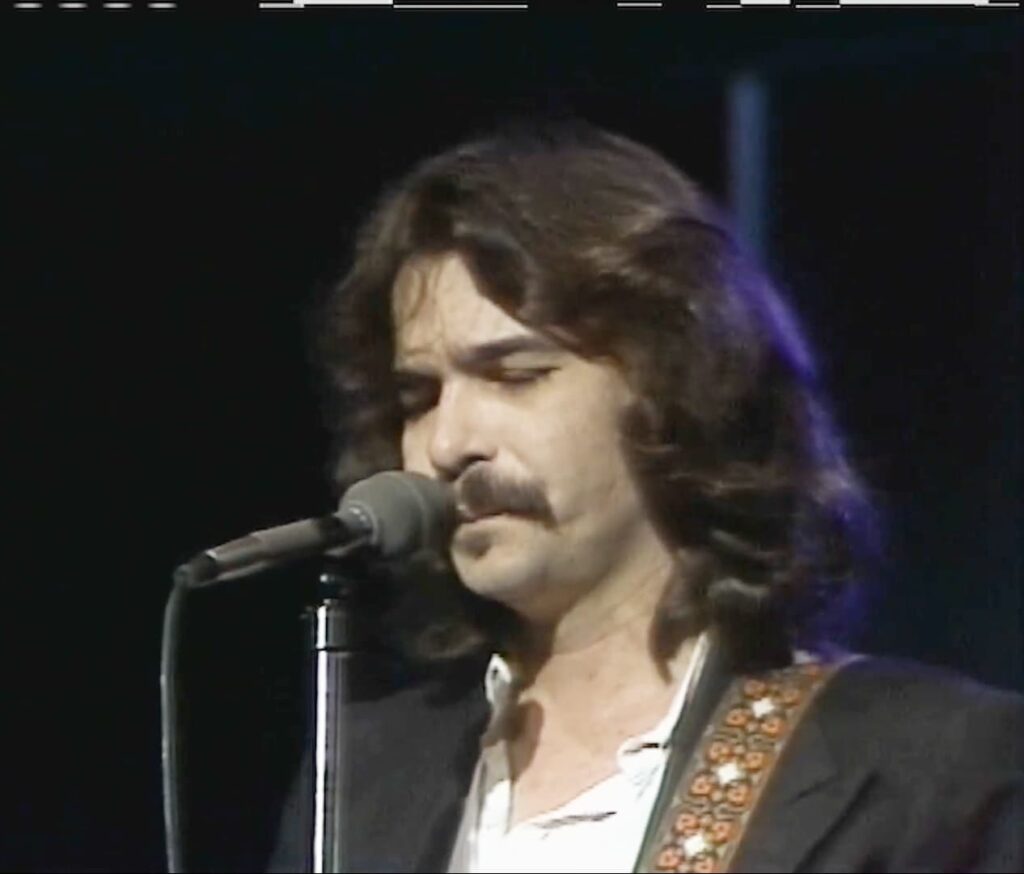
On January 6, 1980, inside the modest surroundings of WTTW Studios in Chicago, John Prine sat with a guitar and performed “Angel from Montgomery.” At the time, it was simply another television appearance by a respected songwriter. Looking back today, it feels like something far greater. It feels like a rare piece of American music history captured before anyone fully understood its significance.
What makes this performance so remarkable is not the setting, the production, or even the performance itself. It is the astonishing contradiction at the heart of the song. Here was a 33-year-old man singing from the perspective of a middle-aged woman trapped in a life that no longer resembled the dreams she once carried. Decades later, listeners still marvel at the same question: how could John Prine understand that feeling so completely?
Many first-time listeners assume “Angel from Montgomery” must have been written by a woman. The emotions feel too intimate, too authentic, too lived-in to be imagined. Yet the song emerged from the mind of a former mailman from Illinois whose greatest gift was seeing the humanity hidden inside ordinary lives. Prine never needed grand heroes or dramatic stories. He found poetry in overlooked people, unfinished dreams, and quiet disappointments.
The origin of the song has become part of songwriting folklore. Prine often recalled seeing the words “Montgomery Ward” in a magazine advertisement. Something about the name Montgomery sparked his imagination. From that ordinary moment came an entirely new character, a woman whose voice would eventually become one of the most beloved in American songwriting. It remains one of the finest examples of how great artists can transform the simplest inspiration into something timeless.
The 1980 performance is especially fascinating because it captures Prine before history elevated him to legendary status. There were no lifetime achievement awards attached to his name. No widespread recognition as one of the founding giants of Americana music. No retrospective documentaries celebrating his influence. He was simply John Prine, a songwriter with a guitar, relying entirely on the strength of his words.
That simplicity is exactly why the performance continues to resonate. There are no elaborate stage effects. No arena-sized production. No distractions competing for attention. The camera focuses on the song, and the song does the rest. Every line reveals another layer of the character’s quiet resignation. This is not a tale of betrayal or dramatic heartbreak. The woman in the song has not suffered a great catastrophe. Her pain comes from something more familiar and perhaps more unsettling. She wakes up and realizes she has drifted away from the person she once hoped to become.
That theme has allowed “Angel from Montgomery” to survive across generations. Nearly everyone eventually encounters moments of reflection, moments when the distance between youthful dreams and present reality becomes impossible to ignore. Prine understood that feeling long before most songwriters dared to write about it with such honesty.
There is also a deeper emotional weight when watching this performance after 2020. Today, audiences know what nobody in that Chicago studio could have known. They know that John Prine would become one of the most respected songwriters in American history. They know that “Angel from Montgomery” would be recorded and celebrated by countless artists, including Bonnie Raitt, whose interpretation introduced the song to millions of listeners. They know that the song would remain inseparable from Prine’s legacy for the rest of his life.
The Chicago setting adds another layer of nostalgia. This was the city where Prine’s artistic journey truly began. It was here that he worked as a mailman, performed in small clubs, and attracted attention through a famous article written by film critic Roger Ebert. In many ways, this performance feels like a homecoming. A son of Chicago returning to the city that first believed in him.
More than forty years later, the power of this video remains unchanged. It is not remembered because of vocal acrobatics or instrumental brilliance. It endures because it captures a beautiful paradox. A young man sits alone in a Chicago studio, singing through the voice of a woman who fears life has slipped away too quickly.
With time, the song’s meaning only grows larger. It is no longer just about a woman in Montgomery. It is about anyone who has looked back across the years and quietly wondered whether they became the person they once imagined. That question lingers long after the final note fades, which is why this performance remains one of the most treasured documents of John Prine’s career.