
A Young Dwight Yoakam Celebrated His First No. 1 Hit and Thanked the Hero Who Helped Bring Bakersfield Back to Life
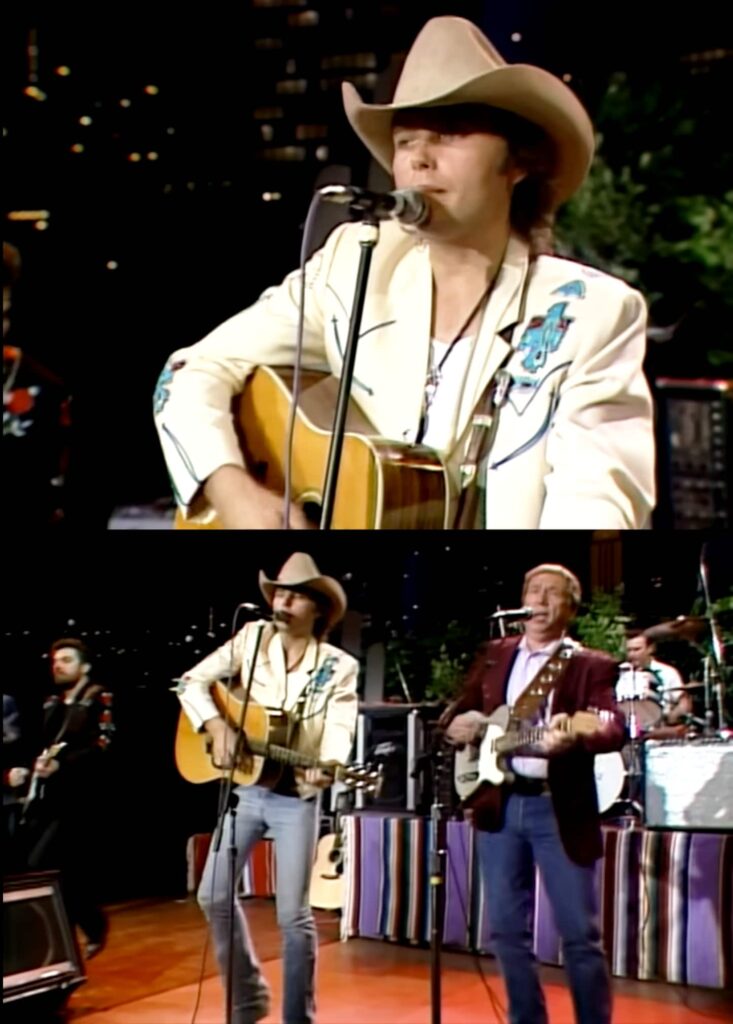
When Dwight Yoakam stepped onto the stage in Austin and introduced “Streets of Bakersfield” as “my first number one single,” he was doing more than announcing a song. He was marking a turning point in country music history. What audiences witnessed that night was not simply a performance of a hit record. It was the story of a dream fulfilled, a musical debt repaid, and a forgotten sound finding its way back into the spotlight.
One of the most surprising facts about “Streets of Bakersfield” is that it was not originally a Dwight Yoakam song. The song was written by Homer Joy in the early 1970s and later recorded by Buck Owens, one of the founding figures of the famous Bakersfield Sound. Despite its powerful lyrics and memorable melody, the song never became a major hit during its original run.
For nearly two decades, it remained largely overlooked.
Then along came Dwight Yoakam.
At a time when Nashville was increasingly embracing polished country-pop productions, Yoakam was traveling a very different road. He was devoted to traditional honky-tonk music, Telecaster guitars, and the raw California country style pioneered by Buck Owens and other Bakersfield legends. Many industry executives doubted there was still an audience for that sound. Yoakam refused to believe it.
His persistence paid off.
When he finally recorded “Streets of Bakersfield” as a duet with Buck Owens, the result was remarkable. The song became Dwight’s first No. 1 country hit. At the same time, it returned Buck Owens to the top of the charts after years away from mainstream success. Few moments in country music history have so beautifully united two generations of artists.
That history gives this Austin performance an emotional weight that extends far beyond the music itself.
Listening to Yoakam sing the opening lines about a man searching for opportunity and acceptance, it is easy to hear why the song has endured. The narrator does not ask for wealth, privilege, or fame. He asks for something much simpler.
A chance to be himself.
The famous lyric, “You don’t know me but you don’t like me,” remains one of the most powerful statements in country music. Decades after it was written, the line still resonates with anyone who has felt judged before being understood, dismissed before being heard, or treated as an outsider while simply trying to build a better life.
That timeless message is one reason the song never feels tied to a particular era.
But perhaps the most revealing moment comes after the music ends.
Many viewers focus on the performance itself and miss what happens next. As the applause fades, Yoakam begins speaking about Buck Owens. He calls him a great friend and expresses heartfelt gratitude for the inspiration he provided, not only to him but to countless musicians.
The sincerity in those remarks is impossible to miss.
This was not a carefully crafted publicity statement. It was genuine admiration from a younger artist standing at the beginning of his greatest success and openly thanking the man who helped shape his musical identity.
Today, those words carry even greater meaning. With Buck Owens having passed away in 2006, the footage captures a moment that cannot be recreated. It preserves a living connection between mentor and admirer, between the architect of the Bakersfield Sound and one of its most passionate champions.
Looking back, the performance also serves as a snapshot of Dwight Yoakam at a remarkable stage of his career. He was still young. The excitement of his breakthrough years was still fresh. The success of “Streets of Bakersfield” was not yet history. It was happening in real time.
Modern audiences know how the story ends. Dwight Yoakam became one of country music’s most influential artists. Buck Owens enjoyed a late-career revival. The Bakersfield Sound found a new generation of listeners.
But on this stage, none of that was guaranteed.
What makes this performance unforgettable is not merely that it showcases a future legend singing a No. 1 hit. It captures a rare moment when success, gratitude, loyalty, and musical heritage all met in the same song. For a few minutes, audiences were not simply hearing “Streets of Bakersfield.” They were witnessing one generation thank another for keeping the music alive.