
Some Songs Age With Time. “A Thousand Miles From Nowhere” Seems to Travel Through Time Untouched.
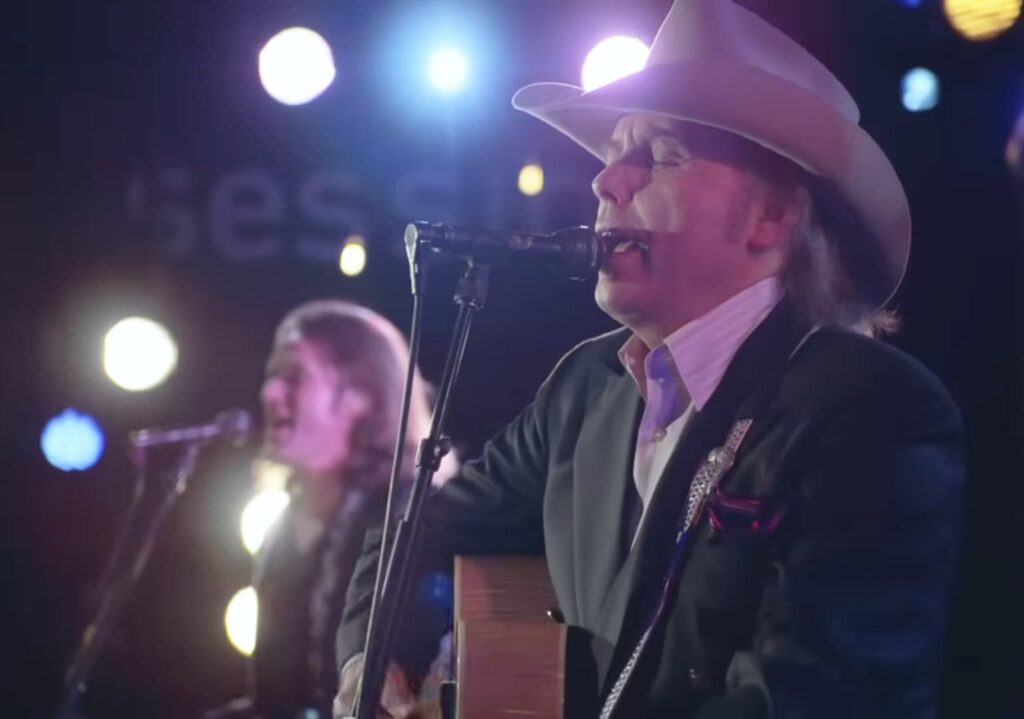
When Dwight Yoakam performed “A Thousand Miles From Nowhere” during Guitar Center Sessions, the years between the song’s original release and that moment seemed to disappear. The voice was older. The face carried the marks of experience. Yet the emotion at the heart of the song remained remarkably unchanged.
That is one of the great mysteries of enduring music.
Released in 1993 on Yoakam’s acclaimed album This Time, “A Thousand Miles From Nowhere” quickly became one of the defining songs of his career. More than three decades later, it remains one of the most recognizable expressions of heartbreak in modern country music. Not because it tells a complicated story, but because it captures a feeling almost everyone eventually understands: the strange loneliness that follows when life no longer resembles what we imagined it would be.
Watching this performance, it becomes clear why the song has survived while countless other hits from the same era have faded into memory.
At its core, “A Thousand Miles From Nowhere” is not really about distance. The narrator is not lost on a highway or wandering through an unfamiliar town. The distance is emotional. He is separated from someone he loves, disconnected from certainty, and drifting through a landscape where time itself seems to have lost meaning.
The opening line remains one of the most instantly recognizable in country music:
“I’m a thousand miles from nowhere.”
It is a simple statement, yet it carries enormous weight. Everyone has experienced moments when they felt disconnected from their destination, uncertain of where they belong, or unable to see a clear path forward. That universality is what keeps the song alive.
One of the most celebrated lyrics arrives later in the song:
“I’ve got bruises on my memory.”
It is a line that many songwriters wish they had written. Rather than describing heartbreak through tears or dramatic sorrow, Yoakam imagines memory itself carrying scars. The image is vivid, original, and painfully relatable. Long after specific details of a lost relationship fade, the emotional marks often remain.
What makes the Guitar Center Sessions performance especially compelling is the way time has changed the song without changing its meaning.
When Yoakam first recorded it in the early 1990s, he was singing from the perspective of a younger man navigating heartbreak in the present. Decades later, he performs it with the perspective of someone who has lived through many more years of triumph, disappointment, change, and reflection. The loneliness is still there, but it feels deeper, more lived-in.
That evolution mirrors the experience of many listeners.
Fans who first heard the song on country radio in 1993 are no longer the same people they were then. They have accumulated their own memories, regrets, losses, and victories. When they hear Yoakam sing those familiar lines today, they are not simply revisiting a favorite song. They are revisiting pieces of their own lives.
The performance also highlights what has always distinguished Dwight Yoakam from many of his contemporaries. While country music trends have shifted repeatedly over the decades, Yoakam has remained remarkably committed to his artistic identity. His connection to the Bakersfield Sound, his distinctive phrasing, and his gift for blending traditional country with modern energy have given his music a timeless quality.
Perhaps that is why “A Thousand Miles From Nowhere” continues to resonate so strongly.
The world has changed since 1993. The music industry has changed. Country music itself has changed. Yet every time Dwight Yoakam sings that opening line, the feeling at the center of the song remains exactly as it was.
Years pass. Voices change. Audiences change.
But the loneliness inside “A Thousand Miles From Nowhere” still sounds as honest as the day it was first recorded.
And that may be the clearest sign that a song has become a classic.
 Oldies Songs