
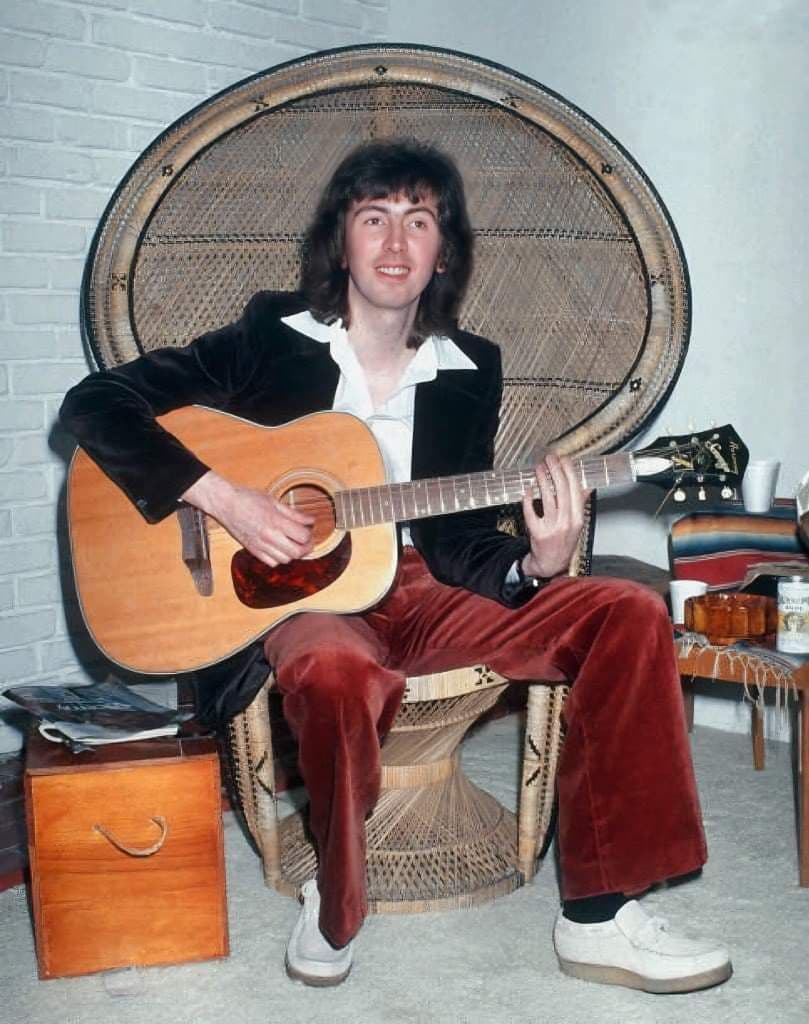
A wistful journey into longing and fate: the poetic dream of “Year of the Cat”
When Al Stewart released “Year of the Cat” in 1976, it became more than just a soft-rock single — it was a cinematic invocation of chance, romance, and mystery. The song soared to number 8 on the U.S. Billboard Hot 100, marking Stewart’s biggest commercial breakthrough.
From the very first, “Year of the Cat” carries the weight of a long and winding creative journey. The melody at its heart comes from pianist Peter Wood, who used to play a haunting chord progression at soundchecks — a riff so compelling that Stewart asked to write lyrics over it.. But before it became the wistful, exotic song we know, the piece had existed for years in another form: Stewart first wrote lyrics in 1966 under the title “Foot of the Stage,” inspired by his impressions of the British comedian Tony Hancock. That version was deeply personal, reflecting a darker side of Hancock’s life — but the record company worried that American audiences wouldn’t connect with such a figure, so Stewart rewrote the lyrics multiple times.
The spark that finally brought the song to life came when Stewart’s girlfriend left open a book about Vietnamese astrology to the chapter “Year of the Cat.” Simple as that — but more than just a title, it offered a metaphor of elusive fate, of a moment in time when everything feels a little enchanted, just slightly out of reach. Stewart also drew on imagery from the classic film Casablanca, weaving in references to Bogart and Peter Lorre to evoke timeless, smoky romanticism.
In the studio, Stewart and producer Alan Parsons went to great lengths to make the song feel lush and cinematic. Recorded at Abbey Road Studios, the track builds slowly from piano into a tapestry of strings, acoustic and electric guitar, synthesizer — and perhaps most memorably, a saxophone solo by Phil Kenzie. Parsons insisted on the saxophone, and though Stewart was initially skeptical, he later admitted that the solo gave the song a “jazzy” richness he hadn’t anticipated.
Lyrically, the song tells a second‑person story of a tourist in a foreign land — possibly in the Middle East or North Africa — who is swept off his feet by a mysterious woman in a silk dress, like something out of a watercolor dream. He wakes the next morning, realizes his tour bus has long departed, but instead of chasing after it, he surrenders to the moment — he “throws away [his] choice and loses [his] ticket.” The “Year of the Cat” becomes a symbol: not just a time in the Vietnamese zodiac, but a metaphor for surrendering to fate, for letting go of plans and embracing the unknown.
This surrender feels deeply nostalgic, even bittersweet. Stewart once admitted that he tucked the song at the end of the album, almost hiding it, because he feared its six‑and‑a‑half minute length and unconventional structure (there’s no simple chorus or hook). Yet radio stations discovered it, audiences fell in love, and it became his signature song.
Its impact on Stewart’s career was profound. The album Year of the Cat reached No. 5 on the Billboard 200 and eventually went platinum in the U.S. For many fans, the song remains an evergreen treasure — a bridge between folk, rock, and jazz, and a reminder that sometimes the most meaningful moments happen when we least expect them.
In its heart, “Year of the Cat” is about more than love: it’s about chance encounters, abandoned certainty, and a kind of romantic surrender to the mysterious rhythms of life. For listeners who remember the soft glow of vinyl and late‑night radio, it can feel like returning to a place they once visited in a dream — warm, strange, and forever uncharted.