
A Desert Tale Whispered by a Master Who Knew Every Mile of the Road
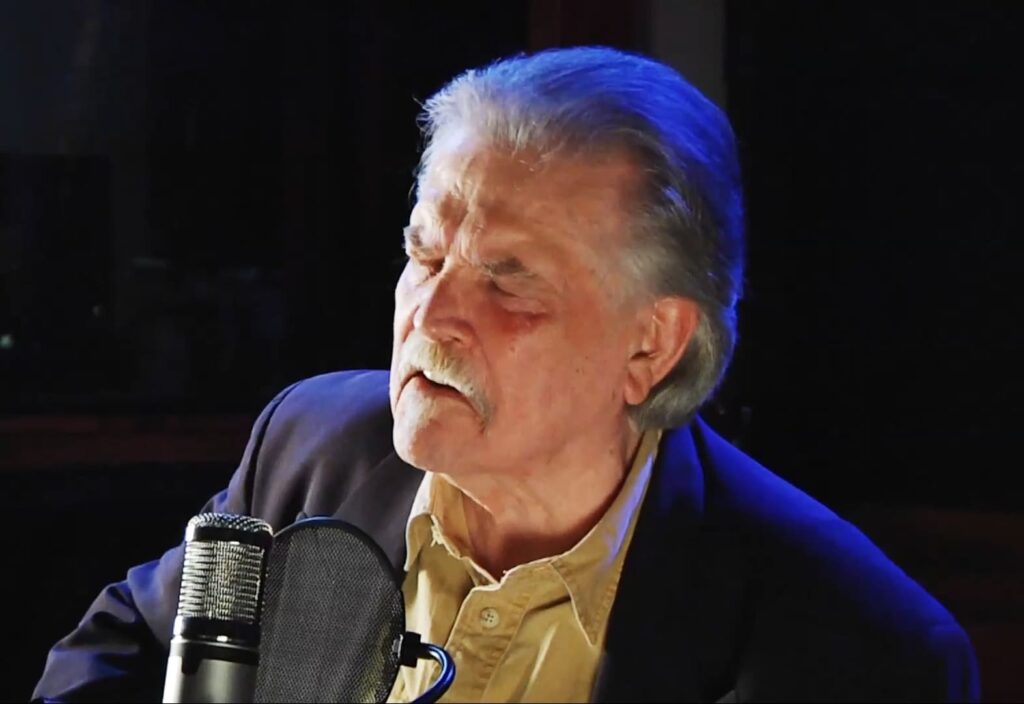
In October 2011, during a Music Fog session at Marathon Recorders in Nashville, just weeks before his 70th birthday, Guy Clark sat down and introduced an early version of “El Coyote”. Filmed amid the quiet hum of the Americana Music Festival, the performance carries a particular weight. By this stage in his life, Clark was no longer proving anything. He was simply telling stories the way he always had, carefully, honestly, and without excess.
“El Coyote” would later appear on his 2013 album “My Favorite Picture of You”, but here, in this earlier form, the song feels especially alive. It has not yet settled into its final shape. You can hear it breathing, still finding its rhythm, guided by Clark’s instinct more than any arrangement. That is part of its beauty. It reminds us that great songs are not built all at once. They are uncovered, piece by piece.
The story itself unfolds like something half-remembered, half-lived. A desert landscape, a smuggler, a sense of movement across borders both physical and moral. Clark never rushes these images. He lets them appear slowly, as if they are rising out of the dust. His voice, worn but steady, carries the kind of authority that does not need to be asserted. It simply exists.
For older listeners, especially those who have followed Clark’s long career, this performance feels like sitting across from an old friend. There is no distance between the man and the song. Every line feels considered, not polished, but understood. When he sings, it is not about performance in the traditional sense. It is about sharing something that has been turning over in his mind for a long time.
There is also a quiet tension within “El Coyote”. It is not a straightforward narrative of right and wrong. Like many of Clark’s songs, it lives in the space between. The character moves through a world where survival often outweighs judgment, where decisions are shaped by necessity rather than clarity. That ambiguity gives the song its depth. It asks the listener not just to hear the story, but to sit with it.
The setting of this recording adds to its intimacy. A small room, minimal instrumentation, no distractions. Just Guy Clark, his guitar, and the weight of years behind him. It is a reminder of how little is needed when the song itself is strong enough.
Looking back, this early performance of “El Coyote” stands as a quiet testament to Clark’s enduring gift. He did not rely on spectacle or volume. He trusted the story. And in doing so, he created something that lingers, like a voice carried across the desert, steady, unhurried, and impossible to forget.