
A Gentle Farewell Wrapped in a Smile: “All the Best” Turned Heartbreak Into One of John Prine’s Most Human Songs
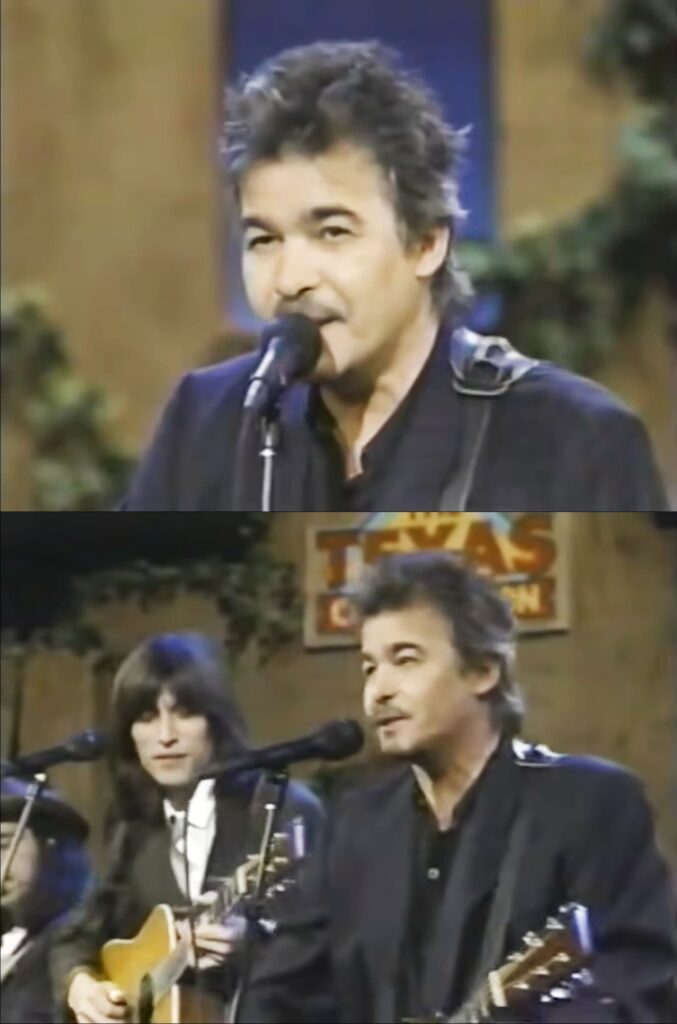
In 1992, the audience watching John Prine on The Texas Connection likely saw what they had always loved about him: a gifted songwriter telling stories, cracking jokes, and making difficult truths sound deceptively simple.
More than three decades later, that same performance of “All the Best” feels different.
Today, it feels like watching a legend revisit one of the deepest scars of his life.
Before singing a single note, Prine sets the stage with a story. He tells the audience that a few years earlier, he received a divorce for Christmas. Then, with the dry humor that became one of his trademarks, he explains how he went out and bought himself an electric train and nailed it to the dining room table “just because I could.”
The crowd laughs.
That was one of John Prine’s greatest gifts.
He could make people laugh at the exact moment he was revealing something that hurt.
Written after the collapse of his first marriage, “All the Best” is one of the most remarkable breakup songs in American songwriting. Unlike songs fueled by anger, revenge, or bitterness, Prine takes a different road. He looks at the ruins of a relationship and somehow finds enough grace to wish happiness upon the person who left.
“I wish you love, I wish you happiness. I guess I wish you all the best.”
The words sound simple. Almost conversational.
Yet anyone who has experienced heartbreak understands the difficult truth hidden inside them.
Sometimes the hardest thing in the world is not learning how to stop loving someone.
It is learning how to wish them well after they are gone.
As Prine performs the song in this intimate television appearance, there is no grand production competing for attention. The focus remains exactly where it belongs: on the storyteller, the lyrics, and the emotions quietly living between every line.
The song is filled with images only John Prine could create.
Love becomes a Christmas card decorating a tree before eventually being thrown away.
A wandering drive around town becomes a metaphor for a restless heart.
Ordinary objects and everyday moments are transformed into reflections on loss, memory, and acceptance.
That ability made Prine one of the most admired songwriters of his generation. His songs never sounded like lectures. They sounded like conversations shared across a kitchen table late at night.
By 1992, Prine had already established himself as a songwriter’s songwriter. Artists across country, folk, and rock music admired his gift for turning life’s small details into unforgettable poetry. Yet performances like this remind us that his greatest strength was not cleverness.
It was honesty.
He never pretended heartbreak made sense.
He never claimed wisdom erased pain.
Instead, he acknowledged the sadness and carried it with dignity.
Looking back now, especially after Prine’s passing in 2020, the performance carries an added emotional weight. The audience that night saw a beloved musician sharing a story from his life. Today’s viewers see something more. They see a master songwriter demonstrating how resilience often arrives quietly, hidden inside humor, compassion, and acceptance.
The most moving part of “All the Best” is not its sadness.
It is its generosity.
Even after disappointment, Prine chooses kindness.
Even after loss, he chooses grace.
And perhaps that is why the song continues to resonate all these years later.
In 1992, the audience saw a songwriter telling a story.
Today, we see John Prine doing something far rarer.
We see a man turning a personal wound into a song that helps countless others carry their own.