
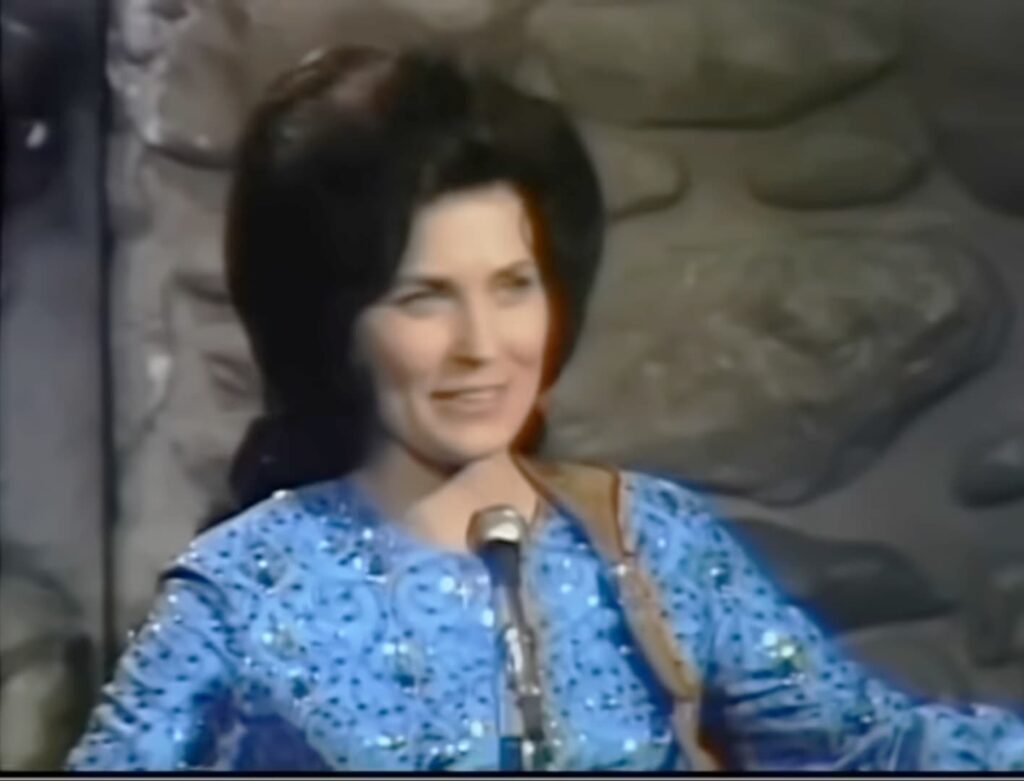
Long before country music embraced strong female voices, Loretta Lynn turned a simple marital argument into a song that changed Nashville forever.
There are performances that entertain, and then there are performances that quietly capture a turning point in cultural history. Loretta Lynn’s rendition of “Don’t Come Home A-Drinkin’ (With Lovin’ on Your Mind)” belongs firmly in the second category. Watching the footage today, it may seem like a lively and humorous country performance. Yet beneath the smiles and catchy melody lies one of the boldest statements ever delivered by a woman on a country music stage.
When the song first appeared in the mid-1960s, country music often portrayed women as patient, forgiving figures who endured disappointment in silence. The wives in many songs waited at home, accepted their circumstances, and hoped things would improve. Loretta Lynn offered a very different perspective. Standing confidently before the audience, she sang a message that was startlingly direct for its time. If a husband wanted to spend the night drinking and running around town, he should not expect affection waiting for him when he returned home.
The remarkable thing was not simply what she said. It was how she said it. There were no tears. No pleading. No dramatic threats. Instead, there was self-respect, confidence, and a quiet certainty that made the message even more powerful. The audience laughed and enjoyed the humor woven throughout the lyrics, but underneath the laughter was a serious declaration of personal dignity.
The song would become a landmark achievement for Loretta Lynn, earning her first No. 1 hit on the country charts and elevating her from rising star to one of Nashville’s most influential artists. Looking back, it is difficult to imagine her career without it. The success of “Don’t Come Home A-Drinkin'” opened doors not only for Lynn herself but also for future generations of female country singers who would write and sing about life from their own perspective rather than conforming to expectations.
Part of the song’s enduring power comes from its authenticity. Fans have long recognized that many of Loretta Lynn’s greatest recordings were inspired by her own experiences. Her marriage to Oliver “Doolittle” Lynn was famously complicated, filled with arguments, hardship, loyalty, and love. He could be difficult and unpredictable, yet he was also instrumental in encouraging her musical ambitions. Because of that reality, songs like “Don’t Come Home A-Drinkin'” never felt fictional. They sounded lived-in, as though they had emerged directly from conversations around the kitchen table.
That authenticity is on full display in this performance. Every line feels believable because Lynn never sang as a distant observer. She sang as someone who knew exactly what she was talking about. Her ability to transform ordinary domestic frustrations into memorable music became one of her defining gifts.
Then comes one of the most charming moments in the entire broadcast. After the performance concludes, the host jokingly compliments the rhythm guitar player and calls him a “very expensive rhythm player.” The audience laughs before the surprise is revealed. The guitarist is none other than Bill Monroe, the legendary architect of bluegrass music.
The appearance of Monroe creates an unforgettable piece of country music history. In a matter of seconds, two towering figures from different branches of American roots music share the same stage. What might seem like a casual television moment today was actually a remarkable gathering of talent and tradition.
Perhaps the most touching aspect of the video is how relaxed everything feels. Modern television productions are often polished to perfection, but this performance reflects an era when country music programs felt more like family reunions than corporate productions. The jokes were spontaneous. The musicians seemed comfortable. The atmosphere felt warm and genuine.
Viewed decades later, the performance reveals something even greater. Loretta Lynn was not trying to become a symbol. She was simply telling the truth as she saw it. Yet that honesty helped make her one of the most important female voices in country music history.
More than half a century after its release, “Don’t Come Home A-Drinkin’ (With Lovin’ on Your Mind)” still feels surprisingly modern. Perhaps that is because its central question has never grown old: Is true strength found in changing someone else’s behavior, or in refusing to accept less than you deserve?
That question continues to resonate, and every time Loretta Lynn sings the answer, it sounds just as powerful as it did the first time.