
BEFORE OUTLAW COUNTRY UNITED THE HIPPIES AND THE REDNECKS, RAY WYLIE HUBBARD GOT BEAT UP TRYING TO BUY BEER
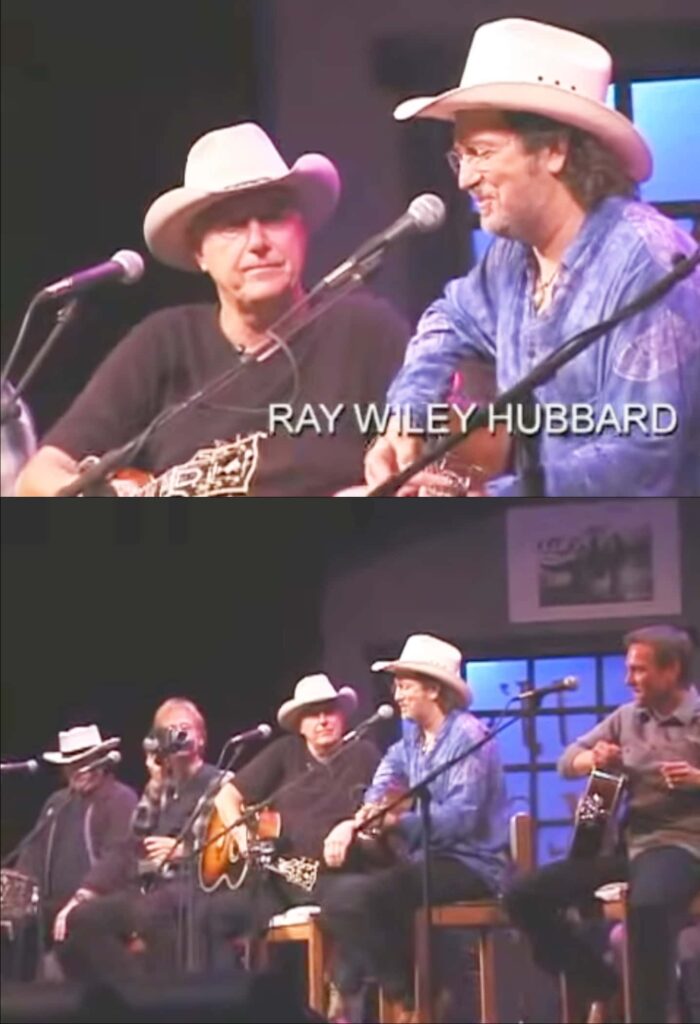
Long before Outlaw Country became a celebrated movement, before Willie Nelson turned the Armadillo World Headquarters into neutral ground where long-haired hippies and hard-drinking cowboys could stand in the same room together, there was a time when those two worlds genuinely did not trust each other. In this unforgettable performance at Jerry Jeff Walker’s Birthday Bash in Austin, Ray Wylie Hubbard does more than sing “Up Against the Wall Redneck Mother.” He resurrects an entire vanished Texas culture with the grin of a man who somehow survived it.
And judging by the laughter onstage, especially from Jerry Jeff Walker himself, everybody knew Ray’s stories had probably improved with age.
That is precisely what makes this performance so special.
It is not polished nostalgia from a museum version of country music. It feels alive, reckless, and half dangerous. Hubbard stands there like an aging cosmic cowboy remembering when getting beat up in the wrong bar could accidentally turn into songwriting history.
The story begins in Red River, New Mexico, back when Hubbard was still a young hippie musician drifting between day jobs, hootenannies, and trouble. At the time, he explains, there were two bars in town. One belonged to the hippies. The other belonged to what he calls the “hardcore serious cowboy hillbilly redneck country bar.” The kind of place where everybody noticed the second you walked through the door wearing moccasins, a tie-dyed shirt, and a cowboy hat with a feather in it.
Older fans who remember the cultural divide of the late 1960s and early 1970s immediately understand the tension in this story. Today, country audiences casually embrace long hair, tattoos, rock influences, and outlaw imagery. But before Willie Nelson blurred the lines between Austin hippies and rural Texas traditionalists, those identities could clash violently. Hubbard jokes about it now, but beneath the humor there is real social history buried in every sentence.
And Ray tells it beautifully.
His storytelling has the rhythm of an old front porch memory. He pauses in the right places, lets the audience laugh, then leans into the absurdity even harder. By the time he recalls swaggering into the bar demanding “Hey Gomer, give me a case of beer,” the crowd already knows disaster is coming.
Then comes the fight.
Or, as Hubbard hilariously puts it, “I say a fight broke out, but I didn’t really hold up my end of the bargain.”
That line alone captures the charm of Ray Wylie Hubbard better than any biography could. There is no macho posturing in his storytelling. He presents himself as both fool and survivor, laughing at his younger self while still honoring the rough world that shaped him.
But the deeper magic arrives after the bruises.
Back at the hootenanny, battered and humiliated, Hubbard starts turning the experience into a song. Somewhere in that mixture of embarrassment, rebellion, and Texas humor, “Up Against the Wall Redneck Mother” was born. Through friends like Cowboy Bob Livingston and eventually Jerry Jeff Walker, the song spread into the bloodstream of outlaw country music itself.
And that matters because the song represents more than a funny barroom story.
It captures the exact moment when country music culture was changing forever. Hippies, rednecks, folk singers, bikers, honky-tonk musicians, and wandering cosmic cowboys were slowly colliding across Texas dance halls and roadside bars. Out of that collision came a new kind of music that cared less about Nashville polish and more about authenticity, storytelling, and freedom.
Watching Hubbard tell this story decades later feels almost bittersweet now because so much of that world has disappeared. The dangerous little bars. The endless wandering. The strange brotherhood formed through bruises, songs, and late-night beer runs. Modern country music often celebrates rebellion as branding. But these men lived it before anyone realized it would someday become history.
And standing there onstage in Austin, with Jerry Jeff Walker laughing beside him, Ray Wylie Hubbard sounds less like a performer and more like the last surviving witness to a rowdy American era that will never quite exist again.