
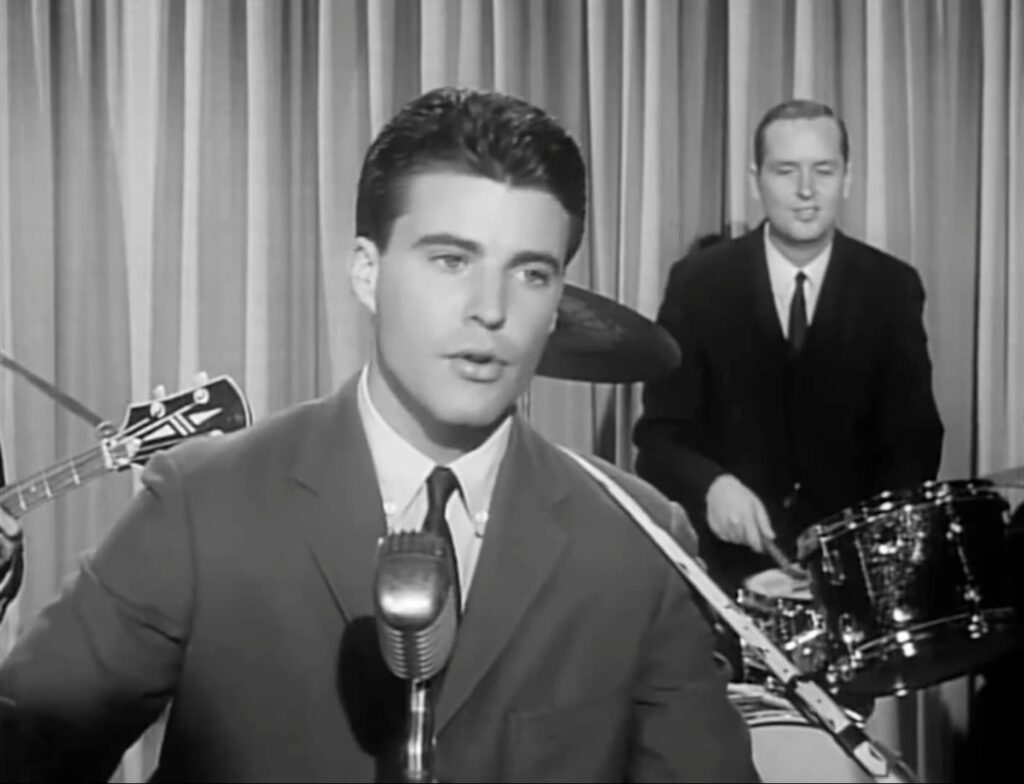
“It’s Up to You” Captures the Quiet Courage of Loving Someone Enough to Let Them Decide
In 1963, Rick Nelson delivered one of the most graceful love songs of his career with “It’s Up to You,” a gentle ballad that spoke not through heartbreak or dramatic declarations, but through honesty and patience. Written by Jerry Fuller, the single climbed to No. 6 on the Billboard Hot 100, reached No. 4 on the Easy Listening chart, No. 24 on the R&B chart, and entered the UK Singles Chart at No. 22. Featured on Nelson’s album It’s Up to You, the recording became another reminder that sincerity could be just as powerful as spectacle during the early years of rock and pop.
Unlike many love songs of its era, “It’s Up to You” is built around acceptance rather than persuasion. The narrator has already confessed everything he feels. He has hidden nothing, exaggerated nothing, and made every promise he can honestly make. Instead of begging for affection or demanding an answer, he quietly says, “I’ve done everything I can,” before placing the future of the relationship in the other person’s hands. That simple decision gives the song an emotional maturity that continues to resonate decades later.
The lyrics reveal remarkable emotional restraint. “I’ve laid my cards on the table,” Nelson sings, borrowing the language of a card game to describe complete honesty. Every feeling has been revealed. Every risk has been taken. Now there is nothing left to do except wait. The repeated phrase, “It’s up to you,” never sounds like surrender. Instead, it reflects respect, trusting that love cannot be forced and that genuine commitment must always be chosen freely.
That quiet confidence was perfectly matched by Rick Nelson’s unmistakable vocal style. Rather than filling every line with dramatic emotion, he allowed the melody to breathe. His smooth voice carried a calm sincerity that made listeners believe every word. There was no theatrical heartbreak, no anger, and no bitterness. Only hope. It was an approach that became one of Nelson’s defining strengths throughout his career, allowing simple songs to leave lasting emotional impressions.
The performance also reflected an important moment in popular music. By 1963, rock and roll had begun to evolve into more polished pop recordings, while country, rhythm and blues, and traditional vocal styles continued to influence mainstream audiences. “It’s Up to You” comfortably existed between those worlds, combining gentle rock rhythms with timeless pop melodies and heartfelt storytelling. Its broad appeal helped explain its success across multiple charts, including pop, easy listening, and R&B.
There is another reason the song continues to feel fresh today. Modern love songs often celebrate grand gestures or emotional extremes, yet “It’s Up to You” reminds listeners that one of the greatest expressions of love is respecting another person’s freedom to choose. The narrator never tries to control the outcome. He simply asks for honesty, saying, “Let me know where I stand.” That quiet request carries a dignity that many listeners still find deeply moving.
More than sixty years after its release, Rick Nelson’s recording remains a beautiful example of understated songwriting. It proves that a memorable performance does not require dramatic production or soaring vocals. Sometimes a timeless melody, an honest lyric, and a singer who believes every word are enough.
Listening to “It’s Up to You” today feels like opening a window to another era, one where romance was expressed with patience, grace, and quiet optimism. Its message has never depended on changing musical trends. Love may require courage to confess, but true love also requires the courage to let the other person decide. That simple truth is what has kept this classic alive across generations.
 Oldies Songs