
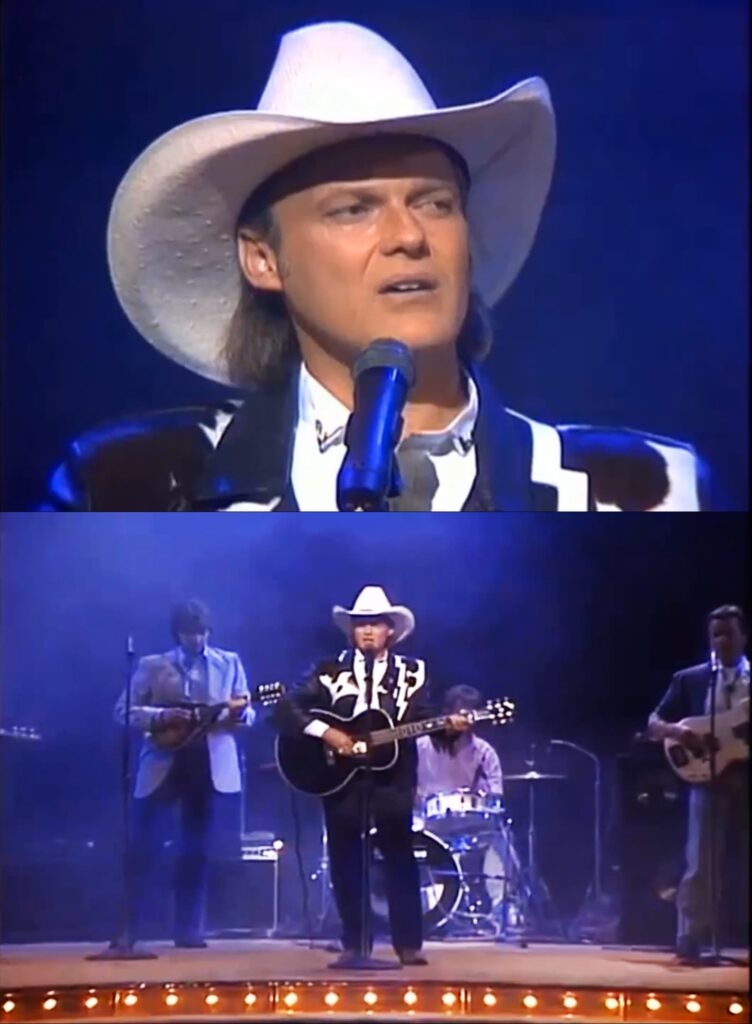
He Didn’t Ask for Wealth, Fame, or Perfection. He Asked One Simple Question: Don’t We All Have the Right to Be Loved?
In the late 1980s, country music was filled with songs about heartbreak, betrayal, and lost love. Yet when Ricky Van Shelton released “Don’t We All Have The Right” in 1988, he approached the subject from a different direction.
Instead of singing about love that had been lost, he sang about love that every person hopes to find.
The result became another Number One hit during one of the most successful periods of Shelton’s career, but the song’s lasting appeal comes from something far more enduring than chart success.
It comes from a question.
“Don’t we all have the right to be loved?”
More than three decades later, that question remains just as powerful as it was when listeners first heard it.
At the time, Ricky Van Shelton was enjoying an extraordinary run of success. Hits such as “Life Turned Her That Way,” “Don’t We All Have The Right,” and “I’ll Leave This World Loving You” established him as one of the defining voices of traditional country music.
Yet Shelton never relied on flashy image-making or larger-than-life celebrity status.
His appeal was something much simpler.
He sounded believable.
When Ricky Van Shelton sang about love, heartache, loyalty, or hope, audiences felt as though they were hearing from someone they knew rather than a distant star. He projected the image of an ordinary man living an ordinary life, and that authenticity became one of his greatest strengths.
That sincerity is especially evident in “Don’t We All Have The Right.”
Musically, the song is remarkably understated. There are no dramatic vocal fireworks. No towering high notes designed to impress. No elaborate production tricks competing for attention.
Instead, the performance depends almost entirely on warmth, honesty, and storytelling.
Shelton delivers the lyrics with the ease of someone having a conversation across a kitchen table.
That simplicity allows the message to shine.
The song’s title may seem straightforward, but it carries a deeper emotional weight than many listeners initially realize.
Unlike songs that offer solutions or grand declarations, “Don’t We All Have The Right” asks a question and leaves the answer to the listener.
Someone who is lonely may hear hope.
Someone who has found lasting love may hear gratitude.
Someone mourning a relationship may hear regret.
The song changes depending on who is listening.
That flexibility is one reason it has remained meaningful long after its release.
Looking back today, the performance also serves as a reminder of a style of country artist that has become increasingly rare.
Ricky Van Shelton represented an era when singers often stood center stage with little more than a microphone and a great song. There were no elaborate visual effects. No carefully manufactured controversies. No attempts to shock audiences.
The focus remained on the voice.
The story.
The emotion.
For many fans, that simplicity has become a source of nostalgia in itself.
There is also an undeniable sense of “what might have been” surrounding Shelton’s legacy. While contemporaries such as George Strait and Randy Travis continued recording and touring for decades, Shelton stepped away from the spotlight while he was still deeply admired.
As a result, songs like “Don’t We All Have The Right” carry an added layer of bittersweet reflection.
They remind listeners not only of a remarkable voice but also of a career that ended far earlier than many expected.
Yet perhaps that mystery contributes to the song’s enduring charm.
Because beneath its gentle melody lies a truth that never grows old.
Every generation searches for happiness.
Every generation searches for connection.
And every generation, in its own way, asks the same question Ricky Van Shelton posed back in 1988.
Not whether we deserve fame.
Not whether we deserve success.
But whether we deserve to love and be loved.
For many listeners, the answer remains as clear today as it was then.
We all do.