
A Carousel of Lights and Longing, Where Joy and Illusion Spin Side by Side
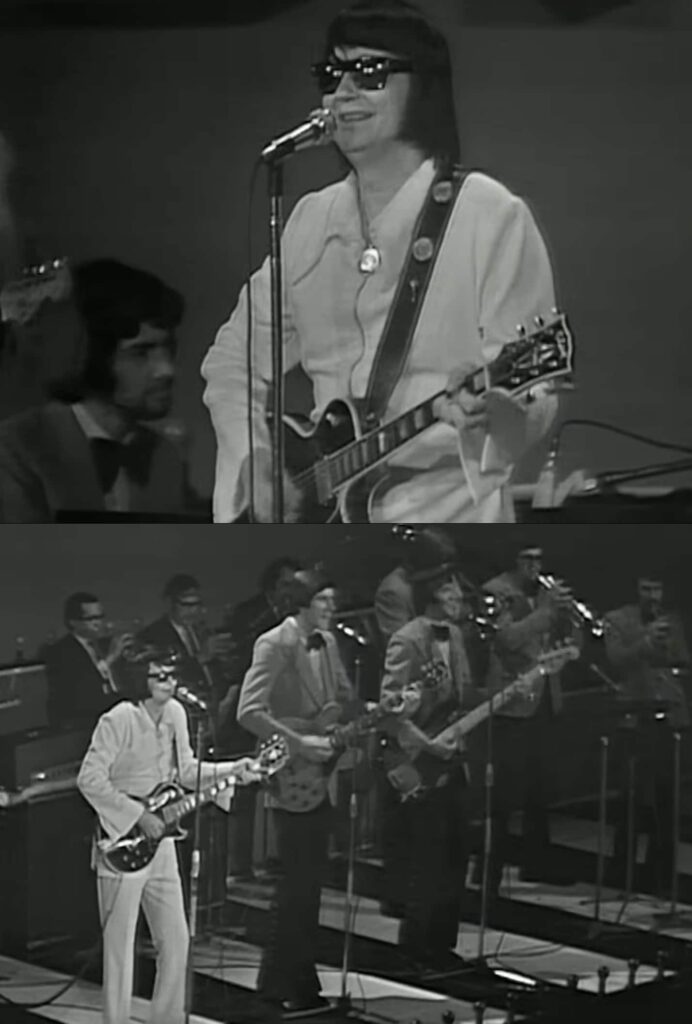
In 1972, during a vibrant tour across Australia, Roy Orbison brought Penny Arcade to life with a performance that shimmered on the surface, yet carried a deeper undercurrent beneath its bright melody. Known for his operatic voice and emotional depth, Orbison stepped into a different mood here, one that felt playful at first, but slowly revealed something more reflective.
From the opening beat, the atmosphere is alive with motion. The rhythm moves briskly, inviting the audience into a world of flashing lights and spinning machines. Orbison’s voice, unmistakable and smooth, glides over the melody with ease. Unlike his more sorrowful ballads, this performance carries a lighter tone, yet he never abandons the emotional nuance that defines his style.
“Penny Arcade” unfolds like a vivid scene. A glowing light in the distance draws the listener in, transforming into a place filled with color, sound, and constant motion. The imagery is simple, almost childlike, yet it resonates on a deeper level. The arcade becomes more than a setting. It becomes a symbol of temptation, of escape, and of the fleeting nature of excitement.
As the song progresses, there is a subtle shift. What begins as wonder slowly hints at something more consuming. The invitation to “step up and play” repeats like a gentle echo, urging participation, drawing the listener deeper into the cycle. Coins are spent, lights flash, and music plays endlessly. It is a world where time seems suspended, yet something is quietly slipping away.
Orbison’s delivery captures this duality perfectly. He does not overstate the message. Instead, he allows the contrast to emerge naturally. His voice carries both the thrill of the moment and the faint suggestion of its cost. That balance gives the performance its lasting impact.
Musically, the arrangement supports this sense of movement. The steady beat mirrors the rhythm of the machines, while the melody loops with a hypnotic quality. It creates a feeling of being caught in motion, circling back again and again, much like the experience the song describes.
As the final chorus builds and fades into applause, the energy remains high, yet there is a lingering thought beneath it. The lights may dim, the music may stop, but the impression stays. A reminder that not all joy is lasting, and not all brightness is without shadow.
In that 1972 performance, Roy Orbison offers more than a lively tune. He presents a small, glowing world, full of color and sound, where excitement and illusion walk hand in hand, and where every spin of the wheel carries both promise and consequence.