
A Defiant Love Song That Turned Teenage Heartbreak into Rock and Roll History
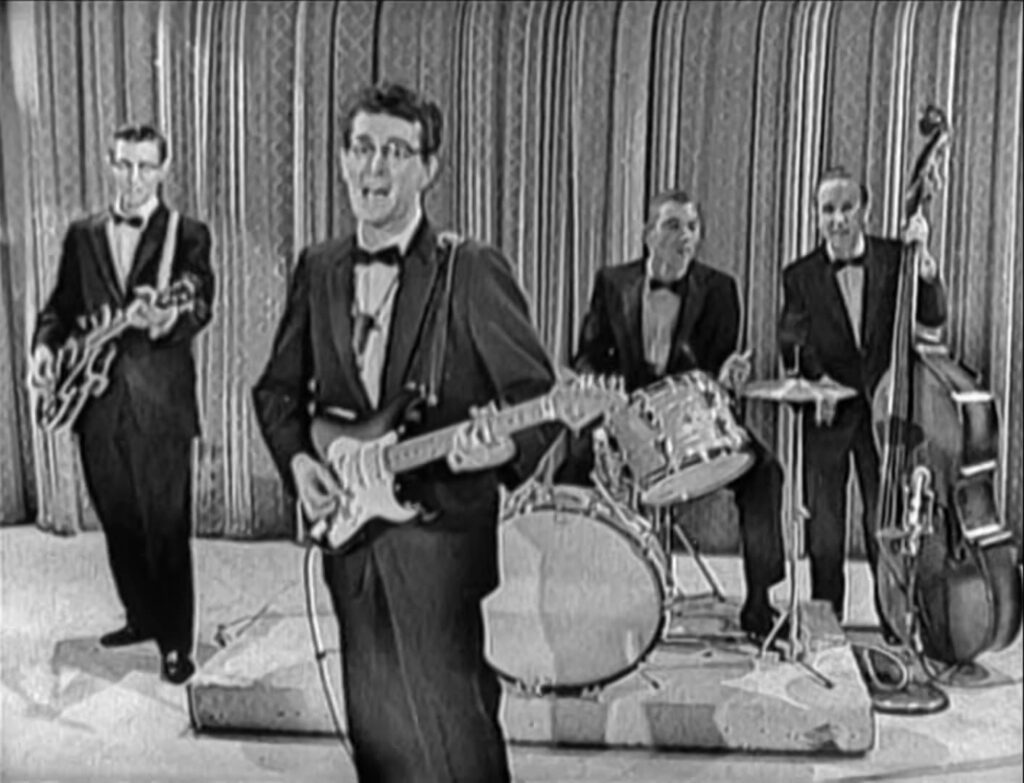
On December 1, 1957, Buddy Holly & The Crickets stepped onto the stage of The Ed Sullivan Show, bringing with them a song that had already begun reshaping popular music. “That’ll Be the Day”, released earlier that year as their breakthrough single, had climbed to No. 1 on the Billboard charts, marking a defining moment for rock and roll’s arrival into mainstream American living rooms.
The performance itself was brief, just over a minute, yet it carried a striking sense of clarity and purpose. From the opening chord, Holly’s clean guitar tone and unmistakable hiccuping vocal style cut through the air with confidence. Dressed in a suit and his signature glasses, he appeared both unassuming and quietly revolutionary. There was no theatrical excess, only a steady rhythm, a tight band, and a melody that felt instantly familiar yet entirely new.
Lyrically, “That’ll Be the Day” captured a youthful defiance wrapped in vulnerability. The repeated refrain about heartbreak and disbelief was delivered not with despair, but with a kind of stubborn optimism. Holly’s voice did not plead, it insisted. That subtle emotional balance became one of the song’s lasting strengths, resonating far beyond its era.
What made this television appearance especially significant was its reach. At a time when rock and roll still faced skepticism from older audiences, The Ed Sullivan Show served as a cultural bridge. Millions watched as Buddy Holly & The Crickets translated the raw energy of youth into something accessible, even respectable. In doing so, they helped legitimize a genre that would soon dominate the cultural landscape.
Looking back, the performance now carries an added weight. It stands as a preserved moment of an artist at his peak, just two years before Holly’s tragic death in 1959. Yet nothing in that minute suggests fragility. Instead, it reflects a young musician fully in command of his sound, delivering a song that would echo across generations.
In the end, it was not just a television appearance. It was a quiet declaration that rock and roll had arrived, steady, sincere, and here to stay.