
A Quiet Reckoning of Loss and Loyalty in a Changing America
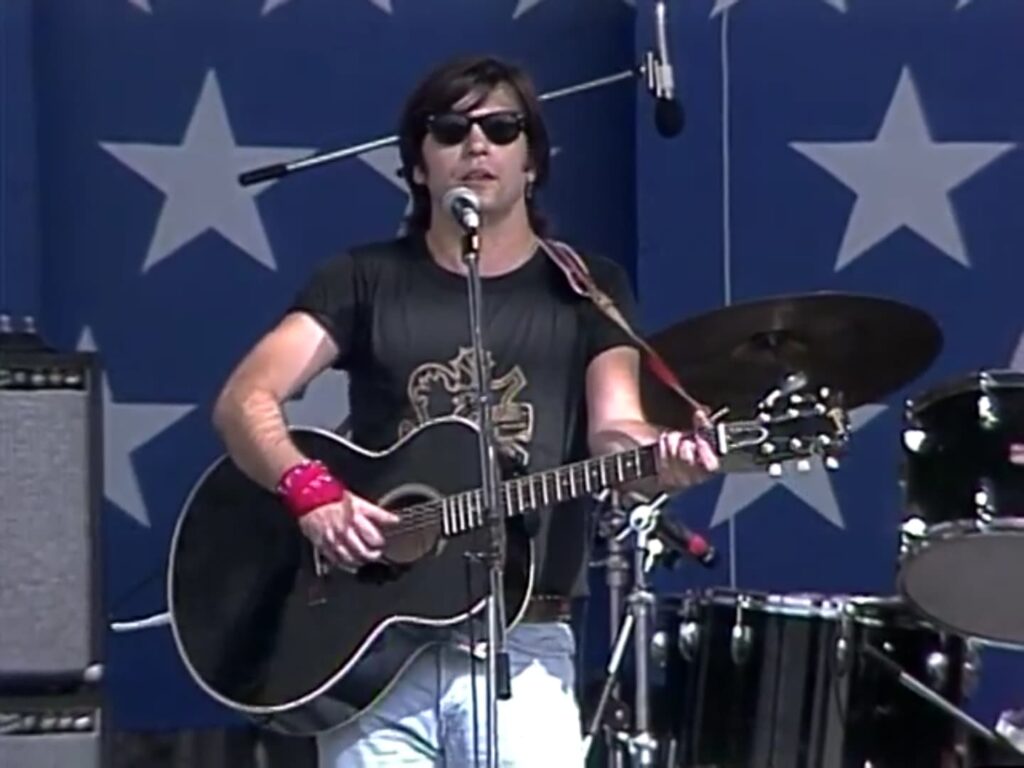
On July 4, 1986, at the Farm Aid concert in Austin, Texas, Steve Earle delivered one of the most quietly devastating performances of his early career with “My Old Friend The Blues.” At a time when the Farm Aid stage was filled with urgent voices fighting for struggling American farmers, Earle chose restraint. Armed with little more than his guitar and a weathered voice, he turned the spotlight inward, offering a moment of reflection rather than protest.
Originally released on his 1986 debut album Guitar Town, “My Old Friend The Blues” had already begun to define Steve Earle as a songwriter capable of bridging outlaw country grit with folk storytelling. But on that warm Texas evening, the song felt different. Slower, heavier, and more intimate. Each line seemed to hang in the humid air, carrying the weight of memory and roads that led nowhere but back to regret.
There was no spectacle in his delivery. No attempt to impress. Steve Earle stood still, almost withdrawn, as if the song itself demanded solitude. The lyrics, centered on an old companion named “the blues,” unfolded like a confession. Not dramatic, not theatrical, but deeply lived-in. It was the kind of performance that did not ask for applause, only understanding.
The setting made it even more poignant. While Farm Aid symbolized resilience and collective struggle, “My Old Friend The Blues” reminded the audience of the personal battles that exist beneath broader causes. In that contrast, Earle’s performance found its power. It acknowledged that behind every public hardship lies a quieter, more private sorrow.
Looking back, this moment stands as an early marker of Steve Earle’s enduring artistic identity. Long before the turbulence that would shape his later life and music, he was already writing and performing with an honesty that refused to be polished. The 1986 Farm Aid stage did not just introduce a rising artist. It revealed a storyteller unafraid to sit with pain and let it speak in its own time.
Decades later, the performance still lingers, not as a grand statement, but as a soft echo. A reminder that sometimes the most powerful songs are the ones that sound like they were never meant to leave the room.