
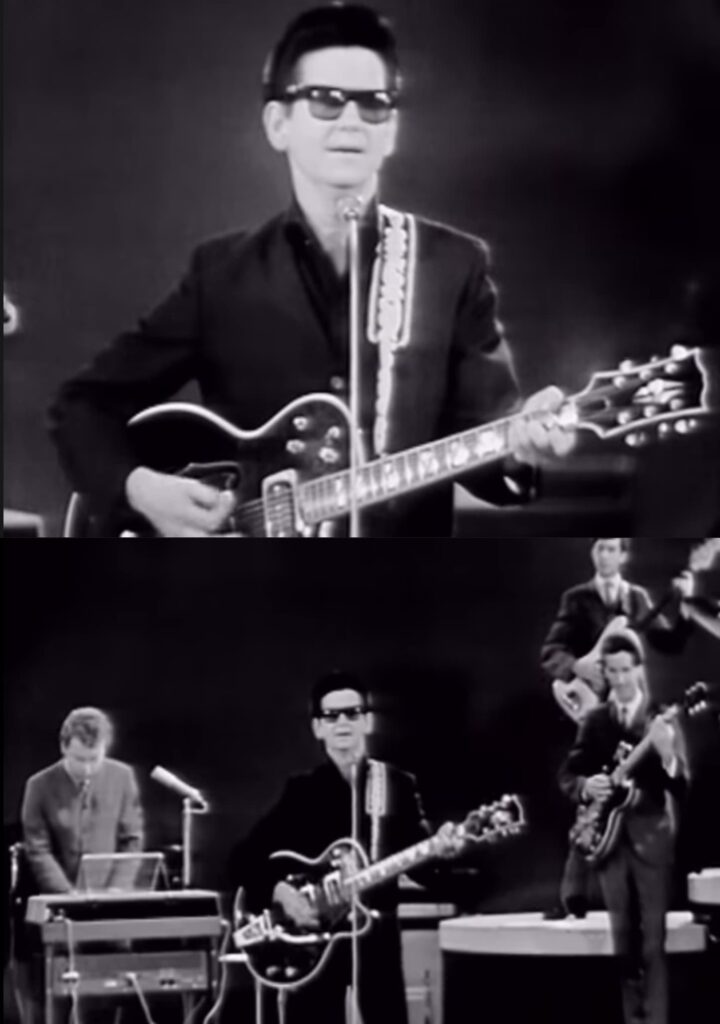
BEFORE THE WORLD TURNED HIM INTO THE KING OF HEARTBREAK, ROY ORBISON COULD STILL SHAKE A ROOM WITH PURE ROCK AND ROLL ENERGY.
In 1965, during the now legendary Monument Concert, Roy Orbison stepped onto the stage and reminded audiences of something history often forgets: long before he became immortalized as the man in dark glasses singing lonely ballads, he was also one of rock and roll’s most dynamic performers.
His performance of “Dream Baby” captured that forgotten side perfectly.
From the opening seconds, the theater felt alive with movement. The beat pushed forward with a restless rhythm, and Orbison attacked the song with a confidence that surprised anyone expecting the solemn figure associated with classics like “Crying” or “Only the Lonely.” This was not the fragile, wounded Roy many later generations came to know. This was Roy Orbison the rocker, sharp and energetic, commanding the crowd with the authority of a man who had grown up on Sun Records-era rhythm and roll.
Standing almost motionless in his signature black sunglasses, he somehow generated enormous energy without theatrical gestures. That was part of Orbison’s mystery. While other performers jumped across stages or shouted for attention, Roy barely moved at all. Yet audiences could not take their eyes off him.
Every repetition of “Sweet dream baby” tightened the atmosphere inside the room. The audience clapped louder with each refrain, pulled deeper into the momentum of the song. Behind Orbison, the band kept the rhythm lean and driving, giving the performance a pulse that felt closer to early rockabilly than the grand orchestral ballads that would later define his public image.
What makes this 1965 performance so fascinating today is how strongly it challenges the simplified version of Roy Orbison that popular memory often preserves.
By the late 1980s, Orbison had become almost mythic: the lonely man in black, standing still beneath the spotlight while singing about heartbreak and loss. That image became so powerful that many people forgot how versatile he truly was during the early 1960s. Songs like “Dream Baby,” “Mean Woman Blues,” and “What’d I Say” revealed an artist deeply connected to the raw excitement of early rock and roll.
And in this Monument Concert performance, that excitement is impossible to miss.
There is also something deeply moving about seeing Orbison at this moment in time. In 1965, he still stood at the height of his powers, years before the devastating personal tragedies that would later shadow much of his life and public image. Watching him here feels almost like looking at a different chapter of the same man’s story. The joy in the rhythm. The playful confidence in his delivery. The sheer pleasure of performing for a live crowd.
For longtime fans, that may be the most emotional part of all.
Because beneath the sadness people associate with Roy Orbison was always a performer who loved the electricity of rock and roll. And for two unforgettable minutes during “Dream Baby,” the audience got to see that side shine brightly again.