
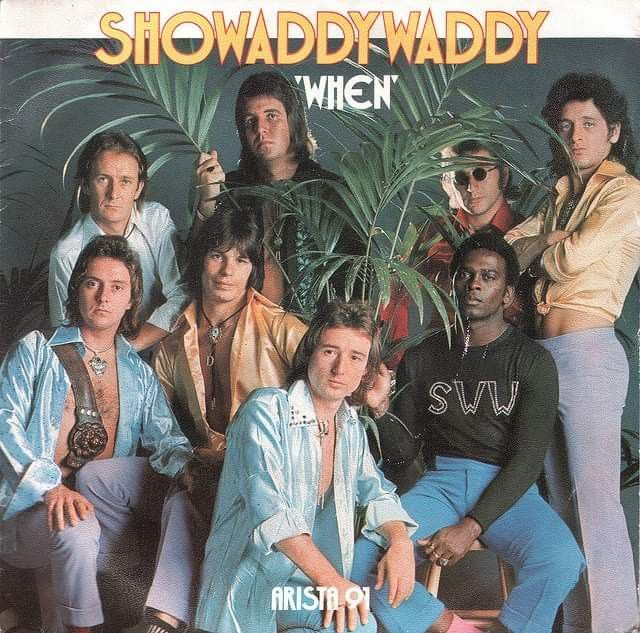
A joyful beat can sometimes carry the sweetest kind of nostalgia — the kind that reminds us how music once made the whole world feel young for three unforgettable minutes.
There are songs that belong to a specific year, and then there are songs that somehow escape time altogether. “Doo Wah Diddy” by Showaddywaddy is one of those records. Released in 1978, the song arrived like a burst of color from another era, carrying with it the spirit of old dance halls, jukebox romance, polished shoes on wooden floors, and the innocent excitement of pop music that simply wanted people to smile again. It reached No. 2 on the UK Singles Chart in the summer of 1978, becoming one of the group’s biggest late-70s hits and further cementing Showaddywaddy as one of Britain’s most beloved revival bands.
But the story behind “Doo Wah Diddy” stretches even further back than that. The song itself was originally made famous in 1964 by Manfred Mann, whose version topped the charts in both the United Kingdom and the United States during the height of the British Invasion. Long before Showaddywaddy touched it, the tune already carried the carefree rhythm of early-60s pop — a style built on handclaps, harmony vocals, and melodies simple enough to sing after hearing them only once. By the late 1970s, however, music had changed dramatically. Disco dominated dance floors, punk rock challenged the old guard, and radio seemed divided between rebellion and glitter. Yet Showaddywaddy chose not to chase modern trends. Instead, they looked backward — lovingly, unapologetically backward.
That was the magic of the band. While many groups were trying desperately to sound “new,” Showaddywaddy understood something timeless: people never truly stop longing for the music that once made them happy. Formed in the early 1970s, the group built their identity around reviving the sound and spirit of 1950s rock ’n’ roll and early-60s pop. Their stage clothes, harmonies, choreography, and cheerful energy all felt like echoes from a gentler musical age. And when they recorded “Doo Wah Diddy,” they did not reinvent the song so much as celebrate it.
Their version feels warmer, fuller, and more playful than the original. There is a pub-singalong warmth in the arrangement — the kind of recording that sounds best when played loudly with friends nearby. The saxophone lines bounce with old-fashioned enthusiasm, the backing vocals practically grin through the speakers, and the rhythm carries that unmistakable stomp of late-70s nostalgia rock. It was not sophisticated music pretending to be intellectual. It was music that understood joy as something valuable in itself.
Lyrically, the song is beautifully uncomplicated. A young man sees a girl walking down the street, and suddenly the ordinary world becomes extraordinary. That is the entire story — and perhaps that is precisely why the song has endured for decades. “Doo Wah Diddy” captures the fleeting lightning strike of attraction before life becomes too complicated. There is no heartbreak, no cynicism, no emotional wreckage. Only excitement, admiration, and youthful wonder. In many ways, the song reminds listeners of a period when pop music often celebrated small human moments instead of dramatic confessions.
And perhaps that explains why the record still carries emotional weight today. Listening to Showaddywaddy perform “Doo Wah Diddy” now feels like opening an old photo album filled with faded snapshots of dance parties, transistor radios, seaside holidays, and Saturday nights when songs like this floated through open windows. It recalls a time when melodies were bright, choruses were communal, and music often existed to bring people together rather than divide generations apart.
There is also something deeply touching about how sincerely Showaddywaddy approached nostalgia. They were never mocking the past or treating old rock ’n’ roll as a gimmick. You can hear genuine affection in every harmony. Their music became a bridge between generations — younger listeners discovering the energy of earlier decades, while older audiences heard echoes of their own youth returning through modern speakers.
Even now, decades later, “Doo Wah Diddy” remains impossible to separate from feelings of warmth and memory. The song may appear lightweight on the surface, but its emotional power lies in what it represents: a reminder that music does not always need complexity to become meaningful. Sometimes all it takes is a cheerful rhythm, a memorable chorus, and a moment that carries us back to who we once were.
And that may be the quiet miracle of Showaddywaddy itself. In an age constantly racing toward the future, they dared to remind people that the past still had a heartbeat — and sometimes, it sounded exactly like “Doo Wah Diddy.”