
Before the Hits, Before the Fame: A Father, Two Sons, and the Gospel Roots of the Everly Brothers
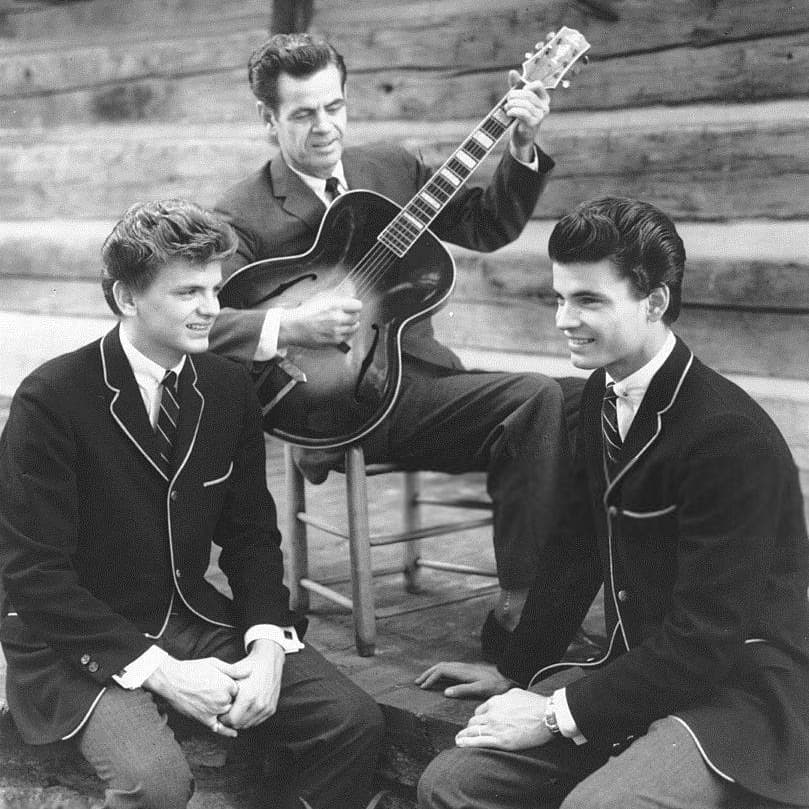
In the summer of 1970, television audiences tuning into the final installment of The Johnny Cash Summer Replacement Show witnessed something far more meaningful than an ordinary musical performance. Standing together under the studio lights were Don Everly, Phil Everly, and the man who helped shape every note they ever sang: their father, Ike Everly.
The song was “Where Could I Go But To The Lord,” a traditional gospel hymn. Yet what unfolded during those few minutes was not simply a performance. It was a living portrait of where one of America’s greatest musical stories truly began.
For many listeners, The Everly Brothers will always be remembered through classics such as “Bye Bye Love,” “Wake Up Little Susie,” “All I Have To Do Is Dream,” and “Cathy’s Clown.” Those records helped define the sound of rock and roll harmony. But long before the screaming fans, the chart success, and the international tours, Don and Phil were two boys growing up in a musical household where gospel songs and Appalachian folk music filled the air.
At the center of that world stood Ike Everly.
A respected musician himself, Ike taught his sons the fundamentals of harmony from an early age. The blend that would later influence everyone from The Beatles to Simon & Garfunkel was not created in a recording studio. It was developed around family gatherings, radio performances, church music, and evenings spent singing together at home.
That history becomes impossible to miss while watching this rare television appearance. As Ike stands between his grown sons, the performance feels less like an entertainment segment and more like a family reunion. The harmonies flow naturally, almost instinctively, revealing a musical connection forged decades earlier.
Many music historians have argued that the true foundation of the Everly sound was not rock and roll at all. It was gospel. Songs such as “Where Could I Go But To The Lord” demanded precision, trust, and emotional unity between singers. Those same qualities later became the hallmark of the Everly Brothers’ recordings.
The setting adds another layer of significance. Johnny Cash’s television program was one of the few places where country, folk, gospel, and early rock traditions could share the same stage. By inviting the Everlys and their father to perform this hymn, the show quietly acknowledged the family’s deep roots within American musical culture.
Looking back today, the performance carries an emotional weight that viewers in 1970 could never have anticipated.
Ike Everly would pass away in 1975.
Phil Everly would leave us in 2014.
Don Everly followed in 2021.
What remains is this remarkable piece of film, preserving a moment when all three voices were still united. There is no hint of loss, no awareness of the decades ahead. Just a father and his sons sharing the music that first brought them together.
Perhaps that is why the performance continues to resonate so deeply. The famous records showcased the Everly Brothers as stars. This hymn reveals them as a family.
The glamour of pop success is absent. The youthful rebellion of rock and roll is nowhere to be found. Instead, viewers see something simpler and perhaps more enduring: a father standing proudly between his sons, hearing the results of a lifetime spent teaching, encouraging, and singing alongside them.
For many fans, that image has become the most moving part of the entire performance.
It reminds us that before they became legends, before they influenced generations of musicians, before their names were written into music history, The Everly Brothers were simply Don and Phil, two boys learning harmony from their father.
And for a few unforgettable minutes in 1970, the world was invited to witness where that extraordinary harmony truly began.