
A Song About National Memory, Human Loss, and the People We Wish Were Still Here
AT 78, EMMYLOU HARRIS STOOD ONSTAGE AND SANG A SONG ABOUT LOST HEROES. SOMEHOW, IT FELT MORE RELEVANT THAN EVER.
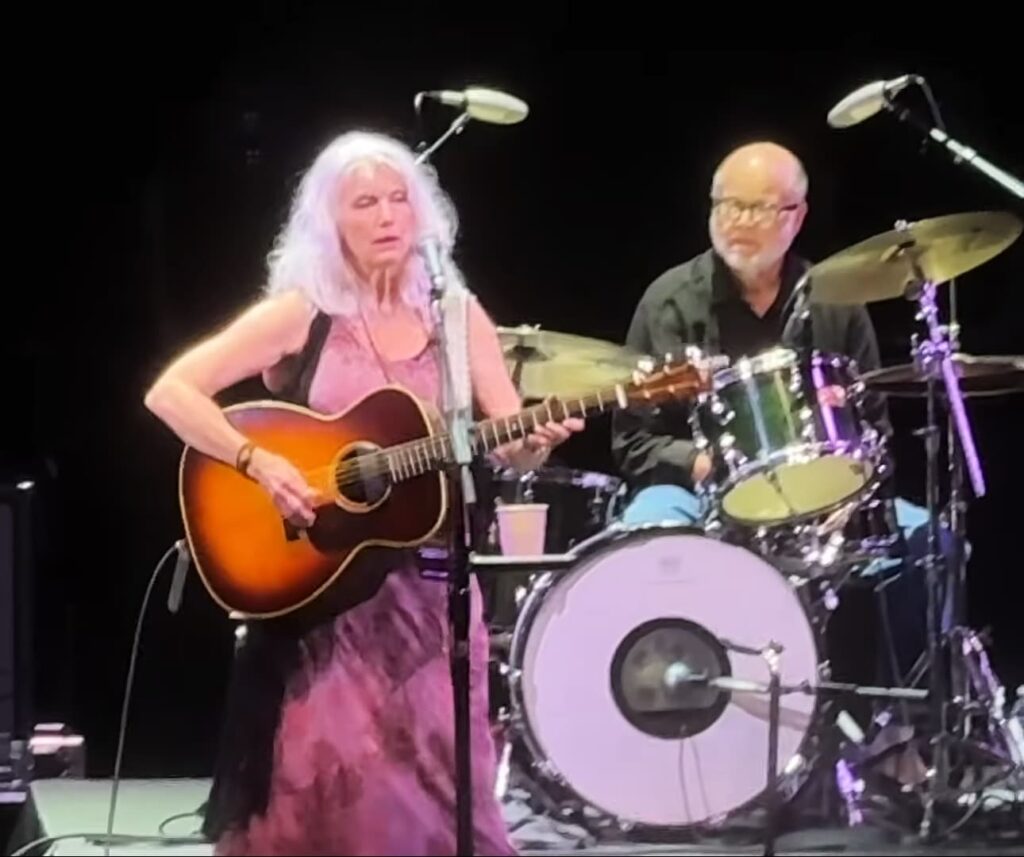
On July 31, 2025, at Virginia’s beloved Wolf Trap, Emmylou Harris delivered a performance that felt less like a concert and more like a quiet conversation with history. Standing beneath the evening lights, the Country Music Hall of Fame member revisited “Abraham, Martin and John,” the timeless 1968 classic written by Dick Holler in the aftermath of one of the most heartbreaking periods in American life.
Unlike many songs that endure because of romance or nostalgia, “Abraham, Martin and John” was born from national grief. Written after the assassinations of Martin Luther King Jr. and Robert F. Kennedy, the song recalls the names of Abraham Lincoln, Martin Luther King Jr., John F. Kennedy, and ultimately Robert Kennedy himself. It is not a song about politics. It is a song about absence. It asks what remains after the people who inspired a nation are suddenly gone.
That question has never truly grown old.
What made Harris’s performance especially powerful was the simple fact that she belongs to the generation that lived through those years. She was not singing about distant historical figures from a textbook. She remembers the era that produced them. She witnessed the turbulence of the 1960s, the civil rights movement, the Vietnam War, and a nation struggling to define itself amid profound social change.
When she softly sang, “Anybody here seen my old friend Abraham?”, the line carried a different weight. It no longer sounded like a lyric. It sounded like a memory.
The setting could not have been more appropriate. Wolf Trap, known for its intimate atmosphere and attentive audiences, provided the perfect home for a song built on reflection rather than spectacle. There were no distractions. No elaborate production. Just a legendary artist and a song that asked listeners to pause and remember.
More than half a century after its creation, “Abraham, Martin and John” continues to find new meaning with every generation. Its enduring power comes from the fact that its central message reaches far beyond American history. Beneath the references to presidents and civil rights leaders lies a universal feeling shared by everyone who has experienced loss.
What happens when the people who helped shape our lives are no longer here?
That emotional layer felt especially poignant coming from Harris. Throughout her remarkable career, she has endured the loss of many cherished friends and collaborators. Names such as Gram Parsons, Guy Clark, John Prine, and Nanci Griffith are woven into the story of American roots music, just as they are woven into Harris’s own journey. Listening to her sing about departed heroes, it was difficult not to imagine some of those beloved figures quietly present within the song’s emotional landscape.
By 2025, Harris was no longer the young artist who introduced herself to the world through Pieces of the Sky. She had become one of the last living links to multiple generations of American music. The passage of time has given her voice a different kind of beauty. Every phrase carries experience. Every pause carries reflection.
That may be the detail many listeners overlook.
The song is not truly about Lincoln, King, or the Kennedys. It is about the emptiness left behind when extraordinary people disappear. The names may change from one generation to the next, but the feeling remains the same.
In that sense, Harris’s performance at Wolf Trap became something larger than a tribute to history. It became a meditation on memory itself. A reminder that while great leaders, artists, and dreamers eventually leave us, their influence continues to echo through the songs we sing and the stories we pass along.
On a summer evening in 2025, Emmylou Harris transformed a classic folk elegy into something deeply personal and profoundly universal. Nearly six decades after the song was written, “Abraham, Martin and John” still asks a question that resonates across time:
Who are the people we still wish were here?