
A Young Love Caught Between Right and Wrong, Singing Anyway
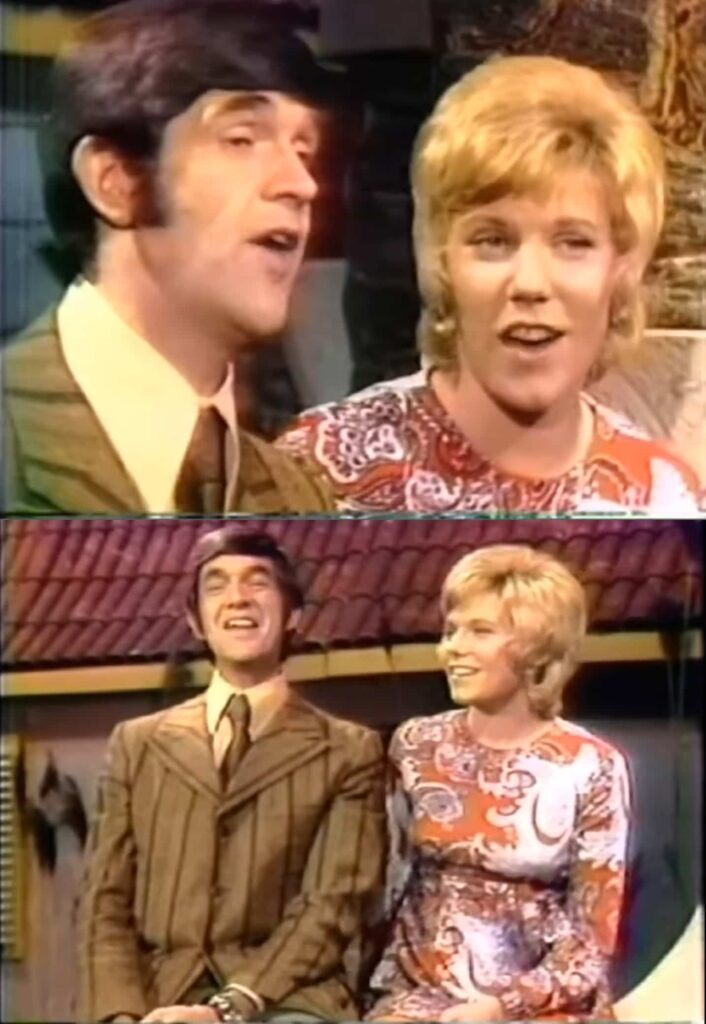
In the early 1960s, on the Canadian television program Singalong Jubilee, a young Anne Murray stood beside Bill Langstroth and performed “Tryin’ To Win”, a folk song often known as “A Losing Battle”. Long before Murray became an international star, this moment captured her at the very beginning, when the music was simpler, the setting more intimate, and the emotions carried a kind of unguarded honesty. The song itself, associated with the influential trio Peter, Paul and Mary, reflects the spirit of the folk revival era, where storytelling and moral tension were often at the heart of the music.
What makes this performance so compelling is not technical brilliance, but sincerity. The premise of the song is quietly complicated. Loving someone who already belongs to another, knowing the odds are against you, yet continuing anyway. “We may be fighting a losing battle, but having a lot of fun trying to win” is both lighthearted and deeply conflicted. It acknowledges the inevitable while still choosing to stay in the moment. For older listeners, this emotional contradiction feels familiar. Life rarely offers clear boundaries, especially when it comes to matters of the heart.
Vocally, Anne Murray is still developing the rich, steady tone that would later define her career. Yet even here, there is a natural warmth in her voice, a clarity that makes every line feel genuine. Singing alongside Bill Langstroth, there is an ease between them that cannot be staged. Their harmonies are gentle, almost conversational, as if they are discovering the song together rather than performing it. Knowing that Langstroth would later become her husband adds a quiet layer of meaning to this moment. What begins as a song about uncertain love carries a hint of something more lasting, something not yet fully realized.
The arrangement remains simple, true to the folk tradition. No elaborate instrumentation, no attempt to dramatize the story. This allows the lyrics to remain at the center, where the tension lives. The idea of a “losing battle” is never resolved. There is no clear ending, no moral conclusion. Only the acknowledgment that sometimes, the experience itself is enough.
Looking back, this performance feels almost like a photograph from another time. It captures Anne Murray before the fame, before the polished recordings, in a moment where music was still closely tied to personal expression. “Tryin’ To Win” becomes more than just a folk song. It becomes a glimpse into beginnings, into choices not yet made, and into the quiet, complicated ways that love first finds its voice.