
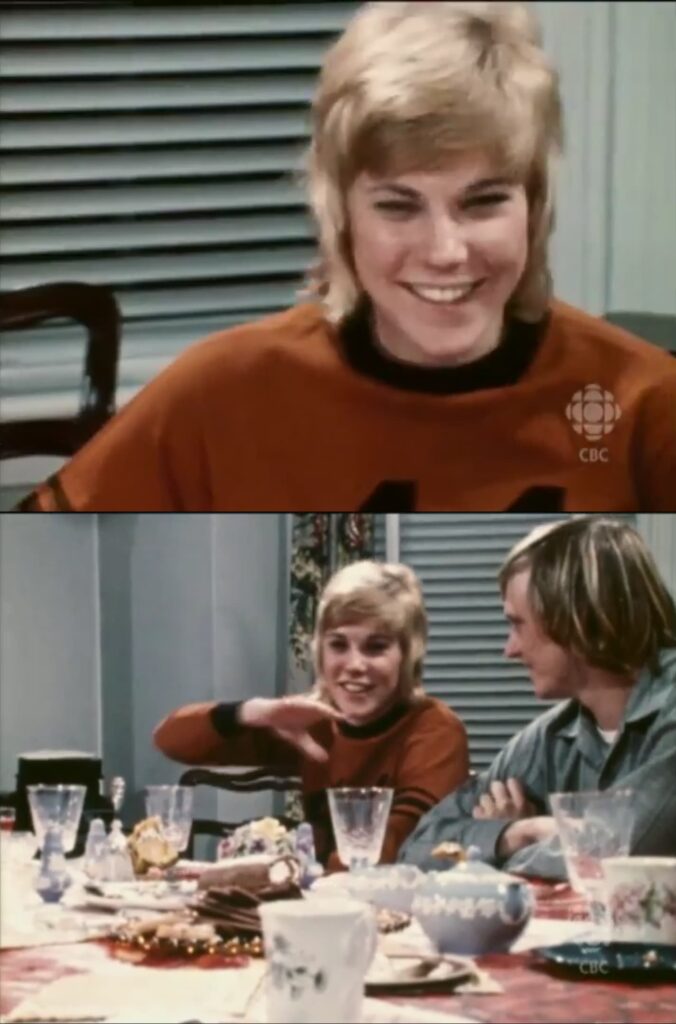
Long Before the Awards and Platinum Records, a Young Anne Murray Sat at Home in Nova Scotia in 1971 Sounding Less Like a Star and More Like the Girl Next Door Learning How to Survive Fame
Watching the 1971 CBC interview with Anne Murray today feels almost like discovering an old family film forgotten inside a drawer for fifty years.
There she is, still young, still slightly shy, sitting comfortably at home in Nova Scotia while speaking with the calm honesty that would later make millions of listeners feel as if they knew her personally. Long before becoming one of Canada’s most successful recording artists, Anne Murray still sounded deeply connected to ordinary life.
That may be the most touching thing about the interview.
At the time, her career was already beginning to explode. She had become the first Canadian female solo singer to reach No. 1 on the American charts and the first to earn a Gold record. Yet nothing about her manner suggested celebrity arrogance. Instead, she laughed while remembering childhood stories about growing up with three older brothers who “treated me like one of them.”
“I cried a lot,” she admitted with a smile.
The family stories give the interview a warmth rarely seen in modern music documentaries. Her brother Bruce pretending to be a priest for neighborhood children, delivering “communion” on the lawn after church, feels less like a media segment and more like memories shared around a kitchen table.
That intimacy became one of Anne Murray’s greatest strengths as an artist.
Unlike many stars of the early 1970s who cultivated mystery or glamour, Anne projected something different: familiarity. Audiences trusted her because she seemed real. Even in this early interview, there is no sign of performance in her personality. She speaks carefully, thoughtfully, and sometimes almost cautiously, as if she is still adjusting to the strange reality that fame has entered her quiet Maritime life.
One of the most fascinating moments comes when she sorts through fan mail.
Marriage proposals, letters from football players, stacks of correspondence arriving faster than she can answer them. Anne laughs about it, but beneath the humor there is already a hint of exhaustion. She explains that answering letters can take five or six hours at a time and admits she is slowly learning the difficult balance between public expectations and private life.
That tension runs quietly underneath the entire interview.
Anne Murray was never the kind of performer who seemed hungry for chaos or celebrity culture. What she wanted was respect, creative involvement, and some control over her own career. Near the end of the conversation, she speaks candidly about how, early on, people discussed her “as a third party,” almost like a packaged product sitting silently in the corner.
But success changed that.
Once her records became hits, people finally began asking for her opinions. She insisted on understanding every part of the business around her because, as she explained, she did not want others making every decision while she remained “completely out of the picture.”
It is remarkable hearing those words from a young female artist in 1971.
Long before the music industry widely encouraged artists to take ownership of their image and career direction, Anne Murray was already quietly demanding it for herself.
Watching the interview now also carries another emotional layer. Modern audiences know what still lay ahead: more than 50 million records sold, four Grammy Awards, twenty four Juno Awards, international tours, television specials, and decades of songs that would become part of everyday life for millions of listeners.
But in this black and white CBC footage, none of that has fully happened yet.
She is simply a young woman from Nova Scotia trying to understand fame while holding tightly to the values she grew up with.
And perhaps that is why the interview remains so moving all these years later.
Before the awards, before the sold out concerts, before becoming a Canadian institution, Anne Murray still looked happiest laughing about childhood memories with her family while sitting quietly at home.