
A Song From 1957 Still Knows Every Broken Heart: Dwight Yoakam’s Tribute to Johnny Cash Keeps the Blues Alive
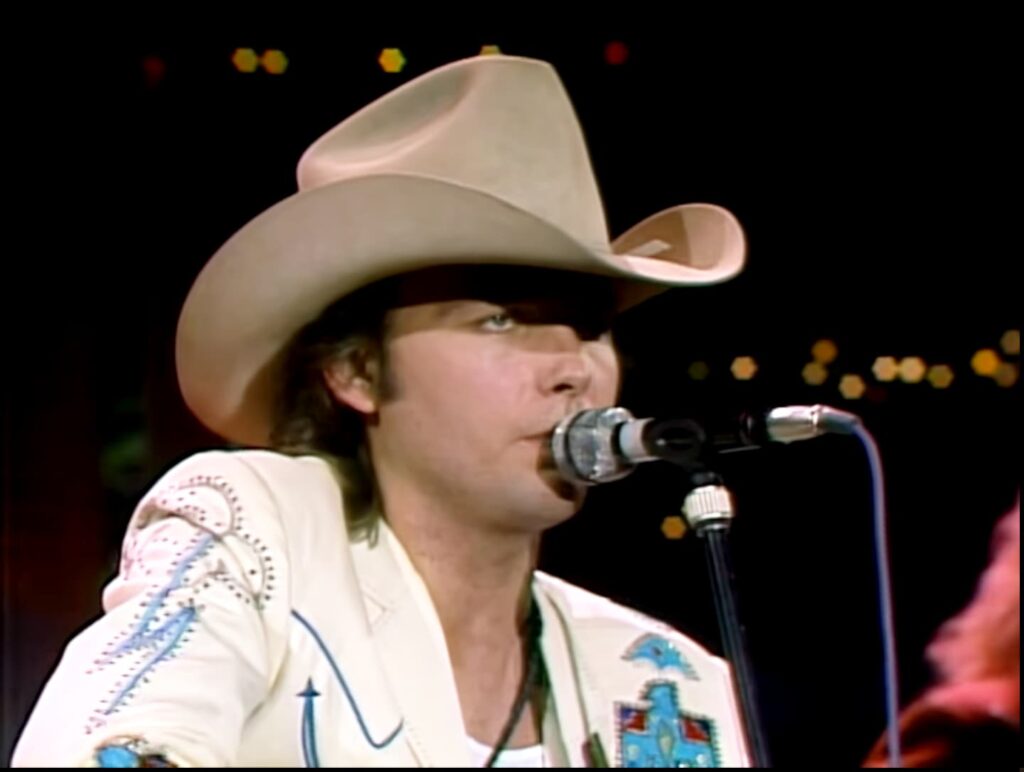
When Dwight Yoakam stepped onto the Austin stage to perform “Home of the Blues,” the most memorable moment arrived before he sang a single note. Smiling, he shared a story about Johnny Cash recalling a conversation from 1957 with legendary producer Sam Phillips, the man who helped launch Sun Records into music history.
According to Cash, Phillips once told him: “You may not be too sure about your singing, but you’ve got that twitch down, son.”
The audience laughed. Yet behind the humor was a lesson that shaped generations of artists. Phillips was not talking about vocal perfection. He was talking about individuality. Presence. Personality. The qualities that cannot be taught.
It was an especially fitting story for Dwight Yoakam, whose entire career has been built on refusing to sound like anyone else.
The song that followed was more than a country standard. Released by Johnny Cash in 1957 during his groundbreaking Sun Records years, “Home of the Blues” remains one of the most enduring expressions of heartbreak ever recorded. Decades later, Yoakam revived it not as a museum piece but as a living conversation between generations of country music.
The performance revealed a side of Yoakam that casual listeners sometimes overlook. Many associate him with the hard-edged Bakersfield Sound, the influence of Buck Owens, and the distinctive style that helped reshape country music during the 1980s. But beneath those California roots lies another foundation entirely: the raw, minimalist sound that emerged from Memphis during the 1950s.
Before Bakersfield, there was Sun Records.
Before Dwight Yoakam, there was Johnny Cash.
By choosing “Home of the Blues,” Yoakam was paying tribute to one of the artists who helped make his own career possible.
What makes the song remarkable is its simplicity. The premise is almost disarmingly straightforward. If you’ve lost the person you love, there is a place waiting for you. A place filled with others carrying the same pain.
The “home of the blues” is not a real location. It is a beautifully imagined refuge for the heartbroken.
Cash’s lyrics transform sorrow into an address. Heartache becomes a destination. Loneliness becomes a community. Few songwriters have ever captured emotional pain so vividly with such economical language.
As Yoakam sang lines about memories, shattered dreams, and nights that never seem to end, the decades separating the performance from the song’s original release seemed to disappear. The emotions felt as immediate as they must have felt in 1957.
Austin provided the perfect setting for such a moment. Long regarded as one of America’s great music cities, it has always celebrated tradition while welcoming new voices. Hearing a classic Sun Records song performed there felt like listening to country music speak to itself across time.
Perhaps the most impressive aspect of the performance was what Yoakam chose not to do. He never attempted to imitate Johnny Cash. There was no forced baritone, no exaggerated phrasing, no attempt to recreate the original recording note for note.
Instead, he sang the song with his own unmistakable voice.
The result honored Cash while remaining unmistakably Dwight Yoakam. That balance is what separates a genuine tribute from a simple imitation.
Looking back today, the opening story about Johnny Cash may be as valuable as the performance itself. It reveals a side of Cash that fans rarely saw: self-deprecating, funny, and reflective about the uncertain early days before fame arrived.
More importantly, it reminds us that great country music has never been about technical perfection. It has always been about truth.
Nearly half a century separated Dwight Yoakam’s performance from the release of “Home of the Blues.” Yet the song remains timeless because every generation understands its message. There will always be lost loves, sleepless nights, cherished memories, and people searching for comfort after disappointment.
That is why the finest country songs never grow old. They simply wait for the next voice to carry them forward. On this night in Austin, Dwight Yoakam did exactly that.