
A Broken Heart, a Loud Guitar, and a Dance Floor Full of Strangers: Why “Turn It On, Turn It Up, Turn Me Loose” Still Feels So Alive
When most country songs talk about heartbreak, they slow down. The tears come first. The loneliness settles in. The singer sits alone with memories that refuse to fade.
Then there is “Turn It On, Turn It Up, Turn Me Loose.”
Released in 1990 and later becoming one of the signature hits of Dwight Yoakam, the song takes a completely different approach to heartache. Instead of asking for sympathy, the narrator asks for something else entirely: louder music. Turn on the jukebox. Turn up the volume. Let the steel guitar and driving rhythm drown out the thoughts he can no longer bear to hear.
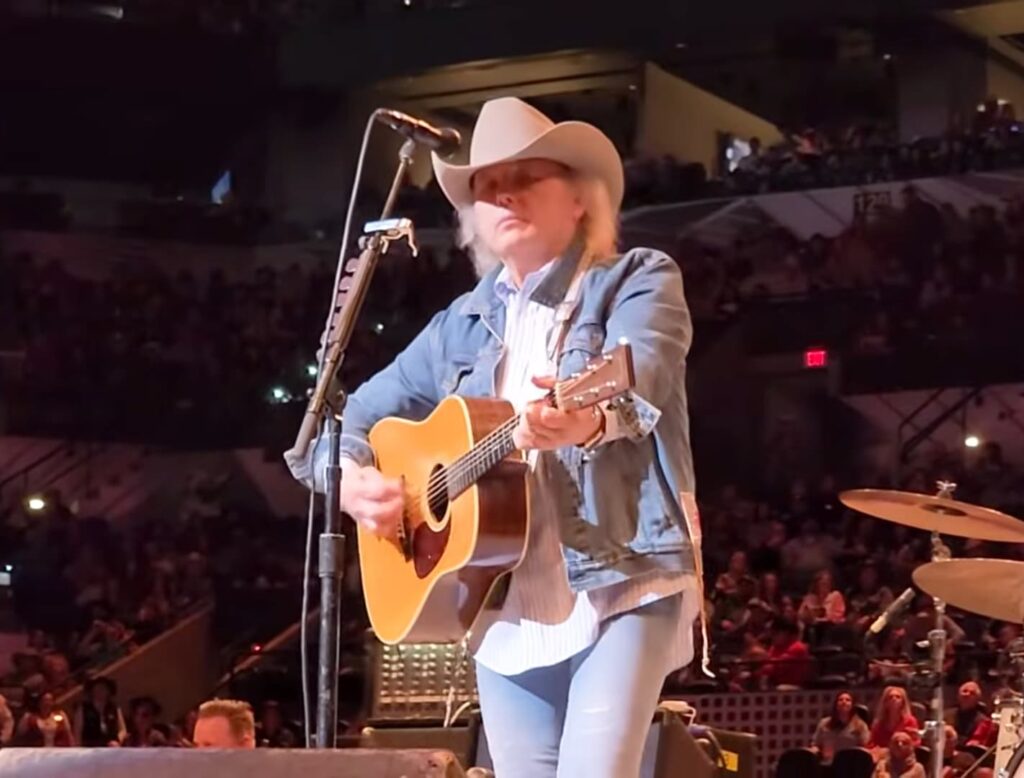
That spirit was on full display when Dwight Yoakam performed the song at the San Antonio Stock Show & Rodeo, a setting that seemed tailor-made for its energy. Surrounded by thousands of country music fans, the performance felt less like a breakup song and more like a celebration of resilience.
Yet beneath the infectious rhythm lies a deeper story.
At first listen, the song sounds like one of the happiest breakup records ever written. The beat is upbeat. The guitars sparkle with the unmistakable influence of the Bakersfield Sound pioneered by legends like Buck Owens and Merle Haggard. The crowd claps along. People smile. Some dance.
But listen more closely and another picture emerges.
The man at the center of the song is not healed. He is distracted.
If he were truly over the relationship, he would not need the music quite so loud. He would not be begging for another song, another drink, another distraction. The brilliance of the lyric is that it captures a feeling many people recognize. Sometimes the first response to heartbreak is not silence. Sometimes it is noise.
That tension between joy and pain is one reason the song has endured for decades. It works both as a honky-tonk anthem and as a surprisingly insightful portrait of emotional survival. The narrator is trying to outrun his memories, even as the listener senses they are still right behind him.
The San Antonio Rodeo provided the perfect backdrop for that contradiction. What begins as one man’s struggle becomes something much larger when performed before a massive audience. A song about private disappointment transforms into a shared experience. Thousands of voices sing along. Thousands of hands clap in time. Individual sadness is absorbed into collective celebration.
That has always been one of country music’s greatest strengths. It can take personal pain and turn it into community.
The performance also highlighted why this song remains one of the clearest expressions of Dwight Yoakam’s artistic identity. Nearly everything that defines his career can be found within these few minutes: the Bakersfield-inspired guitar work, the honky-tonk rhythms, the confident stage presence, and the distinctive voice that helped revive traditional country sounds for a new generation.
More than three decades after its release, “Turn It On, Turn It Up, Turn Me Loose” still refuses to age. The rhythm remains irresistible. The chorus remains instantly recognizable. The message remains relatable.
Perhaps that is because the song asks a question that never goes out of style: What do people do when their hearts are broken?
Some choose silence. Some seek company. Some bury themselves in work.
And some, like the man in Dwight Yoakam’s classic hit, simply ask the band to play louder.
Whether that is healing or hiding is still open for debate. But judging by the reaction in San Antonio, it remains one of country music’s most enjoyable ways of facing heartbreak.