
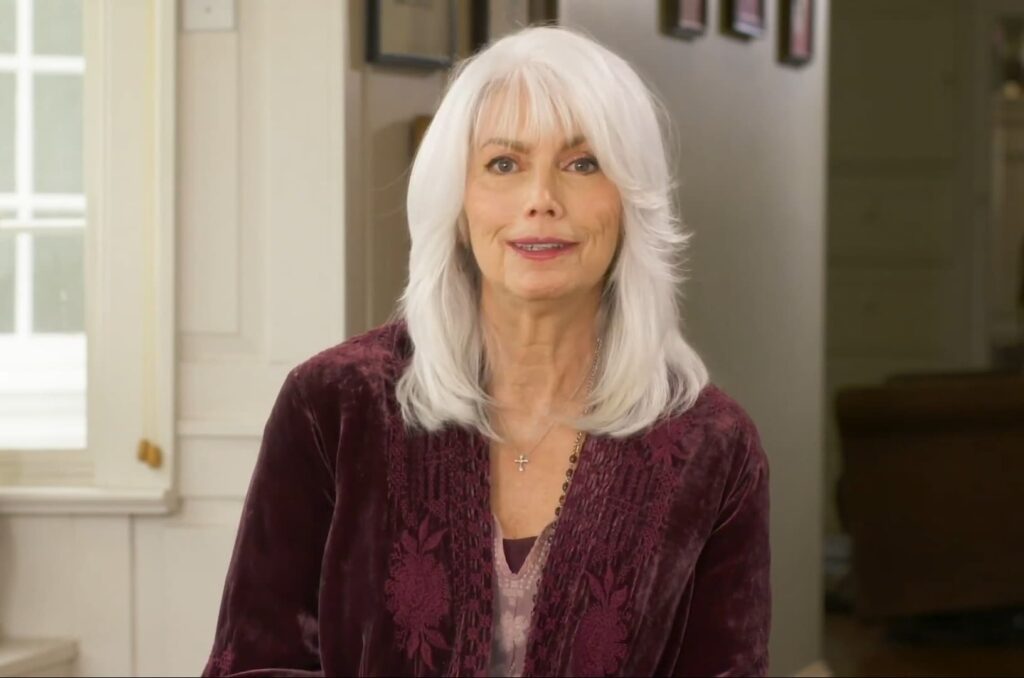
“You Changed My Life”: Emmylou Harris Pays a Moving Tribute to Joan Baez at the Kennedy Center Honors
Some tributes celebrate an artist’s achievements. Others reveal something even more meaningful: how one artist changed the lives of countless others who followed in their footsteps.
That was the heart of Emmylou Harris’s deeply personal tribute to Joan Baez during the 43rd Kennedy Center Honors, an event dedicated to celebrating artists whose work has shaped the cultural history of America and the world.
Standing before a national audience, Harris did not begin by listing awards, chart success, or historic accomplishments. Instead, she spoke as a fan. More specifically, she spoke as a young girl whose life took a different direction because she heard Joan Baez sing.
“From the moment your astonishing voice pierced through my 16-year-old soul,” Harris recalled, “I was inspired, driven even, to pick up a guitar and find my own voice.”
It was a simple statement, yet it revealed the profound influence Baez had on an entire generation of musicians. Long before Harris became one of the most respected figures in American music, she was one of many young listeners sitting beside a record player, absorbing every note and every word from Baez’s albums. Those recordings were not merely entertainment. They were an education.
Harris described spending countless hours listening to Baez’s music, searching for inspiration and understanding. Like many aspiring artists of the 1960s and 1970s, she discovered through Baez a different kind of song. These were songs that carried history, conscience, and conviction. They introduced listeners to folk traditions, bluegrass influences, and social commentary that would shape the music many of them would later create themselves.
One of the most memorable moments of the tribute came when Harris shared a remark from Jeff Hanna of the Nitty Gritty Dirt Band, who once joked that “Joan Baez was my gateway drug to bluegrass.” The line drew a smile, but it also reflected a larger truth. For countless musicians, Baez opened doors to musical worlds they might never have discovered otherwise.
Yet Harris made it clear that Baez’s influence extended far beyond music.
Throughout her career, Baez became one of the most recognizable voices for peace, civil rights, and social justice. Harris recalled seeing her perform “Where Have All the Flowers Gone,” the powerful anti-war song associated with Pete Seeger, even singing it in German for international audiences. She also highlighted Baez’s haunting interpretation of “Birmingham Sunday,” the song written by Richard Fariña about the tragic 1963 church bombing in Birmingham, Alabama, that claimed the lives of four young Black girls.
For Harris, these performances represented something larger than artistic excellence. They demonstrated a lifelong commitment to using music as a force for change.
“From the beginning and continuing over the decades,” Harris said, “you lifted that voice for those who had none, the oppressed and forgotten.”
It was perhaps the most powerful observation of the evening. While many singers become famous because of their voices, Joan Baez became extraordinary because of how she chose to use hers. She sang not only for herself but for those whose stories were often ignored. Through protest songs, benefit concerts, and decades of activism, she became a symbol of conscience during some of the most turbulent chapters of modern history.
Harris went even further, suggesting that Baez helped move America closer to the ideals championed by Martin Luther King Jr. Her music, activism, and unwavering commitment to justice gave voice to the values of freedom, dignity, equality, and human rights that continue to resonate today.
As the tribute drew to a close, Harris raised a virtual glass to Baez with words filled with affection and gratitude.
“You raised the bar for the rest of us.”
It was a fitting conclusion. For more than six decades, Joan Baez has been admired not only as a remarkable singer but as a moral voice whose influence reaches far beyond the stage. And in the heartfelt words of Emmylou Harris, viewers were reminded that some artists leave behind more than songs.
They leave behind a legacy that inspires others to find their own voice and, perhaps, use it to make the world a little better.