
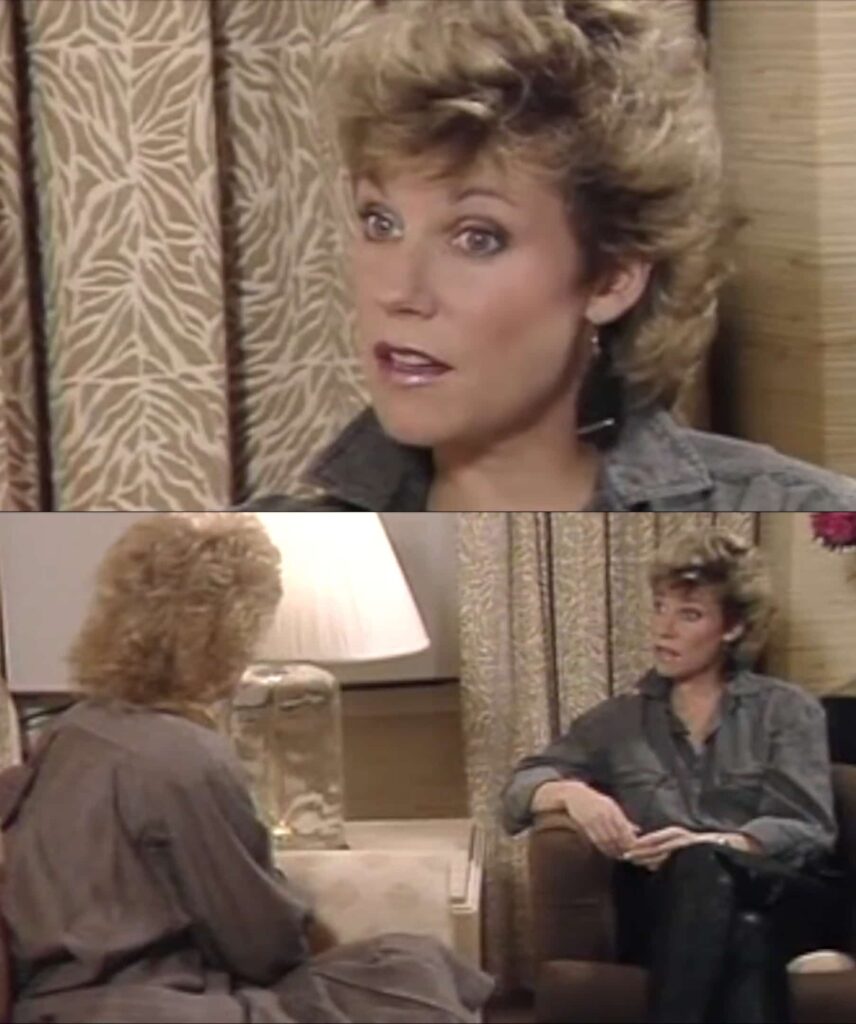
From Doubt to Quiet Triumph: Anne Murray and the Years That Nearly Broke Her Spirit
In this deeply revealing interview, Anne Murray opens a window into the lesser-known chapters behind her remarkable career, tracing a journey that began far from the spotlight and moved through uncertainty, loneliness, and ultimately, hard-earned clarity. Before she became the voice behind “Snowbird”, the song that would make her the first Canadian female solo artist to reach No. 1 in the United States, Murray was simply a young woman from a small mining town who believed singing was something you did for yourself, not for a living.
That early humility shaped everything that followed. Even as opportunities began to appear, she approached music cautiously, almost reluctantly. Teaching school after university, driving long hours to perform on weekends, and slowly stepping into the world of television, her path was anything but calculated. When “Snowbird” became an unexpected hit in 1970, it did not bring immediate confidence. Instead, it brought pressure. Murray speaks candidly about how success arrived too soon, before she felt ready, leaving her to navigate a demanding industry without a foundation beneath her feet.
The years that followed were among the most difficult of her life. For more than two years after her breakthrough, she struggled without another major hit, quietly fearing she had already reached her peak. The phrase “one hit wonder” lingered in her mind, not as a label imposed by critics, but as a private doubt she could not shake. During this time, she worked relentlessly, managing her own tours, booking performances, and traveling endlessly from one small venue to another. What might appear, from the outside, as the life of a rising star was, in her memory, a period marked by exhaustion and isolation.
There is a striking honesty in how she describes those “dark years.” She does not romanticize them. She speaks of loneliness on the road, of living out of suitcases, of returning to empty spaces with little sense of stability. These were not the years of glamour often associated with success. They were, as she puts it, miserable. And yet, they became the contrast that would later define her appreciation for balance and home.
Her personal life eventually provided that grounding. Meeting and marrying Bill Langstroth brought a sense of structure she had long been missing. More importantly, the birth of her children, William and Dawn, reshaped her priorities entirely. Murray makes it clear that family was not an afterthought to her career. It became the center of it. She set boundaries, limited her time on the road, and made deliberate choices to protect a sense of normalcy at home.
Musically, that turning point arrived with “You Needed Me”, a song that did more than top charts. It restored her belief in herself. Coming at a moment when she felt her career slipping away, it became the anchor she desperately needed. With it came not just success, but direction.
Looking back, what defines Anne Murray is not simply her achievements, though they are historic. It is her resilience. She did not avoid hardship, nor did she allow it to define her. Instead, she carried it quietly, learned from it, and emerged with a clearer understanding of who she was, both as an artist and as a person. And perhaps that is why her voice, steady and unmistakable, continues to resonate. It carries not just melody, but experience, the kind that can only be earned over time.