
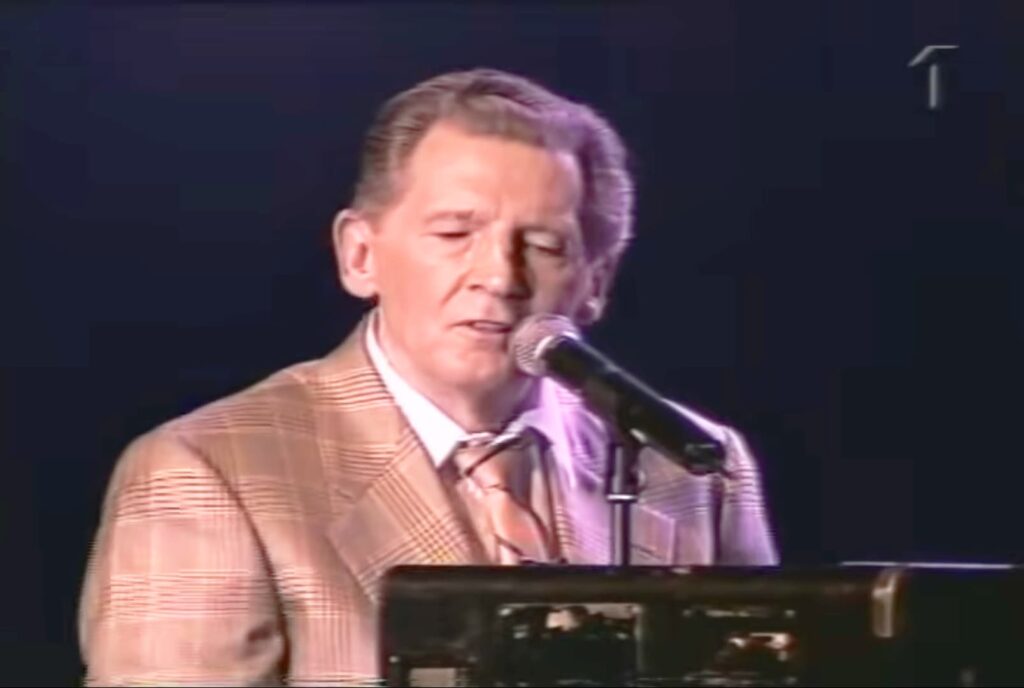
“Sweet Little Sixteen” Was Already a Rock and Roll Classic. When Jerry Lee Lewis Performed It in Sweden, He Turned It Into a Piano-Fueled Celebration of the Music That Defined a Generation.
There are performances where Jerry Lee Lewis simply plays a song, and then there are performances where he reminds the world why he earned the nickname “The Killer.” His electrifying rendition of “Sweet Little Sixteen,” recorded during a concert in Sweden, belongs firmly in the second category. Even decades after the birth of rock and roll, Lewis approached the stage with the same fearless spirit that had made him one of its founding giants.
Originally written and recorded by Chuck Berry in 1958, “Sweet Little Sixteen” became one of the defining anthems of early rock and roll. The song celebrated the excitement of teenage fans who traveled from city to city, collecting autographs and dreaming of seeing their favorite performers. Berry’s lyrics painted a vivid picture of a generation discovering a new musical identity, and the record quickly became one of his signature hits.
When Jerry Lee Lewis took on the song, he never attempted to imitate Berry. Instead, he reshaped it through the explosive energy of his piano. From the opening notes, Lewis attacked the keyboard with the unmistakable style that forever changed rock and roll. Every pounding chord pushed the rhythm forward, giving the familiar classic a new sense of urgency while preserving its joyful spirit.
What makes this Swedish performance especially memorable is the contrast between the audience’s anticipation and Lewis’ effortless command of the stage. He no longer needed the shocking antics that had made headlines during the 1950s. There was no need to set a piano on fire or leap across the keyboard. His presence alone carried the weight of history. The moment his fingers touched the keys, the room understood it was witnessing one of rock’s original architects doing what he did better than almost anyone else.
As he sings about teenagers chasing concerts from Boston to New Orleans, the song becomes more than a nostalgic look at youthful excitement. Coming from Lewis, it also feels like a reflection on the remarkable journey of rock and roll itself. He had lived through the birth of that movement, helped shape it, and was still performing its defining songs with unmistakable passion decades later.
The piano remains the true star of the performance. Lewis fills every musical space with rolling boogie-woogie runs, thunderous left-hand rhythms, and playful improvisations that keep the audience engaged from beginning to end. His voice, weathered by time yet still full of fire, adds another layer of authenticity. Rather than softening with age, it carries the confidence of someone who has nothing left to prove.
Watching the performance today also serves as a reminder of Lewis’ remarkable versatility. Although celebrated for classics like “Great Balls of Fire” and “Whole Lotta Shakin’ Goin’ On,” he always possessed a deep respect for the songs and artists who helped build rock and roll alongside him. His interpretation of “Sweet Little Sixteen” is less a cover than a heartfelt tribute from one pioneer to another.
For longtime fans, this Swedish concert captures something that statistics and awards never can. It preserves the unmistakable chemistry between Jerry Lee Lewis, his piano, and a live audience eager to experience the raw excitement that first made him famous. Time may have changed the man, but it never diminished the spirit behind the music.
Decades after the golden age of rock and roll began, Jerry Lee Lewis proved once again that true legends do not simply revisit old songs. They breathe new life into them, ensuring that every performance feels as thrilling as the first time the world heard them.