
A Road Song of Escape Where Leaving Becomes Its Own Kind of Freedom
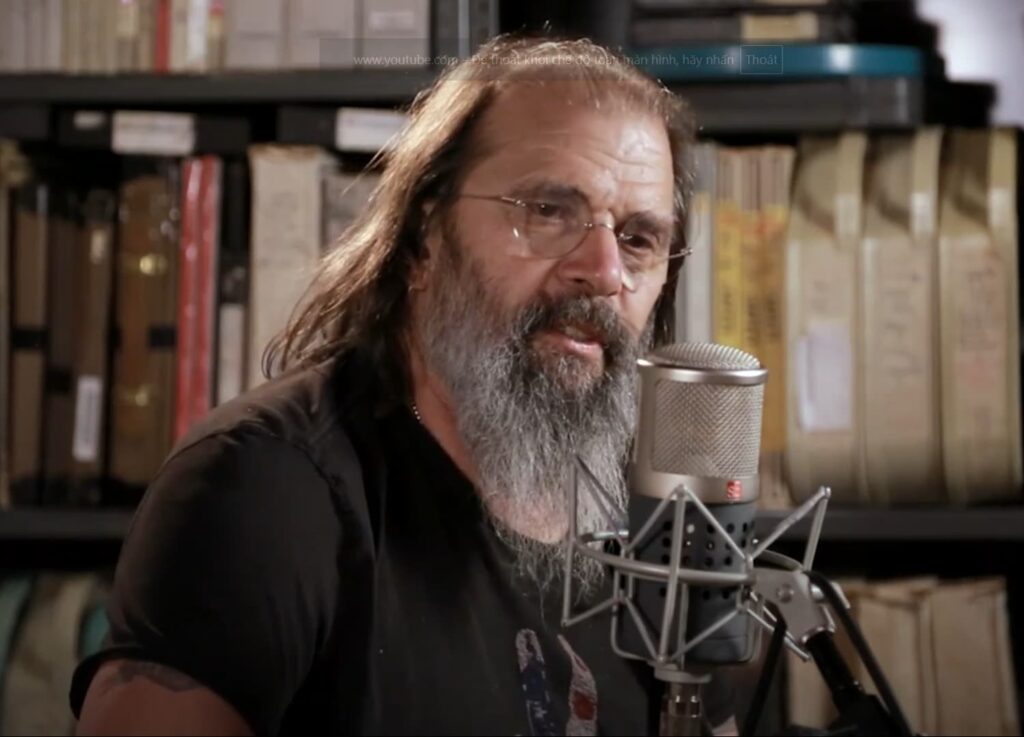
On March 28, 2019, inside the intimate setting of Paste Studios in New York City, Steve Earle revisited “L.A. Freeway”, a song written by his longtime friend and mentor Guy Clark. First recorded by Clark in 1975 on the landmark album “Old No. 1”, the song has long stood as one of the most vivid portraits of restless departure in country and folk music. In Earle’s hands, decades later, it carries not only the spirit of the original, but the weight of memory, friendship, and time.
By 2019, Steve Earle was no longer the young songwriter chasing horizons. He had become a storyteller shaped by experience, someone who understood the road not just as a destination, but as a way of life. That perspective changes the way “L.A. Freeway” feels. What once sounded like youthful escape now carries a quieter sense of reflection. The urgency remains, but it is tempered by understanding.
From the opening lines, the imagery is unmistakable. Packing up dishes, leaving keys behind, saying goodbye without too much ceremony. These are not grand gestures. They are small, practical acts that signal a larger decision. To leave. To move on. For older listeners, this kind of departure feels familiar. It is rarely dramatic. More often, it happens in these quiet, almost routine moments.
Steve Earle’s delivery is direct and unadorned. His voice, worn in a way that only years can shape, fits the song naturally. There is no attempt to recreate the past or imitate Guy Clark. Instead, he honors the song by letting it speak through him, allowing its meaning to evolve. When he sings about getting off the L.A. Freeway, it no longer feels like rebellion. It feels like necessity.
The performance itself remains stripped down, centered on voice and guitar. This simplicity allows the storytelling to take precedence. Details like “a box of Nilla wafers” or “a cloud of smoke” might seem small, even casual, but they anchor the song in reality. They make the journey tangible.
There is also a subtle undercurrent of longing beneath the movement. The mention of someone left behind, a voice remembered, suggests that leaving is never entirely clean. Something always stays with you. That tension between freedom and attachment is what gives “L.A. Freeway” its enduring power.
Looking back, this 2019 performance stands as more than a cover. It is a continuation of a musical conversation between generations. Through Steve Earle, the spirit of Guy Clark’s writing remains alive, not preserved, but lived. And in that quiet room in New York, the road stretches out once again, not just as a path forward, but as a memory carried along the way.