
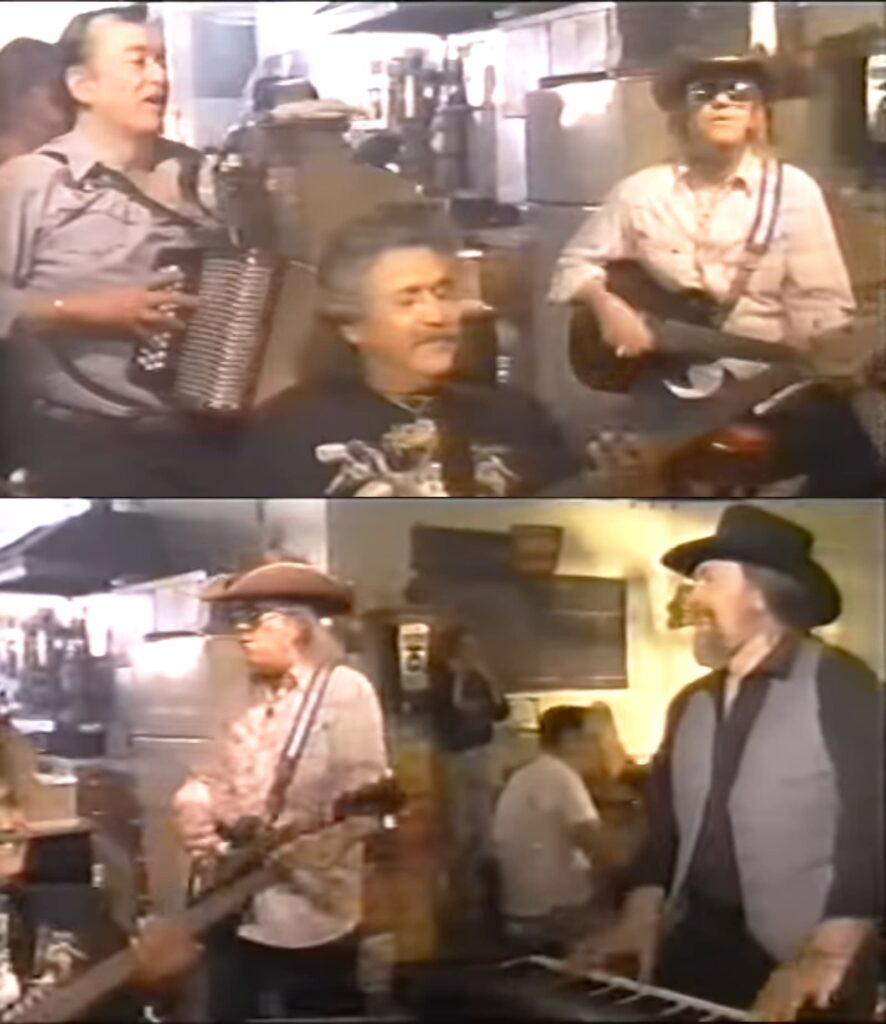
FOUR TEXAS OUTLAWS TURNED A SIMPLE COUNTRY SONG INTO A BORDERLAND CELEBRATION OF PURE JOY
When Texas Tornados launched into “Is Anybody Goin’ To San Antone” on stage, it never sounded like an ordinary country cover. In their hands, the old classic became something warmer, wilder, and deeply alive, filled with the dust, humor, rhythm, and heart of South Texas. Watching them perform it now feels like opening the door to a crowded roadside dance hall where country music, conjunto, rock and roll, and Tex-Mex soul all collide under neon lights.
What made the Texas Tornados so extraordinary was not simply the talent inside the band, although the lineup itself was legendary. Doug Sahm, Freddy Fender, Flaco Jiménez, and Augie Meyers each carried decades of musical history before they ever stepped onto a stage together. Separately, they were already respected figures. Together, they sounded like Texas itself.
Originally made famous by Charley Pride in 1970, “Is Anybody Goin’ To San Antone” was already a beloved country hit long before the Tornados touched it. But their version added an entirely different spirit. The song no longer felt lonely or reflective. It became communal. Celebratory. Alive with movement.
From the very first notes, Flaco Jiménez’s accordion transforms the atmosphere. The instrument dances around the melody with effortless joy, pulling the audience into the rhythm before a single lyric fully lands. Then comes Freddy Fender’s unmistakable voice, weathered and tender at the same time, sounding like a man who has spent a lifetime singing under desert skies and dim barroom lights.
Doug Sahm brought the rebellious heartbeat. He always seemed completely incapable of treating music like a museum piece. Every performance carried looseness and spontaneity, as though the band might suddenly veer into another song, another language, or another party entirely. That spirit is exactly what made the Texas Tornados feel so human. Nothing about them sounded manufactured.
For older audiences especially, performances like this awaken memories of a disappearing musical America, a time when regional sounds still mattered deeply and artists proudly carried the accents and traditions of their hometowns into national music culture. The Tornados never polished away their roots. They celebrated them openly.
There is also something deeply comforting about the chemistry between these musicians. You can hear decades of friendship and mutual respect in every smile, every instrumental break, every playful vocal exchange. They were not chasing trends or radio formulas. They were simply making music that felt honest to who they were.
And perhaps that is why this performance still resonates so strongly today. Beneath the humor and danceable energy, there is an emotional truth running through it: the idea that music can erase borders, connect generations, and make strangers feel like family for a few beautiful minutes.
By the time the song ends, you are not just hearing a performance anymore. You feel like you have spent the evening somewhere between a Texas dance hall and a front porch gathering at sunset, surrounded by laughter, cold beer, and old friends who refuse to let the music die.
That was the magic of the Texas Tornados. They did not merely play songs.
They turned them into celebrations of life itself.
 Oldies Songs