
Seven Years After the Song That Changed Everything, The Everly Brothers Returned to Where the Dream Began
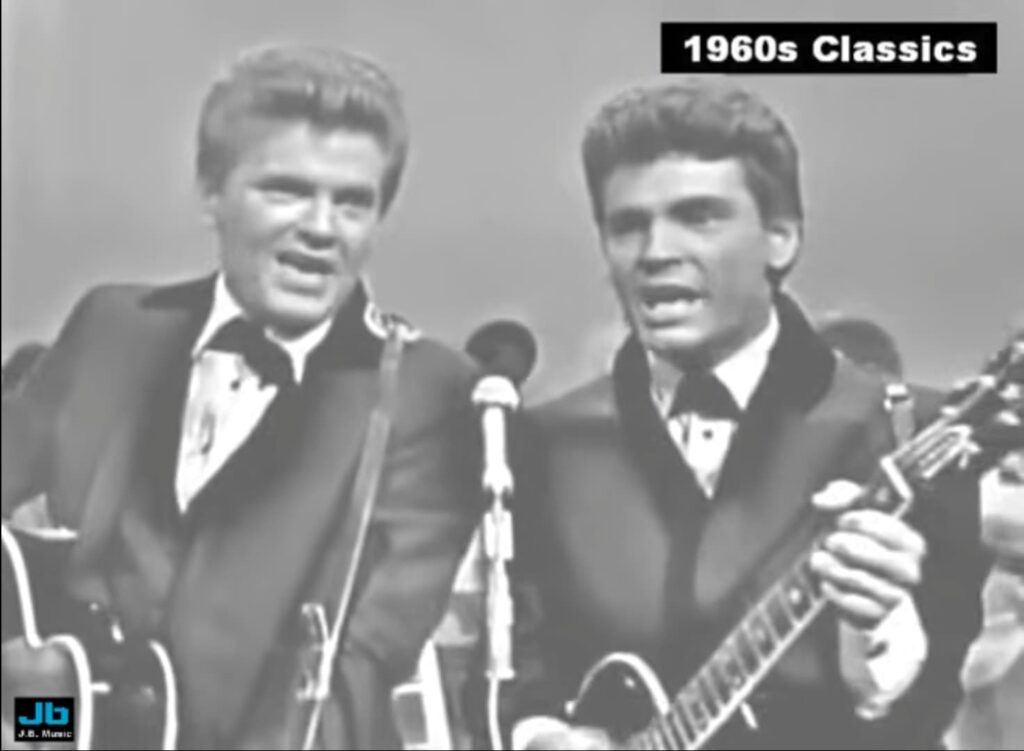
When The Everly Brothers stepped onto the stage of Shindig! on November 18, 1964, they were not introducing a new hit. They were revisiting the song that had transformed their lives.
Before the performance began, the show’s host reminded viewers that “Bye Bye Love” was the song that launched Don and Phil Everly on their climb to becoming the number one vocal duo in the world. It was more than a simple introduction. It was a reminder that one record had changed the course of music history.
Released in 1957, “Bye Bye Love” almost never belonged to the Everlys at all. The song, written by the husband-and-wife songwriting team Felice and Boudleaux Bryant, was reportedly rejected by dozens of artists before reaching the young brothers from Nashville. What followed became one of the most remarkable success stories in popular music. The record climbed to No. 2 on the pop charts, reached No. 1 on the country charts, and introduced the world to the unforgettable harmony style that would influence generations of musicians.
That history gives the 1964 performance an emotional weight that goes beyond the song itself.
The world had changed dramatically during those seven years. In 1957, rock and roll was still young. By late 1964, The Beatles, The Rolling Stones, and the entire British Invasion were reshaping popular music. American audiences were embracing new sounds, new faces, and a new era.
Yet amid that musical revolution, The Everly Brothers walked onto a television stage and sang the very song that started it all.
There was something quietly powerful about the moment. They were no longer the ambitious young men chasing success. They had become established stars looking back at the record that opened every door. The performance felt less like a comeback and more like a reflection, a return to the place where the journey began.
Ironically, although their commercial dominance in the United States had begun to fade by 1964, their influence was growing stronger than ever. Many of the artists capturing headlines during the British Invasion had built part of their sound on the foundation created by the Everlys. The Beatles, Simon & Garfunkel, and The Hollies all drew inspiration from the brothers’ close vocal harmonies. Long before harmony duos became fashionable around the world, Don and Phil had already shown what was possible.
That reality adds another layer to the Shindig performance. While younger acts were dominating charts, the architects of that sound were still standing on stage, reminding audiences where many of those ideas originated.
Even the title “Bye Bye Love” seems to carry a deeper meaning when viewed through the lens of 1964. Originally a heartbreak song, it now feels almost symbolic of a changing musical landscape. The carefree rock and roll world of the 1950s was giving way to something new. The Everly Brothers stood at the intersection of those eras, representing both a celebrated past and a lasting influence on the future.
Watching the performance today, what stands out most is the confidence in their voices. The youthful excitement of the original 1957 recording had evolved into something richer and more assured. The harmonies remained breathtaking, but they carried the experience of artists who had lived through success, change, and the relentless passage of time.
More than sixty years later, this appearance on Shindig! feels like a precious historical snapshot. It captures two pioneers revisiting the song that changed their lives while the music world changed around them.
And perhaps that is why the performance continues to resonate. It is not simply “Bye Bye Love.” It is the sound of two brothers returning to the beginning of their story, proving that great songs never really belong to one era. They travel through time, waiting for the next listener to discover them all over again.