
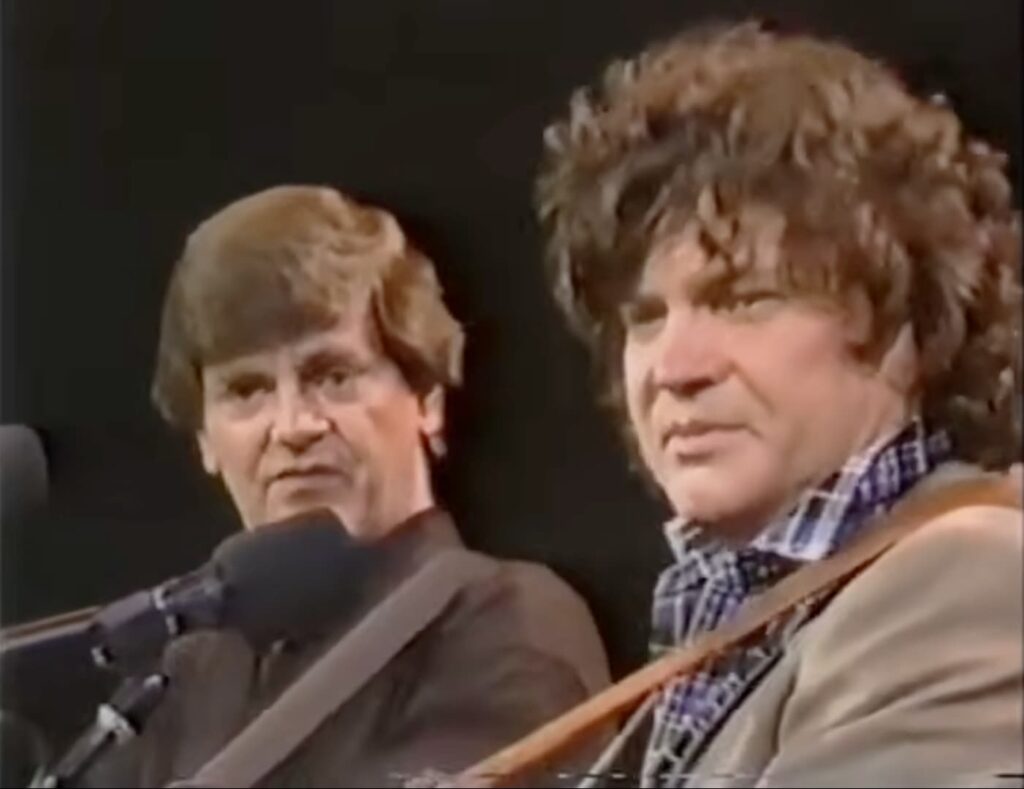
On a Warm Night in Minnesota, The Everly Brothers Turned a Radio Show Into a Living Memory of America’s Musical Past
On May 16, 1987, inside the historic World Theater in St. Paul, Minnesota, something extraordinary happened during a live broadcast of A Prairie Home Companion. What began as a radio variety show slowly transformed into a deeply emotional reunion with America’s musical memory when Don and Phil Everly, known forever as The Everly Brothers, stepped to the microphones and filled the theater with harmonies that seemed untouched by time.
Backed by an extraordinary group that included Albert Lee, Taj Mahal, Kate MacKenzie, Rich Dworsky, and host Garrison Keillor, the evening became far more than a concert. It felt like an old family gathering where songs carried stories older than the stage itself.
The opening moments immediately set the tone. The brothers drifted into “Hello Love” before sliding naturally into their immortal classic “Bye Bye Love.” The audience erupted, not simply because they recognized the song, but because those harmonies still sounded miraculous three decades after they first changed popular music forever. Don’s warm steadiness and Phil’s soaring high notes blended with the same effortless chemistry that once made teenagers stop beside jukeboxes in the 1950s.
But the real beauty of the night came from the conversations between songs.
Garrison Keillor gently guided the brothers back through memories of their childhood in Shenandoah, Iowa, where they sang on morning radio broadcasts with their parents, Ike and Margaret Everly, before school began. Listening to Don and Phil laugh about performing tearjerker ballads at 5:30 in the morning revealed something essential about the Everlys. Long before rock and roll fame arrived, they were children raised inside the tradition of American roots music.
That history came alive during heartbreaking performances of old radio standards like “Old Shep,” “Silver-Haired Daddy of Mine,” “Rocking Alone in an Old Rocking Chair,” and “The Lightning Express.” These were not polished pop hits designed for charts. They were songs of mothers, fathers, trains, loneliness, death, and faith. Songs passed down through front porches and farmhouse radios.
At one point, the brothers joked that sadness itself was part of their musical upbringing. The audience laughed, but there was truth beneath it. The Everlys understood something many modern performers forget: sorrow and tenderness often sit side by side in the greatest country and folk music.
One of the evening’s most unexpectedly moving moments arrived with their performance of “Why Worry,” written by Mark Knopfler of Dire Straits. The song’s gentle reassurance felt almost autobiographical coming from the brothers, who had endured years of estrangement before reuniting earlier in the decade. When they sang, “There should be laughter after pain,” it no longer sounded like a lyric. It sounded like experience.
The crowd responded with complete devotion throughout the night, especially during timeless hits like “All I Have to Do Is Dream” and “Wake Up Little Susie.” Those songs carried listeners back to another America, one filled with drive-ins, transistor radios, late-night dances, and small-town summers that now seem impossibly distant.
Yet perhaps the most emotional performance came near the end with the gospel hymn “Softly and Tenderly.” Joined by Kate MacKenzie and accompanied by the elegant guitar work of Albert Lee, the Everlys sang with a quiet spiritual grace that silenced the theater. There was no showmanship left by that point, only honesty.
Looking back now, the 1987 broadcast feels even more meaningful. Phil Everly would pass away in 2014, leaving behind one of the most influential vocal legacies in modern music. But on that spring evening in Minnesota, the brothers sounded eternal.
For a few unforgettable hours, the World Theater was no longer simply a performance hall. It became a place where old American songs, old family memories, and old emotions still lived and breathed beneath the glow of stage lights and radio microphones.