
The Night Waylon Jennings Turned an Outlaw Anthem Into a Personal Reckoning
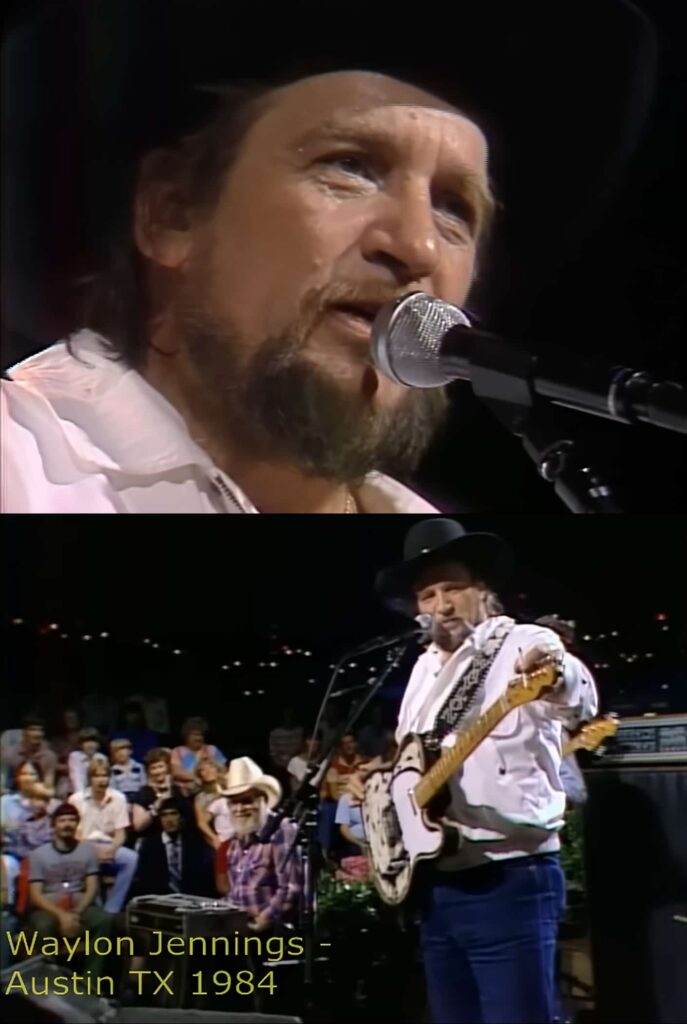
On August 7, 1984, Waylon Jennings walked onto the stage carrying more than a guitar. He carried the full weight of the outlaw image that had followed him for decades. But when he introduced “I’ve Always Been Crazy,” the atmosphere shifted immediately. With a crooked smile, he joked about the song being written “about myself… or maybe it was.” The audience laughed. Then he began to sing, and suddenly the humor disappeared into something far more revealing.
Originally released in 1978 as the title track of his album I’ve Always Been Crazy, the song had long been associated with Jennings’ rebellious public persona. Yet this 1984 performance feels different from the record version. Older, rougher, and more exposed. By then, Jennings had survived years of excess, addiction struggles, relentless touring, and the pressures that came with becoming one of the defining faces of the Outlaw Country movement.
From the opening line, “I’ve always been crazy in the trouble that it’s put me through,” Jennings delivers the lyric less like entertainment and more like testimony. His voice carries the exhaustion of lived experience. When he reaches the line about being “busted for things I did and didn’t do,” there is no theatrical anger behind it. Only recognition.
That honesty becomes the emotional core of the performance. Jennings never asks for sympathy. In fact, he almost challenges the audience not to give it. The song refuses self-pity. Instead, it embraces contradiction: pride mixed with regret, toughness balanced against vulnerability. Few performers of that era could communicate emotional complexity so directly while still sounding unmistakably masculine and defiant.
One of the most striking moments arrives in the quieter middle section, when Jennings addresses the “beautiful lady” in the lyrics. The warning in his voice feels genuine, almost painfully so. He is not romanticizing the life of a “free living man.” He is admitting the damage that often comes with it.
Musically, the arrangement remains lean and grounded. Jennings’ battered Telecaster cuts through the room with a sharp, familiar twang, while the steady rhythm keeps the performance moving forward like an old highway song. Nothing is polished to perfection, and that imperfection becomes part of the power.
Perhaps the most chilling detail is hidden inside the song’s most famous line: “I’ve always been crazy, but it’s kept me from going insane.” In 1984, Jennings sings it not as clever wordplay, but as survival philosophy. It sounds like a man explaining how he endured his own life.
Looking back now, the performance stands as one of the clearest portraits of Waylon Jennings ever captured on stage. Not the myth. Not the outlaw caricature. The man underneath it.
And that is why the moment still resonates decades later. Because for a few minutes that night, Jennings stopped performing rebellion and simply told the truth about what it had cost him to live it.
 Oldies Songs
  Oldies Songs