
A Timeless Cry for Freedom and Conscience That Still Echoes Across Generations
Few songs in the history of modern music have carried the quiet, persistent weight of moral questioning quite like “Blowin’ in the Wind”. Written by Bob Dylan in 1962 and first released on his landmark 1963 album The Freewheelin’ Bob Dylan, the song quickly transcended its modest folk beginnings. While Dylan’s original version did not chart as a major commercial single, it was the rendition by Peter, Paul and Mary that brought the song into the mainstream, reaching No. 2 on the Billboard Hot 100 in 1963—a remarkable feat for a protest song in a turbulent era.
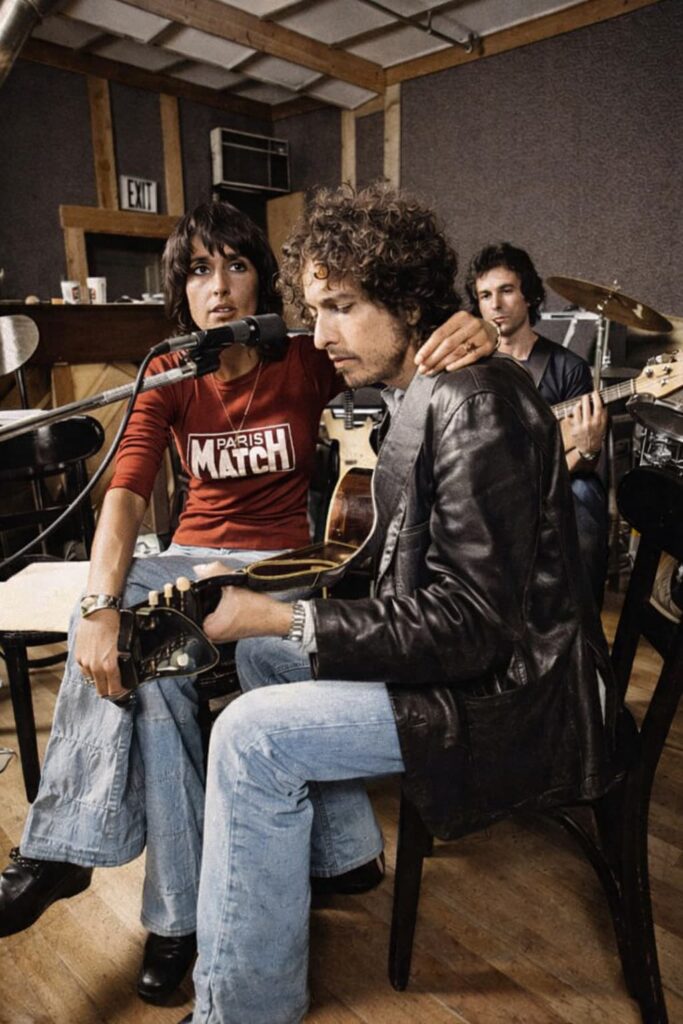
Closely associated with Joan Baez, whose pure, unwavering voice helped carry the song to vast audiences during the civil rights movement, “Blowin’ in the Wind” became more than a composition—it became a shared conscience. Baez frequently performed it live, often alongside Dylan, turning concerts into moments of reflection rather than mere entertainment.
The story behind the song is as unassuming as it is profound. Dylan reportedly wrote it in a matter of minutes, drawing inspiration from an old African American spiritual, “No More Auction Block.” Yet, what emerged was something entirely new: a series of rhetorical questions that seemed to drift like the wind itself—unanswered, unresolved, and deeply unsettling. “How many roads must a man walk down…” is not simply a lyric; it is an invitation to ponder the long, often painful journey toward dignity and justice.
At its heart, “Blowin’ in the Wind” is a meditation on human suffering, peace, and moral responsibility. It does not offer solutions. Instead, it presents questions—about war, freedom, and indifference—that linger long after the final chord fades. The refrain, “The answer is blowin’ in the wind,” suggests that the truths we seek are all around us, yet somehow remain just beyond our grasp, obscured perhaps by our unwillingness to listen.
When Bob Dylan and Joan Baez performed together during the early 1960s, particularly at events tied to the civil rights movement such as the historic March on Washington for Jobs and Freedom, the song took on an even deeper resonance. It became a quiet anthem for those seeking change—not loud or defiant, but steady and unwavering, like a conscience that refuses to be silenced.
Musically, the arrangement is deceptively simple: a gentle acoustic guitar, a straightforward melody, and a vocal delivery that feels almost conversational. Yet within that simplicity lies its power. It allows the listener to focus not on the performance, but on the message. And what a message it is—timeless, universal, and eternally relevant.
Over the decades, “Blowin’ in the Wind” has been covered by hundreds of artists, but few interpretations carry the emotional clarity of Joan Baez. Her voice, clear as morning light, brings a sense of solemnity and grace that complements Dylan’s introspective songwriting. Together, their association with the song forms one of the most enduring partnerships in folk music history.
Listening to this song today is like opening an old photograph album. The world it speaks of may belong to another time, yet its questions remain painfully current. It reminds us that while decades may pass, the fundamental struggles of humanity—justice, peace, understanding—are never truly resolved. They linger, like the wind itself, waiting for us to finally hear what has always been there.
In the end, “Blowin’ in the Wind” is not just a song. It is a quiet companion to those long moments of reflection, a gentle nudge toward empathy, and a timeless reminder that some answers, no matter how elusive, are worth seeking again and again.