
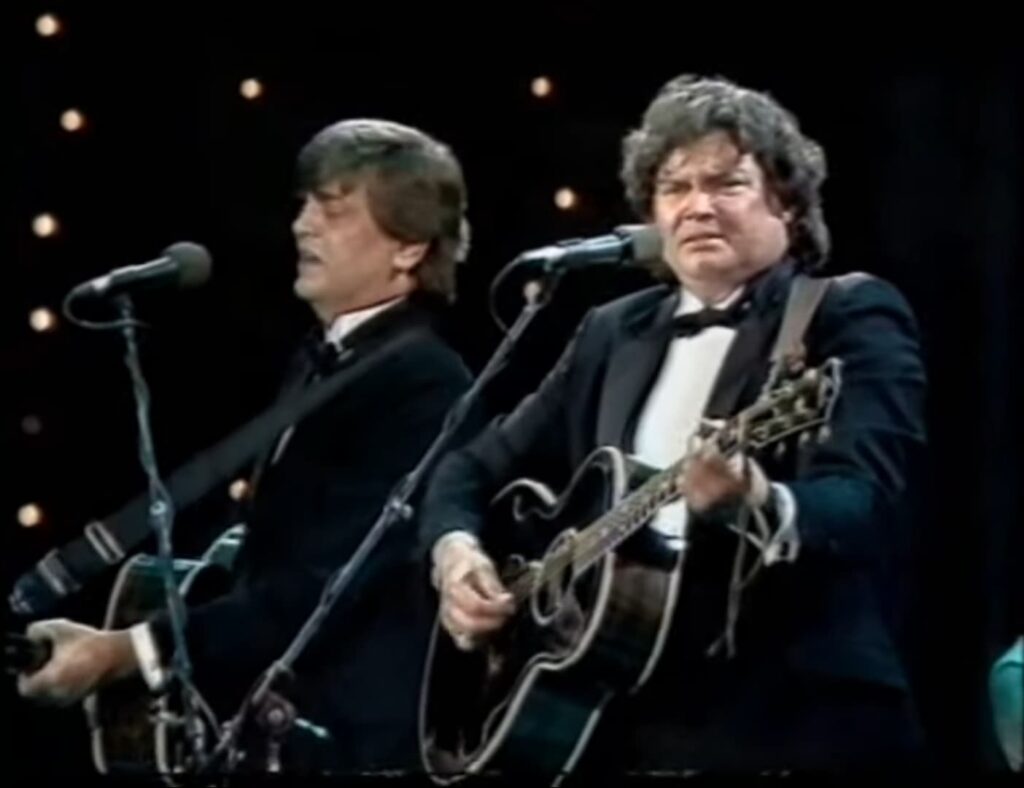
By 1989, The Everly Brothers Were No Longer Singing About Young Love. They Were Singing About Memory.
In Melbourne, Don and Phil Everly performed “All I Have To Do Is Dream” with the kind of harmony that no longer sounded human. It sounded like time itself remembering the past.
When The Everly Brothers stepped onto the stage in Melbourne in 1989 to perform “All I Have To Do Is Dream,” the audience was not simply hearing an old hit revived for nostalgia. They were witnessing something far rarer: two voices carrying the weight of an entire lifetime together.
The song had first conquered America in 1958, during the golden dawn of rock and roll. Back then, Don and Phil sounded youthful, romantic, almost impossibly innocent. “Dream” was a song about longing, teenage imagination, and late-night yearning beneath radio static and summer skies. But by 1989, the meaning had changed completely.
Now the song sounded older. Softer. Fragile in places.
And somehow far more emotional.
The most astonishing thing about the Melbourne performance is the harmony itself. Nearly thirty years after becoming international stars, the Everlys still locked into each other vocally with supernatural precision. Many singers age. Many legendary duos lose the blend that once made them famous. But Don and Phil still sounded connected by something deeper than rehearsal or technique.
Fans often called it “blood harmony.”
Because they were brothers, their voices carried the same emotional grain, the same instinctive phrasing, the same natural rise and fall that countless artists later tried to imitate. You can hear the blueprint of The Beatles, Simon & Garfunkel, and The Byrds hidden inside the Everlys’ harmonies. Modern pop and country harmony singing owes an enormous debt to what Don and Phil created together.
But in Melbourne, their singing no longer felt influential. It felt haunted.
Especially during the repeated line:
“Dream… dream… dream…”
By then, the word no longer sounded romantic. It sounded reflective. Almost ghostly. Like two men quietly revisiting the vanished world of their youth.
That emotional weight becomes even stronger when remembering the complicated history between the brothers. After years of tension and arguments, The Everly Brothers famously broke apart in 1973. For a long period, the relationship between Don and Phil became painfully strained. Audiences knew this history by 1989. That knowledge changed the performance completely.
Because now the crowd understood something heartbreaking:
these two men may not always have been able to live together peacefully, but they still became whole whenever they sang together.
That is why the Melbourne version of “All I Have To Do Is Dream” feels so different from the original recording. In 1958, the song sounded like youthful desire. In 1989, it sounded like memory itself. When they sang:
“I’m dreaming my life away…”
the line suddenly carried the sadness of passing decades, lost time, broken relationships, and the realization that youth disappears much faster than anyone expects.
Even the television atmosphere adds to the emotion. The soft stage lighting, the respectful silence of the audience, the absence of spectacle. Everything about the performance reflects an older style of entertainment where the song itself remained the center of attention. No dramatic effects were needed. The harmonies were enough.
Then came the quietly unforgettable closing moment when the announcer declared:
“The dream continues…”
At the time, it sounded warm and celebratory. Looking back after Phil Everly’s death in 2014, the line feels almost prophetic. The dream did continue. Not only through the song, but through the generations of artists who carried the Everlys’ influence forward.
Today, watching the Melbourne performance feels less like revisiting a concert and more like opening an old family photo album. The music carries traces of youth, heartbreak, forgiveness, distance, and brotherhood all at once.
Two older men standing side by side.
One timeless harmony.
And somewhere between those soft harmonies and fading applause lives the realization that some songs survive because they become part of people’s lives forever.