
When Roy Orbison Recorded “Running Scared,” He Thought His Career Was Slipping Away. Then One Terrifying Final Note Changed Everything
There are many great heartbreak songs in popular music history, but very few sound as emotionally naked as Roy Orbison’s “Running Scared.”
Released in 1961, the song would become one of Roy’s defining masterpieces, reaching No. 1 in America, England, and Australia. Yet what makes the record truly unforgettable is not simply the famous ending. It is the fear hidden inside the performance from the very first line.
Years later, Roy Orbison explained that the song came together in only about ten minutes once the basic idea had formed. But the emotional idea behind it was deeply personal.
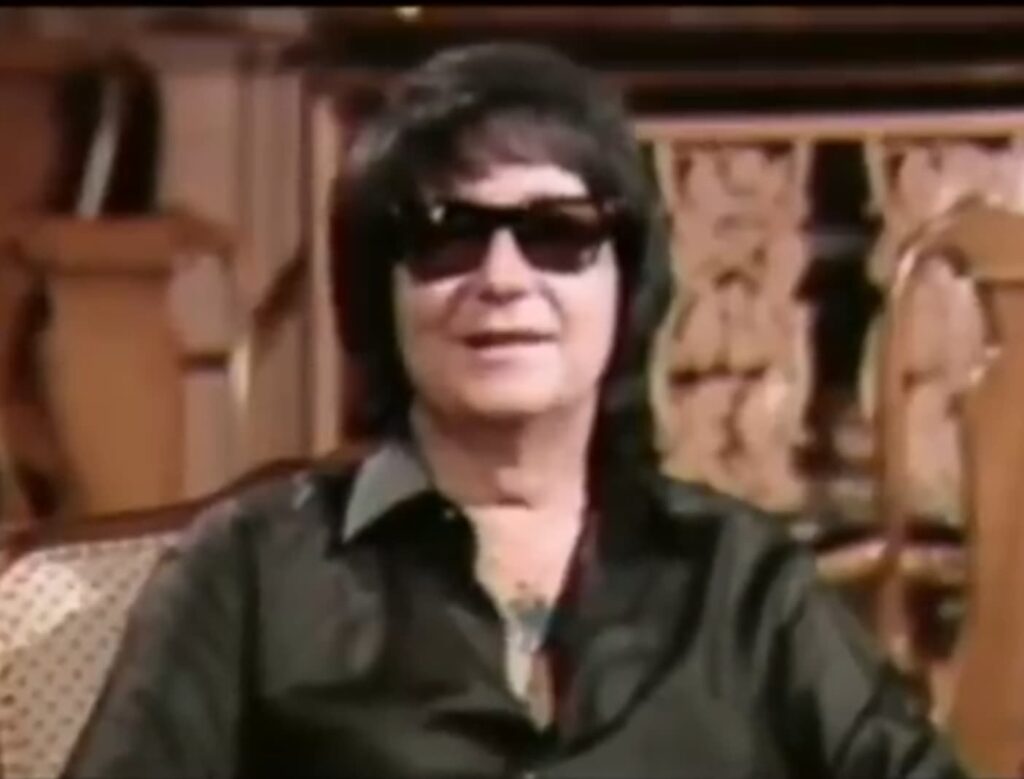
“You never meet a good-looking woman who doesn’t already have a boyfriend,” Roy said with a quiet laugh during an interview. Beneath the humor was the true heart of “Running Scared.”
The song is not about confidence.
It is about insecurity.
Unlike many love songs from the early rock and roll era, “Running Scared” does not present the singer as powerful or certain. Roy sings like a man already preparing himself to lose. The story follows someone watching an old rival return, convinced the woman he loves will leave with someone better, stronger, or more desirable.
That vulnerability became Roy Orbison’s signature.
While other stars projected swagger and charisma, Roy often sounded fragile, anxious, and emotionally exposed. His voice carried loneliness in a way few male singers dared to reveal at the time. That is one reason his music still feels startlingly modern decades later.
Musically, “Running Scared” was also unusual. The song contains almost no traditional chorus. Instead, it unfolds like one long emotional climb. Each verse slowly builds tension higher and higher without release, almost like an operatic aria disguised as a pop single.
And then comes the ending.
One final note that feels less sung than unleashed.
The story behind recording that moment has since become legendary. Roy remembered bringing the completed song into the studio believing it was the best thing he had ever recorded. But during the session, the record company owner interrupted in front of about thirty people and embarrassed him publicly.
“We can’t get the ending,” the man said. “You’re not singing loud enough. We’re going to lose the whole record.”
Roy was humiliated.
He quietly asked for one more take.
What happened next became music history.
The recording was done live, without modern studio editing, digital fixes, or endless track manipulation. Roy reached the final climactic note and, as he later joked, “nearly blew the place apart.”
Most astonishing of all, he admitted he did not even know he could hit the note.
That revelation gives the song an almost mythic quality today. The climax was not carefully engineered perfection. It sounded more like pure emotional survival instinct, a human being pushing beyond his own limits in real time because failure suddenly felt unbearable.
The emotional release at the end of the song mirrors the story itself. Throughout the entire performance, the narrator expects abandonment and heartbreak. Then suddenly, in the final moment, the woman chooses him instead.
That explosive final note is not just vocal triumph.
It is relief.
Disbelief.
A man realizing he was loved after spending the entire song terrified he was not enough.
There is also something deeply nostalgic about hearing Roy describe the recording process now. In that era, hit records were often captured almost completely live. No endless corrections. No computer polishing. Just pressure, instinct, and emotion happening inside the room all at once.
That danger still lives inside “Running Scared.”
Listening today, the song feels even more haunting because modern audiences know the tragedies Roy Orbison would later endure: the death of his wife, the devastating loss of two sons, and years of profound grief that permanently changed his life.
Suddenly, the fear inside his voice no longer sounds imagined.
It sounds prophetic.
And perhaps that is why “Running Scared” continues to affect listeners so deeply more than sixty years later. Beneath the perfect melody and legendary final note is something painfully human:
The fear that love might disappear the moment someone better walks into the room.