
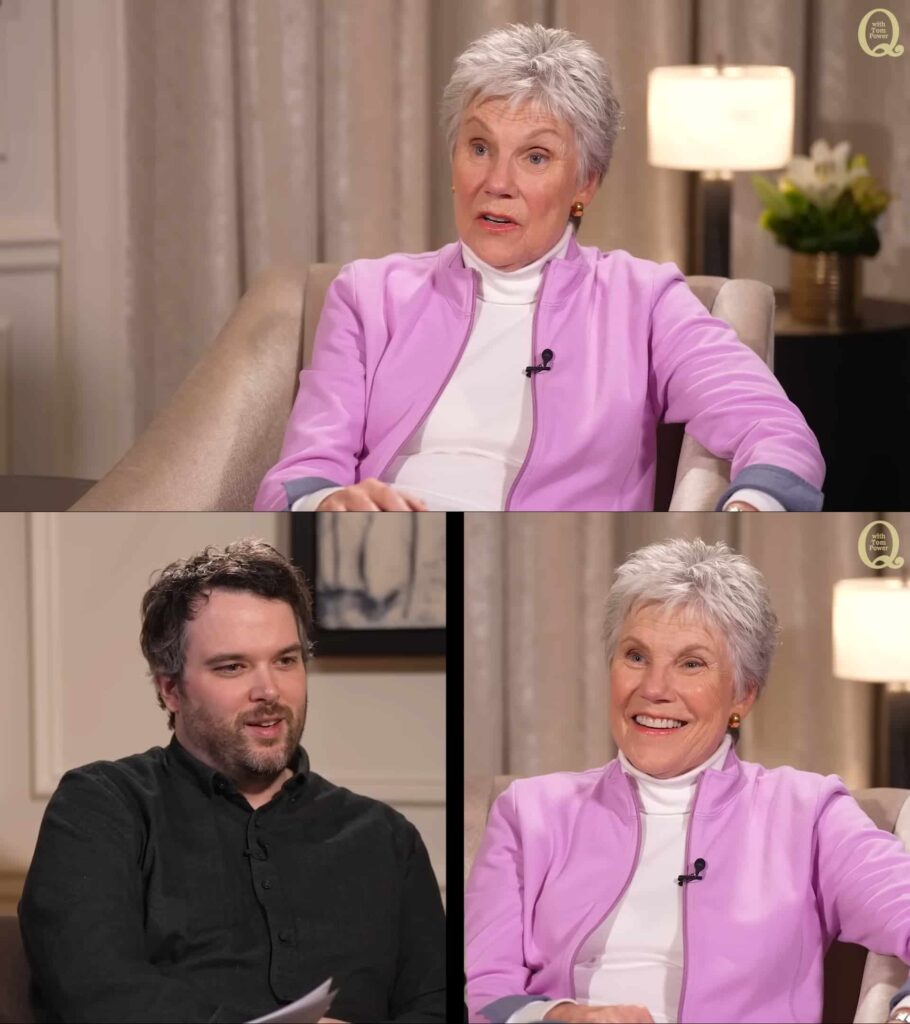
At Nearly 80, Anne Murray Proves That Forgotten Songs Can Still Find Their Way Home
In a moment that feels both improbable and deeply moving, Anne Murray has returned with her 33rd studio album, Here You Are, after nearly seventeen years of retirement. For an artist who once insisted she would never sing again, this unexpected revival is more than a late-career release. It is a quiet but powerful statement about time, memory, and the enduring pull of music. As she herself put it with disarming simplicity, age no longer holds authority over passion.
What makes this album remarkable is not only its timing, but its origin. The eleven tracks that shape Here You Are are not new recordings in the traditional sense. They are rediscovered pieces, drawn from cassette tapes recorded between 1978 and 1996, many of which were left behind due to the physical limitations of vinyl releases at the time. In her own words, Murray admitted she felt a sense of regret for having let these songs slip away. They were not rejected for lack of quality, but simply because there was no room for them. Listening back decades later, one senses that these recordings carry not only melodies, but fragments of a life once lived at full speed.
The story behind their rediscovery adds another layer of quiet wonder. A devoted fan from Las Vegas spent six years tracking down these forgotten masters, moving from archives at the University of Toronto to the University of Calgary. It is a rare reversal of roles. Instead of the artist shaping the audience, it is the listener who gently restores the artist’s legacy, bringing lost work back into the light.
Equally striking is how the album was completed. Rather than returning to grand studios, Murray recorded in the intimacy of her home in Pugwash, Nova Scotia. Her grandson Dale Murray contributed guitar, while her daughter Dawn added harmonies. At one point, Murray even stood on a chair to match her daughter’s height at the microphone. It is a small, almost tender image, yet it captures something essential. The music is no longer about scale or success. It has returned to its most human form, rooted in family and shared memory.
Throughout the interview, Murray reflects on a career that was as demanding as it was celebrated. In the years following Snowbird, success arrived with overwhelming force. There were periods when she recorded up to three albums a year, often forgetting songs entirely under the weight of constant production. Even You Needed Me, one of her most defining hits, did not reveal its magic to her immediately. Only later, when she truly listened, did its emotional depth become clear.
Her recollections of performing in Las Vegas strip away the illusion of glamour. Two shows a night, separated by just a few hours, while her young child waited alone in a hotel room. “I hated it,” she admitted plainly. It is a reminder that the golden age of success often carried a hidden cost. In contrast, her decision to remain in Canada, resisting pressure to relocate to Los Angeles like contemporaries such as Joni Mitchell or Neil Young, now feels like an act of quiet self-preservation.
There are lighter moments too. A surprising resurgence in royalties following a reference on Family Guy introduced her voice to a younger generation, proving that legacy can be renewed in the most unexpected ways. And yet, the most poignant contradiction remains. Murray once said she would not sing again, not even casually. But here she is, recording once more, as if the music never truly left her.
This interview ultimately reveals more than the story of an album. It speaks to something universal. That the most meaningful parts of our lives are not always lost forever. Sometimes, they are simply waiting, hidden in old tapes or quiet memories, until the right moment arrives to bring them back.
 Oldies Songs
  Oldies Songs