
A fairytale-like country ballad of tragic timing and forgotten promises, where youth’s tears transform into an everlasting bittersweet memory
.
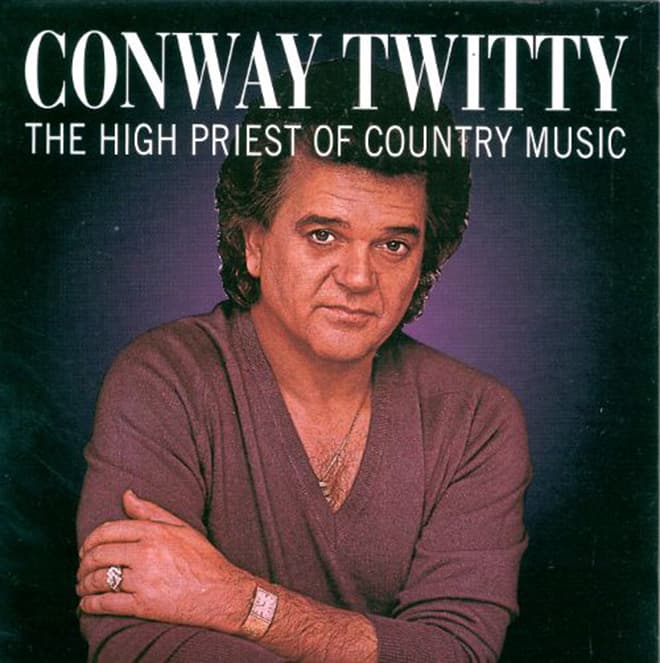
In 1975, country music legend Conway Twitty released Don’t Cry Joni, a standout track from his exceptional album The High Priest Of Country Music. This release marked the absolute pinnacle of his career, a golden era when he managed to debut a new album roughly every eight months. Although it only peaked at number 63 on the Billboard Hot 100 chart, the song achieved an enduring legacy far beyond numbers, becoming a staple on local radio stations across the United States and embedding itself deeply into the hearts of listeners.
The creation of this timeless duet is rooted in a heartwarming family story. Conway Twitty long envisioned his sixteen-year-old daughter, Joni Lee Jenkins, following in his artistic footsteps into the entertainment world. Sensing her eventual willingness after years of hesitation, he decided to provide a gentle creative push. He pulled a song out of his archives that he had written years prior and invited her to record it with him, naming the central character after his beloved daughter.
Yet, instead of a traditional father-daughter dialogue, the song weaves a poignant narrative of unrequited youth. The story centers on fifteen-year-old Joni, who is deeply in love with her twenty-two-year-old neighbor, Jimmy. With all the innocent courage of adolescence, she leaves him a note pledging her undying love and saving all her kisses for him. However, her pure devotion is met with a heartbreaking rejection as the young man explains that she is far too young, and he simply cannot wait for her to grow up.
Five years pass, and fate takes a cruel, ironic turn. By the time Jimmy realizes the true depth of his feelings and packs his bags to return and propose, the window of opportunity has slammed shut. This time, it is his tears that fall like rain upon learning Joni’s response: she has already moved on and married his very best friend. It is a beautiful, fairytale-like romance, but one wrapped in a haunting, permanent sigh of what could have been.
Renowned New York Times critic Robert Palmer once pointed out that any Conway Twitty record was instantly recognizable due to his uniquely thick, resonant vocals and a distinct, raspy blues inflection. The song perfectly captures the true essence of country music—the art of slow, melodic storytelling that reflects the genuine, often complicated truths of human life.
The cultural footprint of Don’t Cry Joni eventually crossed global borders. In 1980, German singer Gunter Gabriel translated the track and recorded a successful duet with his own daughter. In Vietnam, the song found an unexpected home, becoming an iconic staple in English language classrooms and etching its melody into the minds of countless students. Following this breakthrough, Joni Lee Jenkins embraced the stage under the name Joni Lee, releasing tracks like I’m Sorry Charlie and another duet with her father titled Touch The Hand, though her career remained modest.
Until his final days, Conway Twitty remained fiercely devoted to traditional country music, famously stating his preference for staying true to his roots rather than chasing mainstream pop charts. Decades later, the melancholic melody of this classic duet continues to serve as a beautiful portal to the past, gently awakening dormant memories of youth, lost love, and the passage of time.
 Oldies Songs